
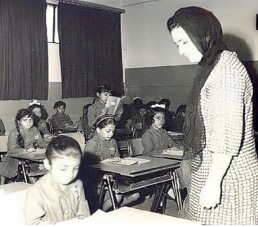
Women’s Day Special: The Queen challenged customs and traditions and enabled Saudi women to be educated
ESRA AHMED
Second Year, BAJMC
March 8, 2022
Beginning of the story :
In the 1940s, laws establishing education for boys were introduced , Girls haven't found their way
into formal education , tradition has tried to hijack their dreams and the rest of them
the clergy ensure that education is withheld for girls , after the clergy took control of this topic
It seemed for a moment that the future of women in the country would be associated with illiteracy
forever, but about 10 years after the establishment of the Boy's Knowledge Directorate .
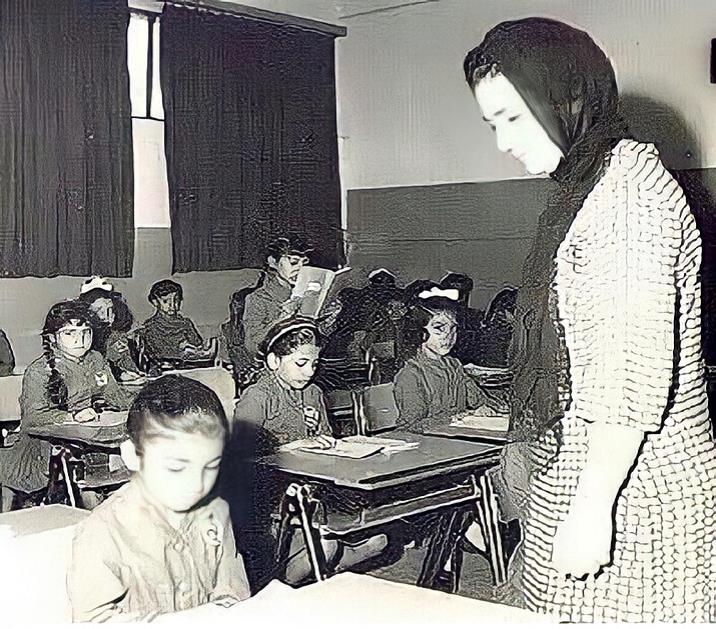
The first group of girls entered the school in 1955. Thirty elementary
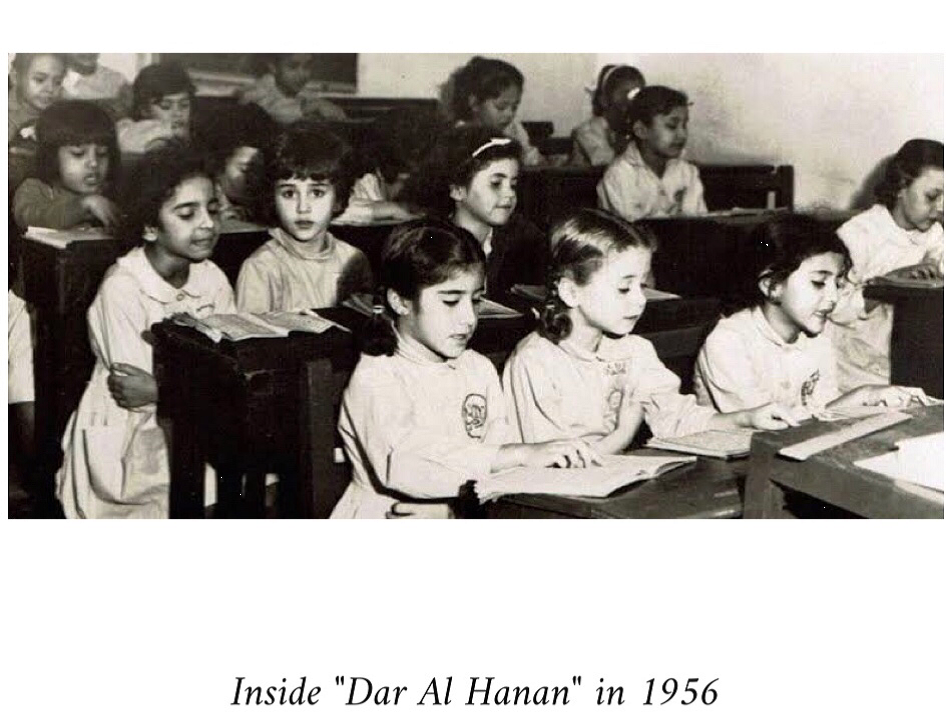
students stood in the courtyard of " Dar Al Hanan " in jeddah
Founded by the wife of King Faisal Queen "Effat Al-Thunayan"
The first school for girls in the Kingdom of Saudi Arabia .
Birth and upbringing:
Effat was born Turkey in Istanbul in 1915 and studied in Turkish schools, after her father passed
away, she wrote to King Abdulaziz, founder of the third Saudi state.
she request from him, obtaining permission to perform Hajj , the king agreed to her request and told
his son at that time, King Faisal, to receive her , Effat met King Faisal by virtue of the kinship
between them, both of whom felt in harmony with the other , she admired his personality and a
conversation arose between them through an interpreter until she learned the Arabic language
Their relationship developed and they got married.
Effat indulged In Saudi society, she learned the Saudi dialect, and education was the first thing that
caught her eye, and the first question she asked was: Where are the schools?
How did she strive and continue her mission to spread education?
At the time when Effat searched for education and schools, popular education was present in the
small books in a rudimentary manner
At that time she found women allocating rooms in their homes for girls' tuition, Some families were
also known to open their homes to educate girls, but there wasn't an organized education
After the announcement of the unification of Saudi Arabia in 1932, “ King Abdulaziz “ met with the
dignitaries of the “ Hejaz “ and expressed his approval for the approval of girls’ education.
This was in recognition of the role that society plays in the formation of educational schools, but it
was not sufficient. The first step began in the 1940s when “Effat” decided to open a department for
girls’ education alongside the boys’ education department at the “Taif Academy” school .
husband, King Faisal, agreed, and the opening actually took place and Effat joined her daughters in
the sec, but the people's response to enrolling their daughters was weak amid strong social
opposition, it was closed because of that section after 4 years .
But Effat didn't give up, so she opened another section in her palace and supervised education in it
herself . she decided to wait for the right time, and in fact 1955 came in Jeddah , she tells her
daughter during her meeting at school and published in " Dar Al-Hanan"
I woke up one morning and found a strange movement in the house, saying, "My mother brought
sewing machines and various fabrics of taffeta, lace and embroidery tools, and she sat among us with
her friends working on sewing school uniforms, bedspreads and curtains that will decorate the
school, Effat changed her strategy in urging the community to educate .
How did she act after the girls' section was closed?
She presented her school as a home for orphans to enter education later. Effat did not like the word
orphans, which was the reason for replacing it with the name "Dar Al - Hanan".
some women refused to join their daughters to the orphanage because of the inferior view that
society has of the orphanage.
Queen Effat decided to announce that her daughters and the daughters of the families she knew
would be enrolled in school , in order to encourage everyone to do that, and thus the number of
female students reached thirty students in the first year and increased to 100 students in the
second year , The enthusiasm of the parents increased, and they demanded that they participate in
the school fees, “ Effat “ decided that she would allocate 30 riyals of the fees paid to take care of
orphans
She didn't stop her work after the introduction of education. One year after the construction of "Dar
Al Hanan", turned it into a fully regular school supervised by the Ministry of Education .
What after that ?
Five years later, the first batch of female students graduated from primary education, it is the year
that approved the issuance of the royal decree approving the government’s education for girls after
it was established civilly, and from it, the establishment of girls’ schools began in the capital, Riyadh,
in Mecca and other cities and suburbs, "Dar Al Hanan" continued to expand, and Effat decided to
accommodate its graduates from primary school by opening a school for intermediate education,
The government agreed to this, and the government assigned it the task of supervising all aptitude
tests for all private schools ,in 1963, then a secondary school examination center.
How after this insistence put her mark?
With her determination, persistence, and defiance of the consequences and difficult traditions, Effat
laid the foundation stone for educating Saudi women to educate and advance them, with these great
achievements, she has the right to register her name in the register of the great and immortal Saudi
women.
She passed away in 2000 at the age of 85, after an operation that her health could not bear the force
of the operation, and in appreciation and respect for her, her children founded a university and
named it "Effat University" in Jeddah.
She passed away, but she still lives in the heart of every Saudi woman

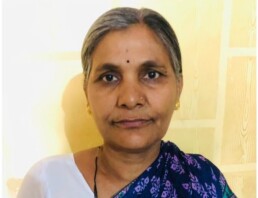
Women’s Day Special: Tiffin Wali Aunty, A Women Who Became Annapurna For Hostelites
Manisha Swain, Third Year BA, JMC
Journalism Specialization
March 7, 2022
Mark Twain once said, "Age is an issue of mind over matter. If you don't mind, it does not matter."
We often believe that a person's age defines what they should be. This not only restricts a person's creativity but also their confidence.
But some people do not let all these talks define them.
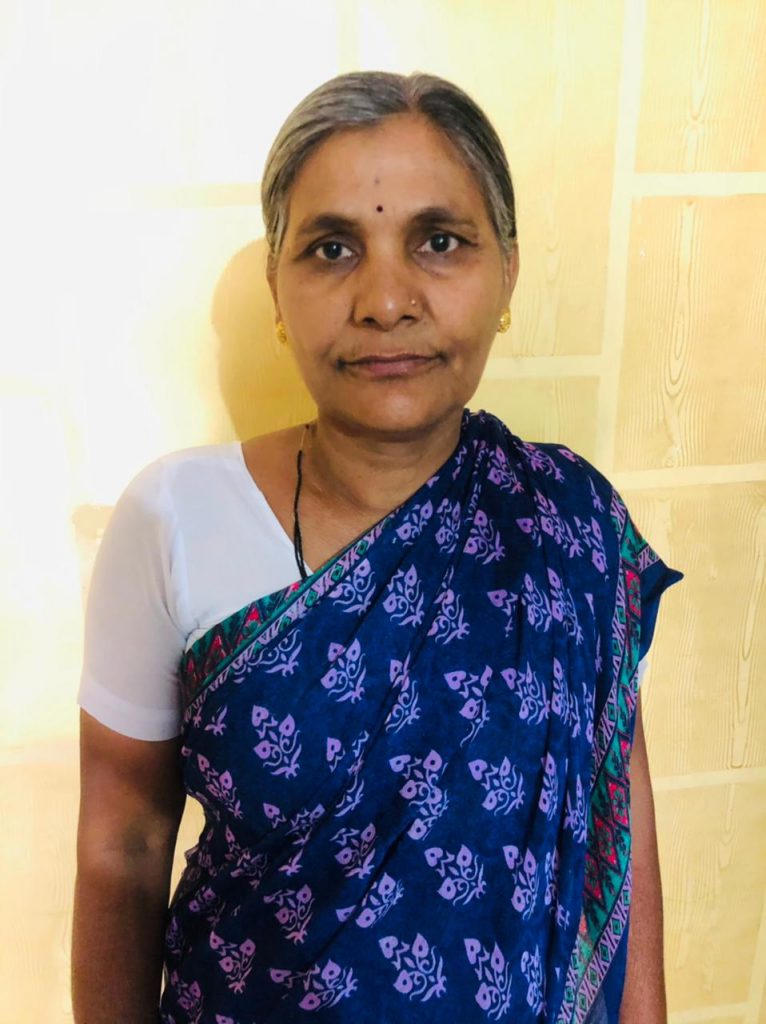
One of them is Meena Manik Sontake, who started making and selling tiffins at the age of 55.
Meena, who was originally from Junnar came to Pune after her marriage. She could not complete her studies which forced her to be a homemaker.
Meena says, "I wanted to learn and study more. But I was married at a young age. After marriage, I couldn't complete my studies while taking care of my home. So I had to give up on that dream."
In June 2018, Meena's family was going through some financial issues, which led her to start making tiffins for a living.
Meena said, "When my family was going through a financial crisis, I wanted to be of some help. I did not want to sit still. So a thought crossed my mind, why not do something which I am already good at? I talked with a nearby hostel owner and told him that I will make and sell tiffins for the hostelites."
"I started with one tiffin. I used to sell the tiffin for forty rupees which included four rotis, two sabzis, rice and daal," says Meena.
Selling a few tiffins at such a low price when the price of vegetables was at its peak was hard for Meena, but she did not let those factors discourage her. But soon, lockdown due to Covid-19 was imposed and her small business came to a halt.
Meena lost her husband in December 2020. Her world was shattered, but she picked herself up.
"I lost my husband and I thought what will I do now? But I knew that my family needed me the most, so I had to be strong for them," says Meena.
During the lockdown, Meena was not able to sell many tiffins. It was a huge loss for her as the tiffins were with the students who moved from Pune to their hometowns.
Meena says, "I was afraid that I might lose those tiffins. This may sound silly that I was worried about empty tiffins but those were the only things that helped me and my family to sustain ourselves. But some students paid for those tiffins when they reached home."
Meena makes the tiffins with her Daughter-In-Law, Sangeeta Vishal Sontake. They divide the work among themselves and they ensure that no food goes to waste during the process.
Meena says, "I was often told by people that I should act my age and that I should just rest on my bed. But I never listened to them because I know that if I hadn't decided to start making tiffins at that time, then my family wouldn't have survived."
"Now that I look back, I realize that all this was done just by two women and it was all our efforts which made us independent and strong. If I can do it then certainly anyone can and I am sure that if one is determined then no one can stop them," says Meena.
Manisha Swain