

The ‘Iron Man’
Sanket Rajesh Loya
Aurangabad
Nitin was living in an intoxicated world as he started drinking 24x7. His family thought that marrying him would bring him back on track, but in futile. He continued immersing himself in drinking and doubting his wife. The situation in life worsened. Nitin developed multiple personality disorder, mental illness, and memory loss. His weight was reduced to 42 kg. In 2009-2010 Nitin was admitted to a hospital where doctors said that he would not survive more than two months.
As he shares his story Nitin Ghorpade from Aurangabad in the Marathwada region of Maharashtra shudders for a moment but then he controls himself and narrates his life. Nitin was born in Pune on December 15, 1979, and due to poor financial conditions, his family moved to Aurangabad when he was just six-year-old. Nitin along with his brother and mother sold popcorn at the city bus stand. Additionally, he also washed cars to earn money for the family. When in ninth standard he started working as a paperboy. Life was harsh and so was destiny, he says. With no hope in the present and unpredictable future, he turned to liquor.
“I was in the eighth standard when I first consumed liquor. It was a Holi day and I drank with my friends. Liquor was not new to me. It was always there around in the family and neighborhood” he says. But this was the first time he embraced liquor which tightened its noose around him.
Intoxicated Life
Even though he was drinking continuously, he was a hard worker. Sometimes he attended classes in his school and one of his teachers was aware of his background and hard work. The teacher asked Nitin if he would do a job in the transportation business. The company was owned by the teacher’s relatives. Nitin agreed as he was in the need of more money for his family. Also working in a transport company gave him some dignity for which he was yearning while working as a paper boy.
He joined the transportation business, as an employee. As his salary increased, his drinking habit doubled. He was so deep into the liquor that he could not stand or walk on his own.
Nitin admits that money made him arrogant and he started abusing his family members who would try to stop him from drinking. He suspected his wife and remained agitated with the family members. His wife was at the receiving end. The National Family Health Survey - 5 (NFHS-5) states that experience of spousal physical or sexual violence varies greatly with the level of the husband’s alcohol consumption. Seventy percent of women whose husbands often get drunk have experienced spousal physical or sexual violence, compared with 23 percent of women whose husbands do not drink alcohol The NFHS also highlights that only 1 percent of women (among surveyed) drink alcohol, compared with 22 percent of men. Among men who drink alcohol, 15 percent drink alcohol almost every day, 43 percent drink alcohol about once a week, and 42 percent drink less than once a week.
Way to Rehabilitation
Nitin was among those 15 percent who survived on alcohol. His family and friends were trying to help him to get rid of alcohol, but Nitin was unwilling to listen to anyone. “My family tried everything, but I was still drinking. But Supreme Power (God) sent my friend Raju and he told my family about Alcoholic Ananimers (AA)” he says. AA is an organization working for de-addiction.
Nitin’s family convinced him and immediately took him to AA. Nitin unwillingly went there. Habitual drunkards who were admitted for treatment at AA regularly met and shared their experiences. When Nitin started hearing stories from other alcoholic patients, he was shocked. He could relate to what they were saying. He knew how he behaved when he was drunk. But now he was listening to the same stories and suffering of their family members. Nitin lamented remembering his behavior. It was like looking into the mirror.
“After six months at AA, guilt and self-realization made me conscious. It was the moment I decided to change” says Nitin. It was not easy living without liquor, but Nitin was ready to fight the battle with himself. He would see how his wife and family members suffered because of his liquor addiction. It took over a year for Nitin to come back to a regular lifestyle, he was successfully able to defeat his addiction to alcohol consumption. This was probably the toughest battle of his life where he was his own oppressor and enemy. But finally, he succeeded and quit liquor.

The New Beginning
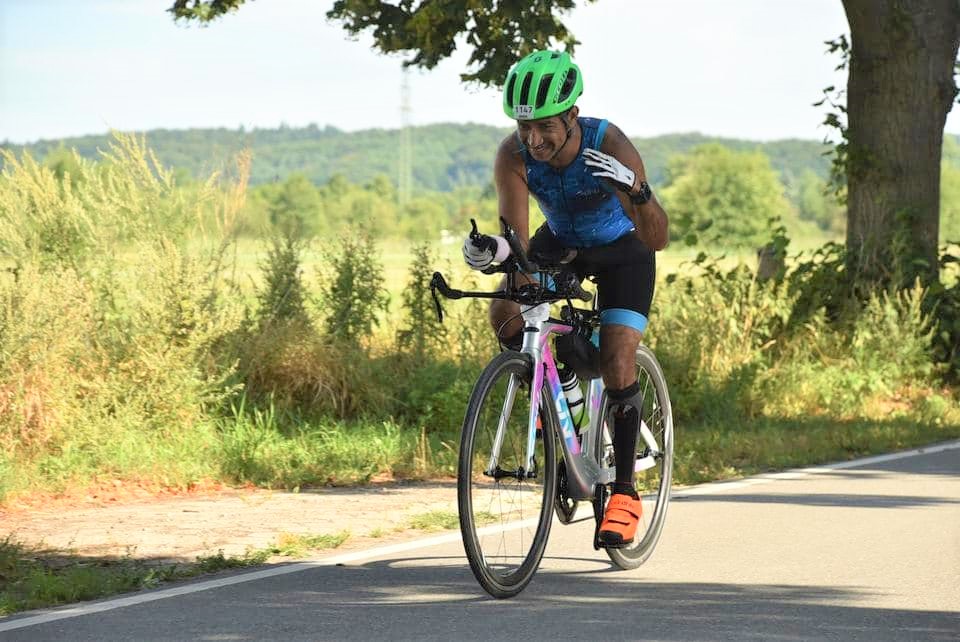
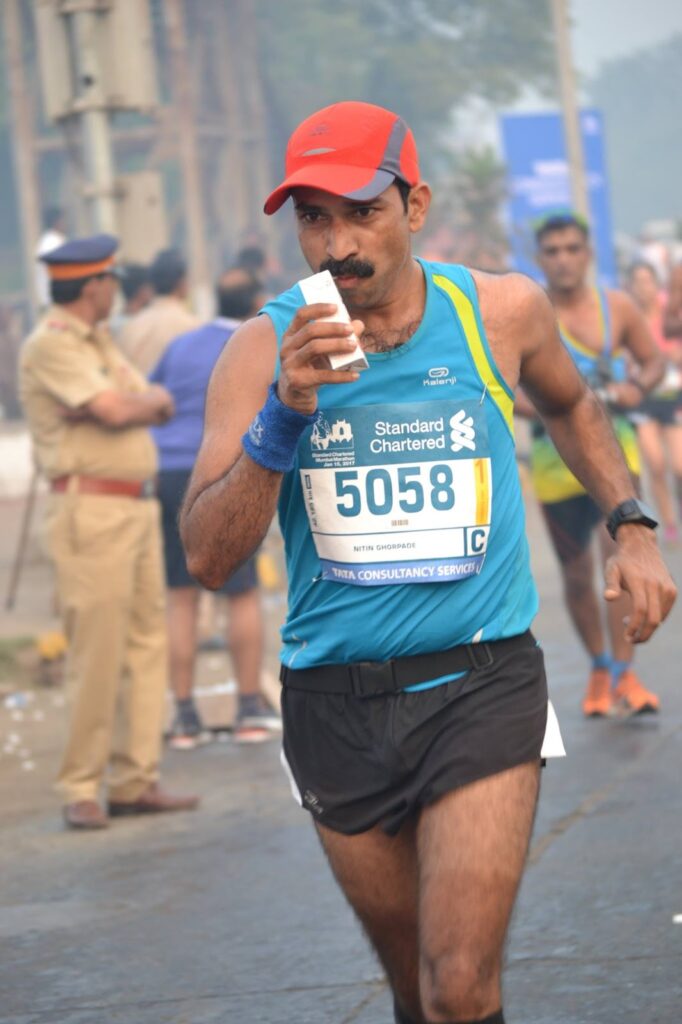
After leaving alcohol he realized that he was getting fat and unhealthy so started running, swimming with friends, and cycling. Also, he worked on his diet. One day when Nitin’s friends suggested that he should try TRIATHLON and explained to him about the sport. A sport includes 3.8 km of swimming, 180 km of cycling and 42 km of running which a participant has to complete within a given time to win the title of IRON MAN. Now, Nitin had a new target in his life. After the tragic past, he was determined to do something that would satisfy him and his family. Nitin started preparation for TRIATHLON. He participated in different fitness, cycling, running, and swimming competitions. “I used to bath with ice water for 15 months to get used to cold conditions abroad where competition was to be held,” he says. Preparing for the competition was the best part because it was just like preparing for school exams and Nitin enjoyed working hard daily.
Nitin was able to win his first IRON MAN title in 2018 in Hamburg Germany where he completed all three events in a total of 12 hours and 49 minutes. Next year Nitin again clinched the title in Denmark.
As he pursued his passion for exercise, Nitin also built his own transportation business. “ Now, I want to live a normal life with my family and forget the dark past,” he says. Life has taught him many tough lessons and Nitin knows how difficult is to fight the battle to self.
He strongly believes that nobody can gift you willpower, it is you yourself who has to earn it. The will to change is the basic premise of life, says Nitin. Good Samaritans hanging around are there to facilitate your journey. Once addicted to liquor, Nitin today is addicted to achieving new heights and testing his own capacities as a human being.
(Sanket Rajesh Loya is a TYBAJMC student at Vishwakarma University)
Note: Pics for the story are taken from https://nitinharishghorpade.blogspot.com/2018/09/ironman-journey.html

Taare Zameen Par: On the streets of Pune
Tapasya Kamble & Snehal Bhagwat
Pune
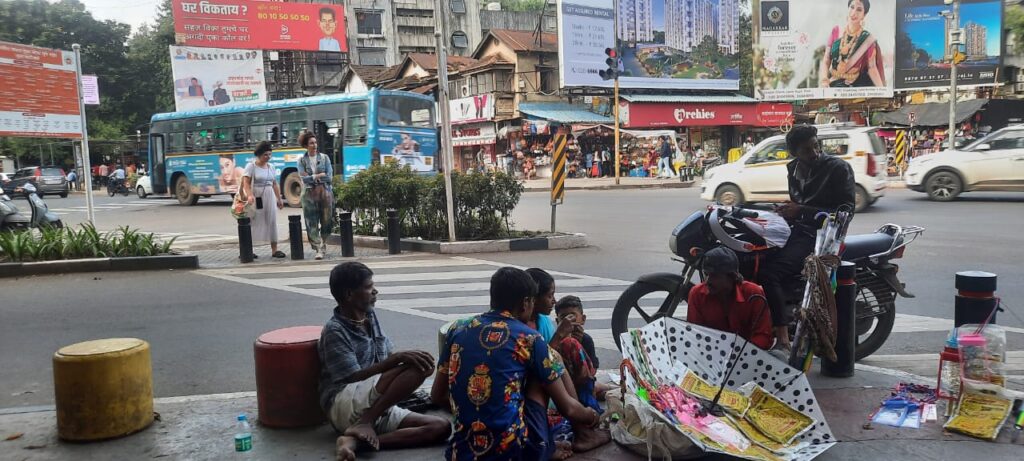
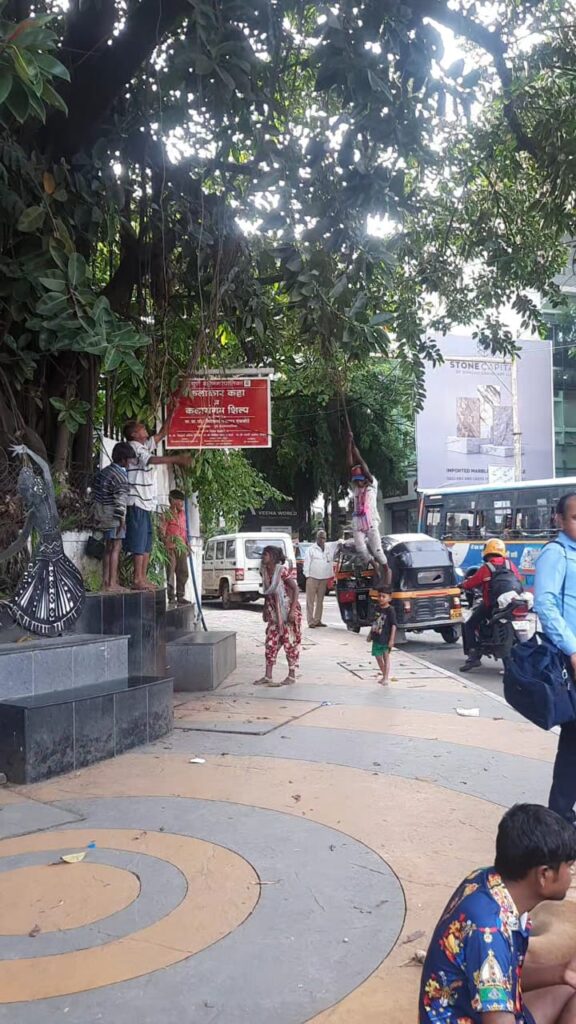
The busy Gopal Krishna Gokhale road popularly known as FC College road is one of the busiest roads in Pune city. As traffic is teeming on the road during busy hours couple of kids are reveling near the Goodluck chowk.
They are swinging with swag holding tight to the aerial roots of the banyan tree. But this merriment is just for a few moments. As soon as the red traffic signal turns on, they pick up their stuff including plastic dustbin bags and a bunch of key chains, and rush to the commuters and try to sell their products. As the green signal glows, they are back to the banyan roots to breathe the fresh air.
Life is not merriment for these innocent kids who must be in school classrooms but are earning livelihood by selling some products, begging, and cleaning vehicles stopping at signals. Education is their right but life has brought them to the streets. UNICEF defines a street child as “anyone under the age of 18 years either lives or works on the street for most of the time”.
Nine-year-old Dashrath and his eight-year-old brother Parbal sell key chains which are not as flashy as the ones in the shops. Not surprisingly, there were hardly any buyers who bought key chains from them.
Ask him “ Do you go to school?” and he answers, “ No. I don’t have a birth certificate to get admission to the school”. Dashrath along with others came to Pune from Madhya Pradesh in search of livelihood. His parents are back home and live in abject poverty with no resources to feed and educate their kids.
While Dashrath is busy talking, his younger brother is bothered about selling keychains. When asked “ What do you want to do when you grow up?”, Prabal has a quick answer, “ I will buy a full bus ticket when I grow up”. His eyes twinkle while he answers.
Living in abject poverty even a dream of development is a distant dream for these kids who continue to grope in dark. As of now mitigating hunger and survival is the only motivation they have.
The road is full of eateries, restaurants, cafes, branded clothing stores, and digital brand showrooms. But these are not part of Dashrath, Prabal, and hundreds of street children’s lives.
Life on Streets
The Pune Municipal Corporation’s survey on street children titled ‘Children in street situations – Life on Pune streets’ reveals that a total of 10,427 children were enumerated across the city. Among surveyed children 58.1 percent are boys, 41.7 percent are girls and 0.3 percent are transgender. About 83 percent (8,550) of the children belonged to street-living families.
Among the street children covered in the survey, about 50 percent (5,207) of children were in the 6 to 14 years age group. As many as 60 percent of surveyed children were not studying.
“The poorest children of different parts of the State of Maharashtra migrated to Pune city in search of job and livelihood. It was surveyed that about 48 percent of children or their families migrated from the districts such as Usmanabad, Latur, Beed, Parbhani, and Solapur in Maharashtra. Almost 82 percent of children or their families migrated in search of job and income” states the published survey.
According to the survey, 33 percent of children were involved in hawking/vending on the streets, 17 percent in begging/used for begging, and 12 percent in construction work.
Hardly seven percent of the children were aware of any NGO or government programs that provide some assistance to street children. Most of the street children hawking or begging could be seen on busy roads.
It is not just from Maharashtra, but from many other States, children come to cities like Pune and Mumbai to work on the streets.
Mitigating Hunger
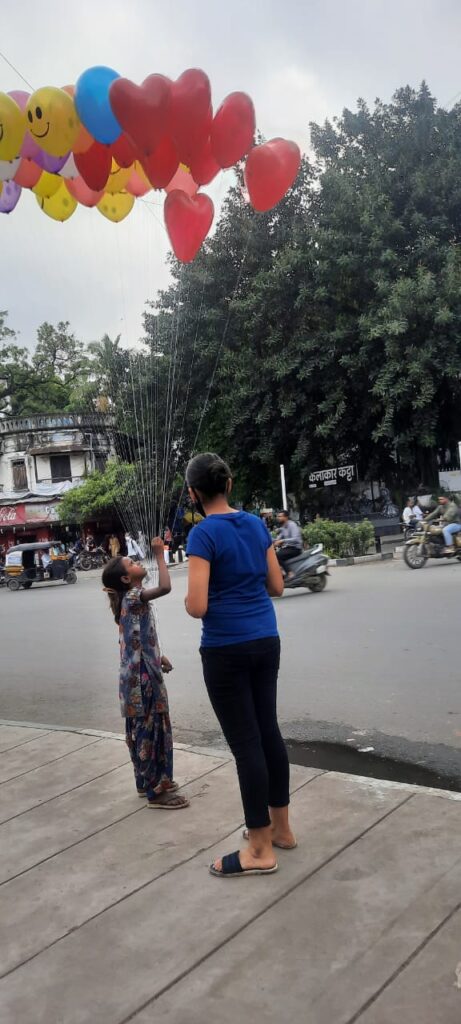
Just on the other side of the FC road is JM road. It's 8 pm and there is a queue near Pataleshwar rock-cut caves. Everyone in the queue is looking at the tempo standing on the roadside. The tempo driver then starts distributing silver packets of food wrapped in food-grade plastic. Then in a systematic way people, one by one come and collect their food packets and sit on the footpath there and have their meal.
These people are beggars, cleaners, and ragpickers including children like Dashrath and Prabal. They don’t earn sufficient money to buy their meal for the day and these food packages provided by Venkys are the only option.
When the tempo driver distributes the packets, an employee from Venkys stands there with his tablet recording and keeping a check that the food is reaching the right hands.
Also, keeping the environment in mind, they also kept a dustbin bag near the tempo so that the leftovers and packets are properly disposed without harming the environment.
Darkness hovers all around and neon signboards and street lights start illuminating the streets in the locality. Another day has passed but for street kids sunrise is not in sight.
Protection of Street Children
According to the union Ministry of Women and Child Development as per Section 2 (14) (ii) of Juvenile Justice (Care and Protection of Children) Act, 2015 (JJ Act), a child who is found working in contravention of labour laws for the time being in force or is found begging, or living on the street is included as a “child in need of care and protection”, among others.
The Ministry implements a centrally sponsored scheme, named Child Protection Services (CPS) scheme, under Umbrella Integrated Child Development Services (ICDS) Schemes for supporting children in difficult circumstances including street children, as envisaged under JJ Act.
“ Under the scheme institutional care is provided through Child Care Institutions (CCIs), as a rehabilitative measure. The programmes and activities in CCIs inter-alia include age-appropriate education, access to vocational training, recreation, health care, counseling etc. The primary responsibility of execution of the Act and implementation of Scheme rests with the State/UTs” the Ministry stated in 2021 in Rajya Sabha.
(Tapasya Kamble & Snehal Bhagwat are SYBAJMC students at Vishwakarma University. Pictures by Tapasya Kamble)
A woman who dares to dream
Sanika Jain
Pune
The doctors declared that Prajakta won’t survive. She was just a newborn baby. Sangita and her family lost hope when they could not find an incubator for Prajakta. They asked for help from everyone and tried to knock on the doors of hospitals around. But there was no incubator available.
For poor people like Sangita, getting an incubator for kids or a hospital bed is a daunting task. The bed density (number of hospital beds per 1000 population) in India is 1.0 while in low-income countries it is 1.2, in middle-income countries it is 2.4 while in the world it is 2.7. Overall, 72 percent of hospital beds in India are available in urban areas, while 28 percent are in rural areas.
Sangita and her family were helpless and couldn't do anything for the baby which was suffering from low birth weight, irregular temperature, and unstable vital signs. They had 4 hours to save her, but as these horrifying 240 minutes passed, fortunately, nothing happened to her and she survived. Sangita says it was a “miracle” but not many miracles have happened in her life.
Her Story
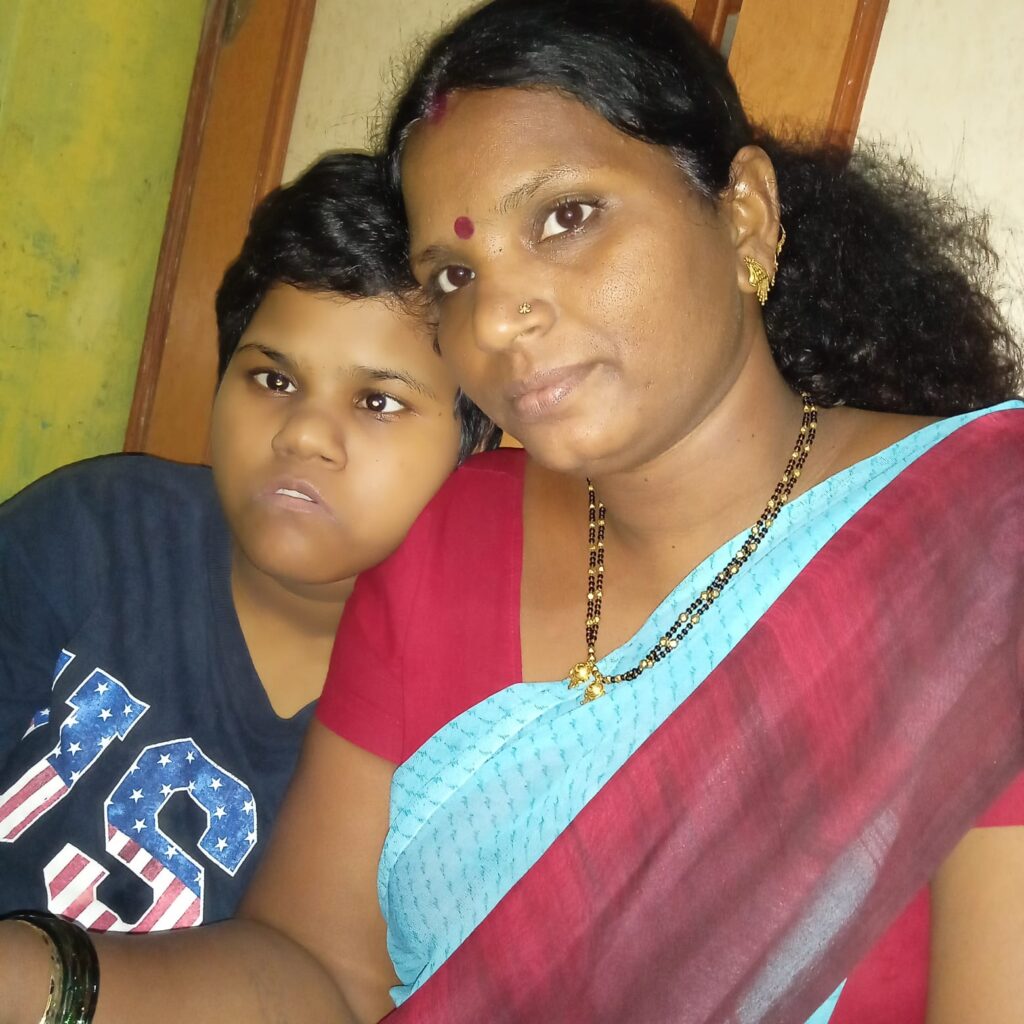
Sangita Dattatrya Sabale living is a mother to four daughters. She is 38-year-old and has been working as a maid since she was just 10 years old. She was married off at the age of 12 and delivered her first daughter when she was just 16. Though child marriages are banned, hundreds of Sangitas are married at a young age and forced to produce children when they themselves are still children.
“Getting married at such a young age was not easy for me. I was unaware of the meaning of marriage”, Sangita laments. All her dreams to get educated and be on her own crashed with marriage. Her family members insisted that the bridegroom was educated and she would not get any such marriage proposal. Her husband, Dattatrya Sabale says that he is a civil engineer. Sangita agreed and married to Dattatrya. She delivered twin girls Prajakta and Prerna when she was 18.
Like many other families in India, the Sabale family also wanted sons to take the family tree forward and also take care of their dotage. But Sangita continued to give birth to girl children.
Life Challenge
As Prajakta was growing she was not able to utter words or even take baby steps. Her twin sister Prerna was a normal child but Prajakta didn’t show any growth.
About 2-3 months later, Sangita and her husband realized that their daughter is differently abled. They took her to the local hospital. Three surgeries were conducted on Prajakta following which she was able to talk, laugh and recognize people around her. But she is not able to walk and had to stick to a wheelchair.
Prajakta is now 19 years old and studies at a school for differently able children in Shukrawar Peth. Sangita endured years of struggle. Her in-laws did not accept Prajakta because of her condition but Sangita and her husband always stood head-strong and never gave up.
However, the struggle hasn’t come to an end. Sangita said, “This struggle will continue to exist for the rest of our lives. For me, for Prajakta and my family”.
They faced many financial issues and still do. Due to these circumstances, they had to take loans from people in order to meet the financial needs for Prajakta’s surgeries. After a few years, the doctors said that more surgeries would have to be performed but these surgeries involved several risks. Also, doctors didn’t offer any guarantee that surgeries would be completely successful. Finally, the family decided that they would not go for any further surgeries on Prajakta.
Presently, Sangita serves ten houses as a maid and yet manages to take care of her home and her daughter. Her other three daughters also take care of Prajakta and help with household chores whilst the mother is working outside.
Sangita loves her four daughters equally. She says her husband has been supportive in managing everything with her. She adds “My mother has always been there through our thick and thin, without her, the situation would’ve worsened,” said Sangita.
“There were times I felt completely disheartened during the time of handling adversities. But I wanted to see Prajakta in a good condition and the belief that she will get better kept me going,” Sangita added.
Making it Possible
Sangita’s story is the story of thousands of girls who are deprived of education and better opportunities in life. In families struggling for survival, girls become burdens, and marrying them off is the only answer.
The family, society, and destiny have left very few options before Sangita in the battle of life.
The only weapon she has to fight all the odds is her love for her daughters and her dreams. She is not allowing her hope and her dreams to die. She dreams for better lives for her daughters and trusts that someday there will be a ray of hope in the darkness all around.
Sangita says, “I live for my children. Everything I did or do in my life is for them. Never thought of myself in this battle. I want to educate my daughters and provide them with a good life. Even though everyone lost hope, I was persistent. The struggle is endless; nevertheless, I never intend to give up”.
And she is aware that there will be no miracle that will change her and her family’s life. She has to rely on her hard work and challenge the situation. This gritty woman continues to dare to dream despite all odds.
No permanent employment, no good wages, and no dignity. Society, family, and destiny are testing her grit to live, but Sangita says that she is not the only one who is facing these challenges. At a time when happiness is like a mirage, Sangita hopes to convert the mirage into reality. “ It’s possible. I shall try my best to make it possible” she says holding back her tears.
She is not ready to give up!
( Sanika Jain is an SYBAJMC student at Vishwakarma University: Pictures by Sanika Jain)
============================