

Saraswati’s tryst with tragedies

Sanika Jain
Pimpri Chinchwad
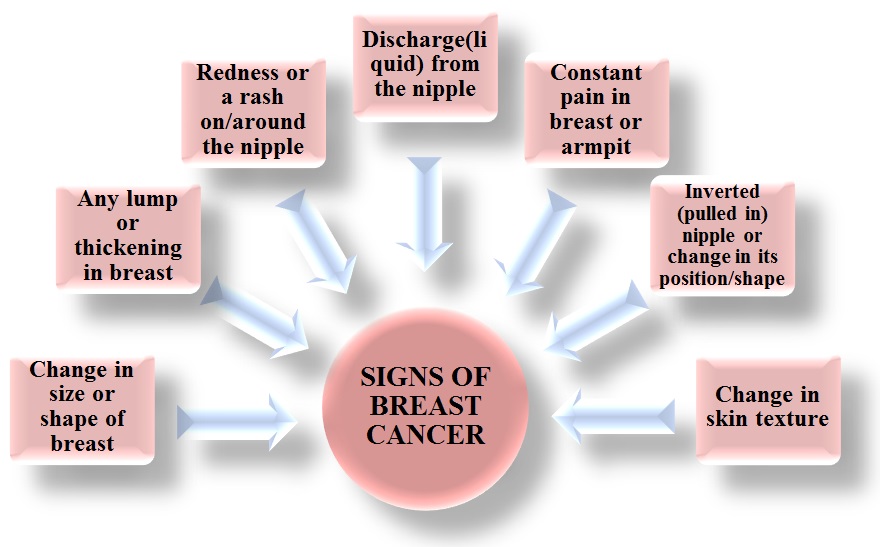
When Saraswati felt severe pain in her breast, she went to the nearby hospital. At the age of 47, she was detected with breast cancer and she was aghast. All her life she had battled many odds and a series of tragedies and this was another one.
Born and brought up in Kolkata Saraswati completed her education till 9th standard and at the age of 25, she was married. Within two months of marriage, she separated from her husband after delivering a boy. Ask her about the reason for separation and she is unwilling to speak. As she narrates her story in a small congested room near an apartment in Pimpri Chinchwad, she hesitates and fumbles many times.
She started tailoring and handicraft as a hobby when she was young but later it turned into an occupation for her. But then came another shock “ At the age of 13 my kid developed a liver jaundice which deteriorated. We tried to do everything to save him, but couldn’t. He died” she says and goes silent unable to speak further.
“ Losing him has been the most painful experience imaginable. I was miserable for years after his death,” she says sobbing. “The death of my only son has left me with an open wound which will never heal,” she manages to add. The pain is visible on her face as she tried to control her tears.
With their son’s death, her husband was back in her life. A year later after losing their son, the couple moved from Kolkata to Pimpri-Chinchwad. She tries to earn a livelihood by doing tailoring, her husband hunts for the job now and then.
Challenging Cancer
As she was detected with breast cancer Saraswati was disheartened. Earlier her mother too was detected with breast cancer at the age of 55 and she lost her mother during treatment.
Saraswati’s breast cancer treatment was carried out at Deenanath Mangeshkar Hospital, Pune. As she was managing to cope with the mental and financial stress, there was another tragic mode in her life. Her husband met with a dangerous accident which resulted in paralysis of his partial body.
Saraswati says, “It was a strenuous phase for me as I had to look after my husband and at the same time I myself had to undergo an operation for breast cancer.” She was broken and felt defeated, but was not ready to give up. She continued her treatment and also looked after her husband.
The chemotherapy treatment did not suit her body. It had to be stopped immediately.
“No matter how much I fight and overcome problems, they never stop chasing me,” she says gasping.
“ I had to accept things and face the situation. Throughout the treatment, I faced everyday positivity and boldly” she says. She had to undergo a mastectomy.
According to the American Cancer Society, mastectomy is breast cancer surgery that removes the entire breast. A mastectomy might be done when a woman cannot be treated with breast-conserving surgery (lumpectomy) or if a woman chooses mastectomy over breast-conserving surgery for personal reasons.
The surgery is also done for women at very high risk of getting second breast cancer who sometimes choose to have a double mastectomy (the removal of both breasts).
Saraswati is strong-willed and she went through the surgery bravely. All through the treatment process her husband, brother, friends, and relatives were with her, she says.
She holds the dream of starting her own business of handicraft items and dressmaking. Paul also wants to build an institute where she can teach handicraft and tailoring as well as offer jobs to needy women. She is moving towards accomplishing her dreams and pursuing her goals with determination and tenacity.
After mastectomy Saraswati is not very comfortable going out. She says that after her son’s death she doesn’t pay any attention to herself. But she knows that she has to get up and fight. She has to earn a livelihood and she has to fulfill her dream.
“ This is life, after all, we all have to face it” is what she has to say to conclude the conversation.
( Sanika Jain is an SYBAJMC student at Vishwakarma University.
Pic courtesy: Breast Cancer Survivors India FB page and National Health Portal)



Daring Deval who changed the destiny
Manali Doshi
Pune
For years, Deval Doshi was yearning to do something on her own. As her kids were growing and she was getting some time to think about her long pending wishes. Like thousands of girls, she was married, even as she was completing her education. She was just 22 and her family insisted that she must get married. She wanted to complete her graduation, but was unable to express her wish.
After marriage, she shifted from Gujarat to Mumbai and then to Pune. Her life revolved around her two kids and husband. As she thought about stepping out of the threshold, she stopped herself. “ I don’t have the educational qualifications to do a job? Who will give me a job? What skills do I have?” these and many questions danced around her and she was dismayed.
But she didn’t allow the dismay to prevail. She started thinking about what were other ways to fulfill her wish. The wish was simple. To work and become financially independent, support their husbands and family, and also satisfy her own wish to do something.
Her best friend Madhavi supported her saying that she was on the right track. Madhavi also helped her financially and connected her to many like-minded people.
Deval felt like trying something in cloth and food items. She started speaking to cloth vendors in various states. She started building the network in Pune and fulfilled their orders. Her customers were women and she provided them with all kinds of dresses, dress materials etc. But already women were purchasing online and Deval had to convince them that she had a better deal. Meanwhile, she also started selling snacks. She prepared snacks at home initially and then with help of the other two women she started increasing the network.
But the journey was a bumpy ride. She started with a very small business of clothes and food items but still faced challenges. She was not that good with her communication skills and connecting with people. Also, there were issues with the family members who thought that she has no reason to get into all these things and must concentrate on home and family.
Crossing the threshold
The latest National Family Health Survey (NFHS-5) states that in India, only 32 percent of currently married women aged 15-49 are employed, compared with 98 percent of currently married men age 15-49.
Eighty-five percent of currently married women who earn cash say that they make decisions alone or jointly with their husbands on how their cash earnings are used. It is most common for women to make these decisions jointly with their husbands; only 18 percent mainly make these decisions alone. For 14 percent of women, the husband is the sole decision maker regarding the use of women’s earnings.
In India, housewives are generally discouraged from working as traditionally it is believed that women must take responsibility of husbands, kids, and in-laws. Earning money is the responsibility of men and women should look after the household.
But Deval was sure about herself. She took care of her family but at the same time, she didn’t restrict herself to household work.
“ After 9-10 years of all the struggle I have learned many things. I improved my communication skill and this helped me in mouth publicity of my business” she says. This process wasn’t easy for her. She was demotivated and criticized. “ But I have learned to stand for myself,” says Deval adding that a journey from a docile housewife to a businesswoman has taught her a lot. A strong will and mental strength helped her to keep going.
Today she has a network of cloth vendors who are connected with her and Deval caters to the requirement of women. She is also into the business of imitation jewelry and her snacks business is rising. She dreams of opening her own shop and expand the business.
Self-realization
Deval’s story is the story of thousands of women who want to excel in life despite all odds and opposition from society and people who want women to restrict to kids and cooking.
According to the Ministry of rural development, 57,209 enterprises came up during 2020-21 and 41,623 enterprises in 2021-22 when India was grappled with the Covid-19 pandemic. According to the Ministry, SHG women shouldered the responsibilities of the situation and emerged as a strong task force in producing several quality products like masks, protective gear kits, sanitizers, and hand wash.
“Products were procured and distributed by the local administration to various stakeholders. While addressing the need, these SHG rural women entrepreneurs set up an example of themselves and earned an additional income” the Ministry states.
But is not just rural women, their counterparts in urban areas are also striving to prove their mettle and Deval is one of them.
(Manali Doshi is a SYMAJMC student at Vishwakarma University)

Migrating in search of better lives
Sudharsana Jain & Ritvik Nair
Pune
Naresh Patil, a 28 years old tea vendor, came to Pune in 2010 from his village in Rajasthan after completing his 9th.
He worked at MIT college canteen alongside his uncle and sold tea. But he never restricted his potential there. Throughout the span of seven years, he started accumulating all the necessary financial resources. After all those years of hard work, around five years ago he finally was able to rent a small tea stall in a roadside alley on FC road and he named it ‘Sudarshan Tea Corner’.
One would always find people around his stall with their “chai ka cup” in hand talking with their friends, family, and colleagues about how good or bad their day was or discussing some political or social, or economic topics. The tea-drinking culture of India helped his small business grow a lot that now he earns Rs 25,000 per month. After a sip of his tea, you could find the joy on people’s faces which is enough proof for Naresh to know that his hard work is paying off.
Although Naresh’s success might be small but it is inspiring enough how a young boy from Rajasthan with no experience in this line, with his constant hard work and dedication, is now an independent businessman running his own tea stall selling a cup full of love with cutting chai.
Mumbai kulfi
FC road is also known Namdar Gopal Krishna Gokhle is full of numerous shops, especially women's shopping.
Amidst the crowded lanes, there is a kulfi wala named Mumbai kulfi who also gives you falooda in three flavors - strawberry, mango and pista.
“My name is Balbir Singh and I came from Madhya Pradesh,” he says. He started kulfi selling in Mumbai and after two years working in India’s financial capital, he came to Pune just six months back. “ I am 12th pass and earn Rs 10,000 per month,” he says.
Being a migrant, Balbir continues to work hard as he knows that hard work is the only capital he has to survive.
Migration Track
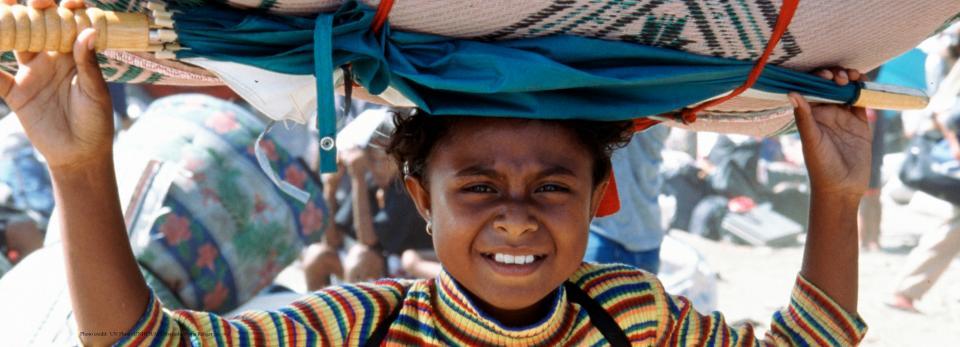
According to the government migration of workers from one place to another is a continuous process. The workers migrate out of their native places in search of livelihood.
The migration of agricultural labour from rural to urban areas is a general phenomenon and a natural part of the development process. The reasons for this shift include, inter alia, better employment opportunities in industry and services, increasing urbanization, low income in agriculture etc. In a market economy like India, the movement of the people for better economic opportunities is inexorable, according to the government.
The Constitution of India guarantees the right to every citizen to move and reside in any State/UT in search of an Occupation/Job. According to the Economic Survey 2016-17 the size of the workforce as per Census 2011, was 482 million (48.2 crore) people and based on extrapolation, this figure could have exceeded 500 million (50 crore) in 2016.
If the share of migrants in the workforce is estimated to be even 20%, the size of the migrant workforce can be estimated to be over 100 million (10 crore) in 2016 in absolute terms.
(Sudharsana Jain & Ritvik Nair are students of SYBAJMC at Vishwakarma University, Picture – United Nations Population Division)
Knocking at the doors of the school
Richa Paunikar
Pune
There is a family wedding on the anvil but Shabana is not happy. She is disturbed and depressed. There is nothing to be happy she says adding that the family is hunting for a groom for her brother’s daughter.
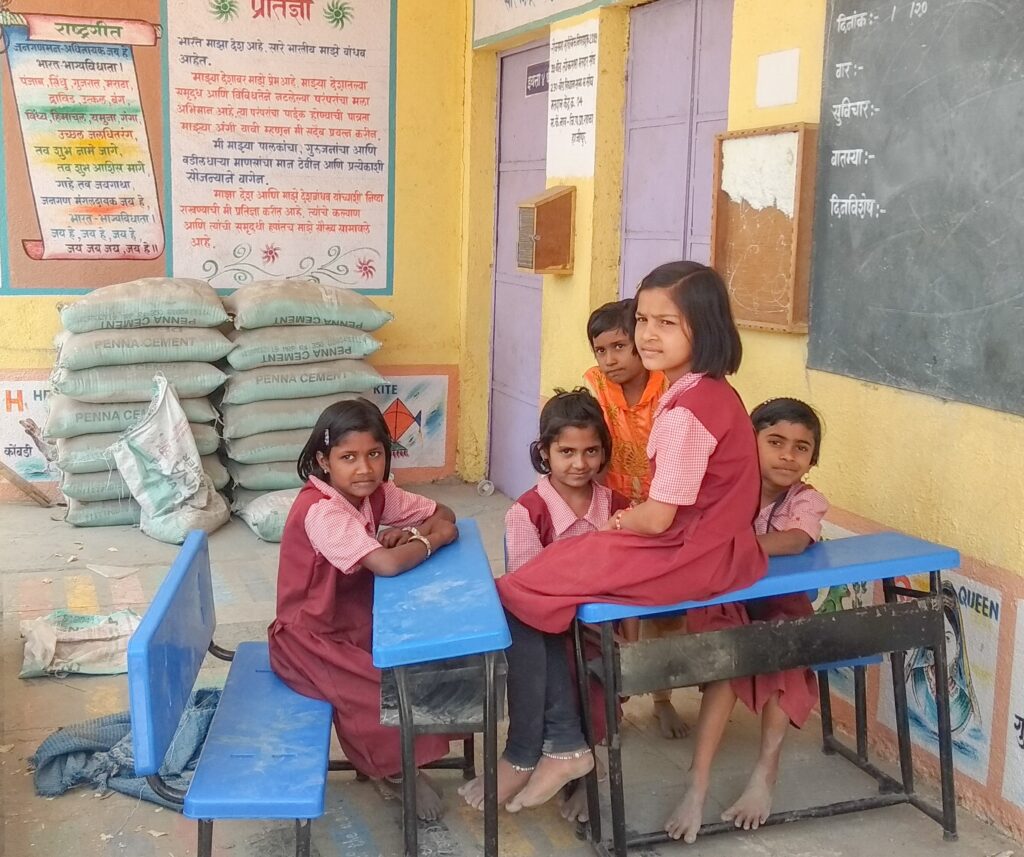
“She is too young to be married,” says Shabana who is unwilling to speak much about this. When prodded, Shabana says that at a tender age girls must get an education and enjoy school life. But instead, the poor girl are forced be marry someone who might be double their age. “ Same will be the case with my brother’s daughter. I can’t do much as it is a tradition in the village to marry off girls as soon as possible,” she says.
Shabana herself never went to school and instead accompanied her parents in the fields. Born in Nashik district she left to Dongargaon village near Nagpur with her parents. She came to Pune after being married at the age of 14.
“I wanted to attend school, but my parents had no money. I was helpless” she recalls with gloom in her eyes.
Her husband works as a Mistry who does temporary work whenever it is available. Now at the age of 24, Shabana has three children including a girl and two boys. “ Whatever my husband is earning is not enough even to feed the family. I realized that I have to do some work. Initially my husband didn’t allow me to step out of the house. But I was determined that I have to work if I want to educate my children” she says.
Physically abused by her in-laws, Shabana faced torture and continued living with the family for the sake of her children. “ Where to complain and to whom I should complain?” she says.
“ I have to work and have no scope for any complaints. My two kids go to a government school but I dream to educate them in an English medium school. But my husband’s salary goes into paying house rent and I have to work if want to educate my kids” she insists. Shabana works as a cleaner in an university and is also looking for more work. She says that she was never able to go to school, but her kids will definitely get education. Shabana insists that she wants her daughter to get a good education and stand on her own in her life. Education matters, she insists.
Girls in Schools
The National Family Health Survey (NFHS-5) states that urban women are more educated than their rural counterparts. As per the survey, 27% of rural women have never attended school, compared with 13 percent of urban women. Twenty percent of women in rural areas have completed 12 or more years of schooling, compared with 39 percent in urban areas. The percentage of women and men who have completed secondary school or higher increases by wealth quintile; 6 percent of women and 10 percent of men in the lowest wealth quintile completed 12 or more years of schooling, compared with more than half of women (55%) and men (62%) in the highest wealth quintile.
Interestingly the survey reveals that the ideal family size declines with an increasing level of education among women. Women with no schooling consider 2.5 children to be ideal, compared with 1.8 children for women with 12 or more years of schooling.
Education is the solution
Shabana says that are hundreds of women like her who want to stop the vicious circle of child marriages and educate their girls. “ In urban areas, it is easy to convince the family members against marrying girls at a young age. In the village it is difficult” she adds.
Shabana says that once educated her daughter will be aware of her rights and no one will be able to exploit her.
The NFHS survey is in consonance with her feelings. Based on the reports of ever-married women age 18-49 of their experience of spousal violence, husbands who have completed 12 or more years of schooling are half as likely (21%) to commit physical, sexual, or emotional spousal violence as husbands with no schooling (43%). Women with husbands having the same education level as them are less likely (26%) to have experienced spousal violence than women in couples in which neither attended school (44%) or one or the other has more schooling.

Fatima and Shabana
In January this year Google Doodle celebrated Indian educator and feminist icon Fatima Sheikh, who is widely considered to be India’s first Muslim woman teacher. Alongside fellow pioneers and social reformers Jyotirao and Savitribai Phule, Sheikh co-founded the Indigenous Library in 1848, one of India’s first schools for girls.
Google wrote that Fatima Sheikh was born on 9 January 1831 in Pune and lived with her brother Usman. They opened their home to the Phules after Jyotirao’s father asked the couple to leave home if they wanted to educate “lower caste” children.
“ The Indigenous Library opened under the Sheikhs' roof. Here, Savitribai Phule and Fatima Sheikh taught communities of marginalized Dalit and Muslim women and children who were denied education based on class, religion, or gender” Google adds.
Fatima went door-to-door to invite the downtrodden in her community to learn at the Indigenous Library and escape the rigidity of the Indian caste system. She met great resistance from the dominant classes who attempted to humiliate those involved in the Satyashodhak movement, but Sheikh and her allies persisted according the Google information.
Shabana and many like her might not be aware of Fatima’s struggle, but they are walking the same path laid by Fatima. The path of education will empower their kids to take control of their own lives.
( Richa Paunikar is SYMAJMC student at Vishwakarma University. Pictures: Google doodle and RBJ)