

Community or Casualty ?
Film By Divya Shaj
This film revolves around the lifestyle and mindset of the LGBTQIA+ community. The objective of this documentary is to make the audience understand the concept of ‘a person as opposed to categorizing everyone into genders they don’t belong to. A series of questions will be asked to the interviewees that depict parts of their lives. These stories are meant to be understood in a way that proves discrimination on the basis of gender must be eradicated.
The LGBTQIA+ community has always been sidelined and this documentary is a try at expressing why this is inappropriate. This talks about the hopes and visions the people of the community have when it comes to the future of the same. This is a small attempt to end the worldwide stigma around homosexuality.
Credits:
Directed By: Divya Shaj
Cinematography: Divya Shaj
Producer: Divya Shaj
Editor: Divya Shaj
Cast: Ritesh Singh, Aadil, KC
https://youtu.be/EK4lHOop2Yo?si=-BUPaIsb3tMbW2sX


Mochi: A Dying Profession
Film by Harnisha Desai
Mochi : The Mochi are a Hindu caste found mainly in North India, being Chamar caste. They are the traditional shoemakers of South Asia.
“The concept is to bring out the story of dying professions which where very important part once in the history but now due to the development and betterment of technologies and affordable replacements or capitalism is dying or is on the edge of becoming extinct.
it seems to be a real small change in the surrounding…. For some it could be just one man sitting on the footpath and now he’s not there ! But for the one that was his source of livelihood. Now he’s hardly able to sustain himself and his family with the business and somewhere it is because of easy replacements due to more affordable brands and new fashion trends changing maybe somewhere the Capitalism is equally responsible. I wish to bring out the story of an ordinary person whose business use to be a important service in the past but not anymore . This would bring out the rich past and the present scenario also the dying future of the profession and the professionals.
by Harnisha Desai (TYBAJMC, Vishwakarma University)
https://youtu.be/_sVjRh_HK3o?si=ReAAzDXrHCDw00sF
A Leap Towards Sustainable Cities and Climate Action
VUCCD Team
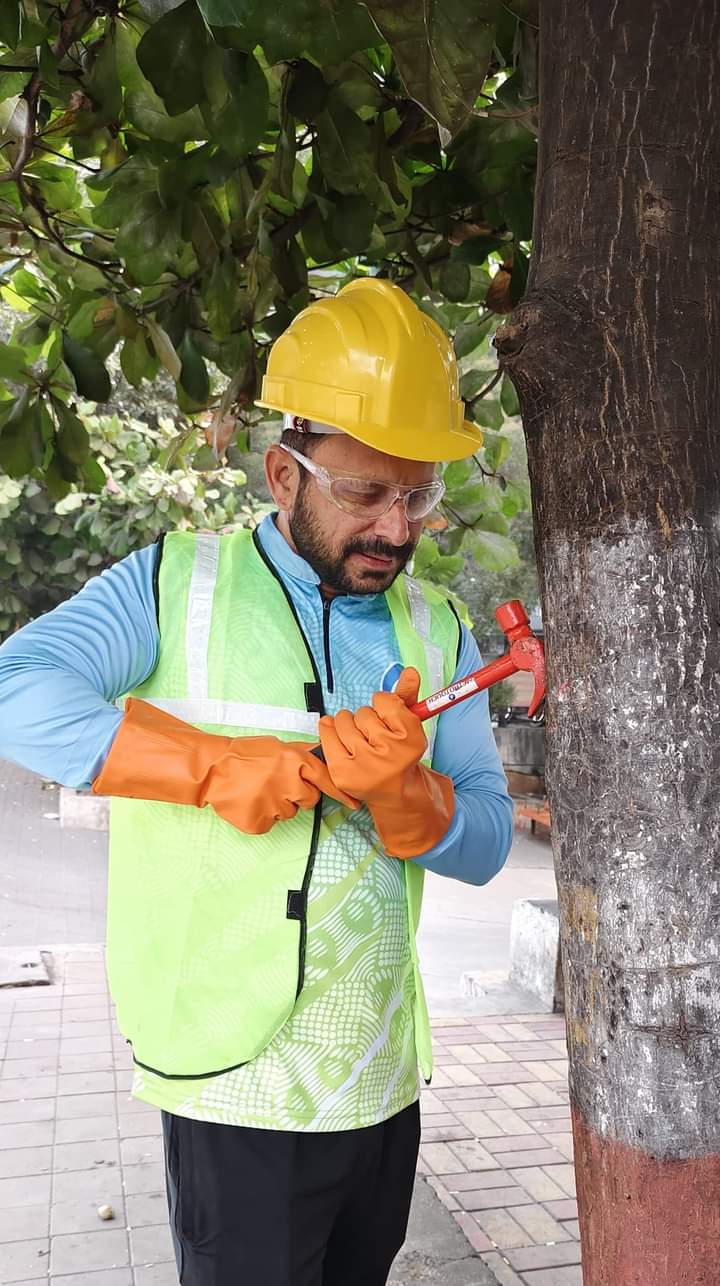
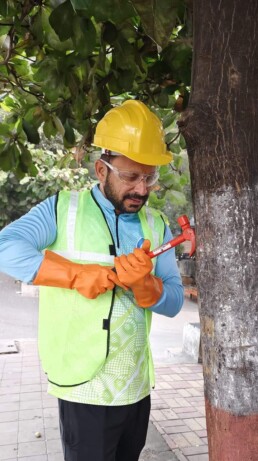
Madhav Patil, an engineer and social worker in his mid-forties, has dedicated the last five years to a unique mission: saving urban trees from defacement. Whenever he spots an advertisement nailed to a tree, he stops his car, uses a special tool to remove the nails, and dons a helmet for safety. "These tools have been my constant companions," he says.
Patil spearheads the 'Nail Free Trees' campaign, an initiative under the Angholichi Goli Non-Governmental Organisation (NGO). Over the past five years, the campaign has successfully removed one lakh nails from trees in cities such as Mumbai, Pune, Pimpri Chinchwad, Thane, and Vasai Virar. Their persistent advocacy has convinced ten municipal corporations to issue notifications under the Maharashtra (Urban Areas) Preservation of Trees Act 1975, aimed at protecting trees and beautifying urban spaces.
The inspiration for the campaign struck Patil during a family vacation in Kolkata. A sapling he had planted recently died due to a lack of water. His eight-year-old daughter's remark that they had "killed the tree" deeply affected him. The next day, he noticed many trees defaced by advertisements and lights, prompting him to take action. "Removing the first nail felt like saving a tree's life. Soon, the effort spread across the city," Patil recalls.
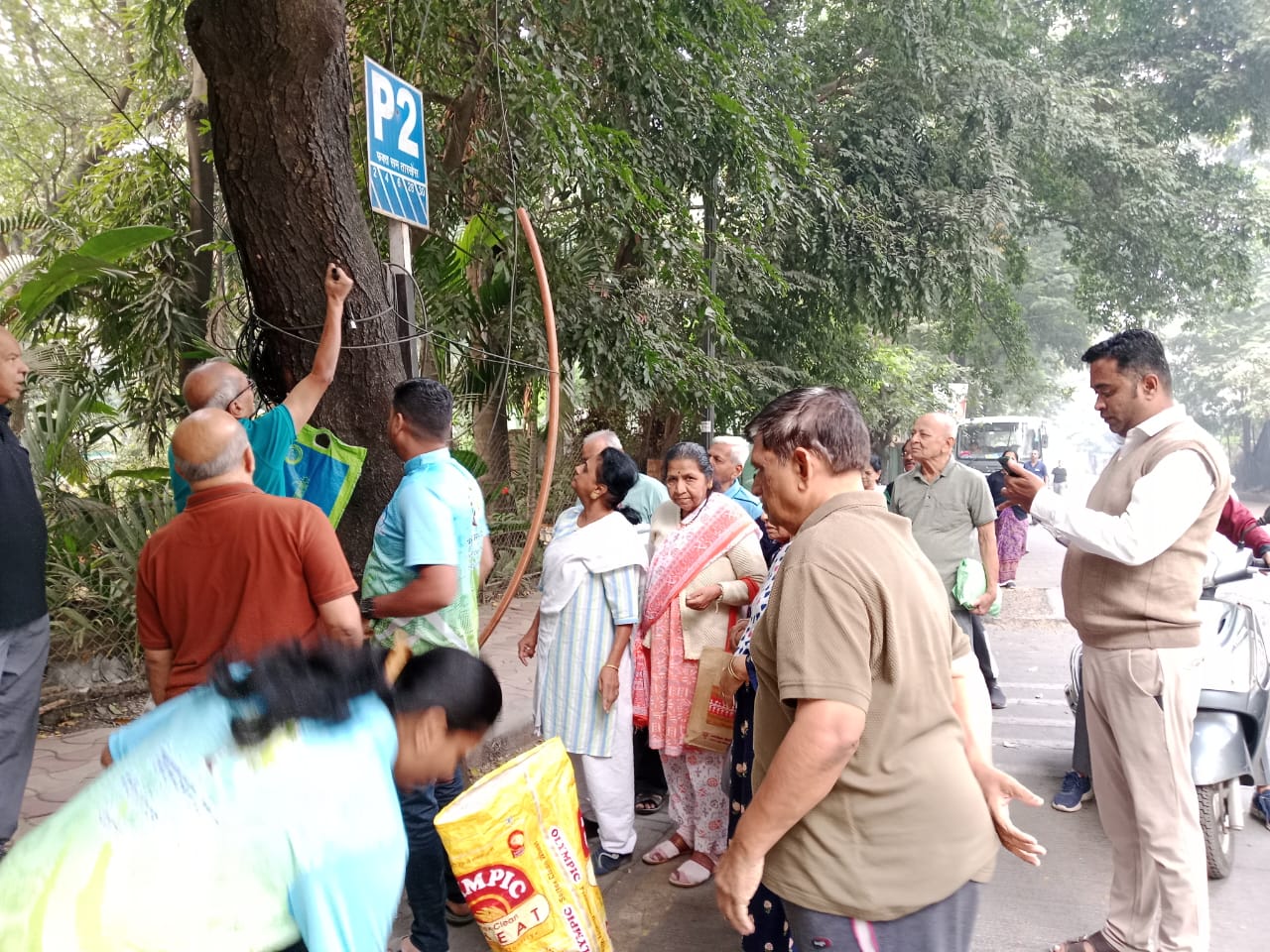
The 'Nail Free Trees' movement has garnered significant support in Maharashtra, with over 500 volunteers and partnerships with 100 NGOs in Pune and Pimpri Chinchwad. Patil's commitment is rooted in a belief in universal values such as sacrifice, community belonging, and sustainability. Since 2015, through Angholichi Goli, he has been raising awareness about climate change and promoting individual actions to combat its effects.
"Universal values unite us. In this globalized era, those who advocate for humanity and sustainability will leave a lasting legacy. The Nail Free Trees campaign is part of a broader effort towards sustainability. Trees are vital to urban life, and when defaced by hoardings and advertisements, their beauty and health suffer. Renowned scientist Jagdish Bose proved that trees are living beings. Damaging them with nails disrupts their life cycle," Patil explains.
The Pune Municipal Corporation (PMC) has responded positively to Patil's campaign. After continuous follow-ups, the corporation issued a notification for the removal of these advertisements and hoardings. Guruswami Tumbhale, a PMC official, states, "According to the Maharashtra (Urban Areas) Preservation of Trees Act 1975, any action harming a tree is a criminal offense. We, along with the Nail Free Trees campaign, have jointly removed nails from trees in the city. This participatory action has raised awareness among residents."
The campaign started modestly but quickly gained momentum, attracting volunteers from across the state. Avinash Patil, the first volunteer and campaign coordinator, notes that they never actively recruited volunteers; people joined on their own accord. "Responses poured in from various cities in Maharashtra. People saw it as their personal mission. This collective effort led to the removal of one lakh nails over five years. Last year, we organized an exhibition at the Balgandharva Gallery in Pune, showcasing these nails," he adds.
Initially, Patil funded the initiative himself until a donation from Cummins India in 2023 boosted their efforts. "Residents in Pune and Pimpri Chinchwad donated ladders, tools, and helmets. It's a low-capital initiative, and Cummins India's support has helped scale our work. We now aim to extend this initiative to small and medium cities across India," Patil concludes.
Through his dedicated efforts, Madhav Patil and the 'Nail Free Trees' campaign exemplify how individual actions can contribute significantly to climate action and the creation of sustainable cities. Their work not only protects trees but also fosters a sense of community and environmental responsibility among urban residents.
Bringing Government Schemes to Rural Communities, Empowering Rural Citizens
An initiative guiding rural citizens on social welfare schemes of the government
Rutika Chaugule ( BAJMC Third Year)
Pune : Project-Jagruti, a communication extension project was implemented between September to December 2023. It was an initiative by Vishwakarma
University Centre of Communication for Development ( VUCCD), a centre for training students in development communication and reporting.
The project was aimed to inform and create awareness among villagers about various government welfare schemes through two minute videos. As many as 21 videos were shared with three Gampanchyats in the Pune district. Students got an opportunity to work on real real issues as part of their curriculum.
Access to information is the key in the process of development. Timely information has the potential to impact decision making and empower an individual for desired effect or results. It has been observed through various
studies that villagers are not aware of various programmes and schemes meant for their welfare and development. There are multifold reasons associated for information deficit running from lack of information and nexus of influential persons with government officials. Thus many schemes and facilities ramin far away from the village dellwers. Mobile has played a major role to bridge the digital divide in the past few years. Considering the need of villagers, The department had produced two minute videos for the villagers. These videos carry brief information about schemes and programmes. As a final output these videos have been shared with Gram Panchayat office bearers.
The set of these videos have been distributed to Whats app groups in three Gram Panchayats ( Rural local
body).The third students of Bachelor of Journalism and Mass Communication ( BAJMC)with faculty mentors and Gram Panchayat office bearers selected schemes and prepared scripts and shot the videos. This community engagement project created an opportunity for students to identify real issues, develop a communication plan for social change, organise a development campaign and its execution and networking.
VU- Saksham to resolute commitment towards rural financial literacy
Aarya Deshpande (BAJMC Second Year)
Pune : The women empowerment centre - VU Saksham, of Vishwakarma University organised a financial literacy campaign jointly with National Security and Exchange Board of India ( SEBI) to aware rural women in Donaje and Mordari regarding proliferation of ponzi schemes and investment in government driven various welfare schemes for better and healthy future on 18th January 2024
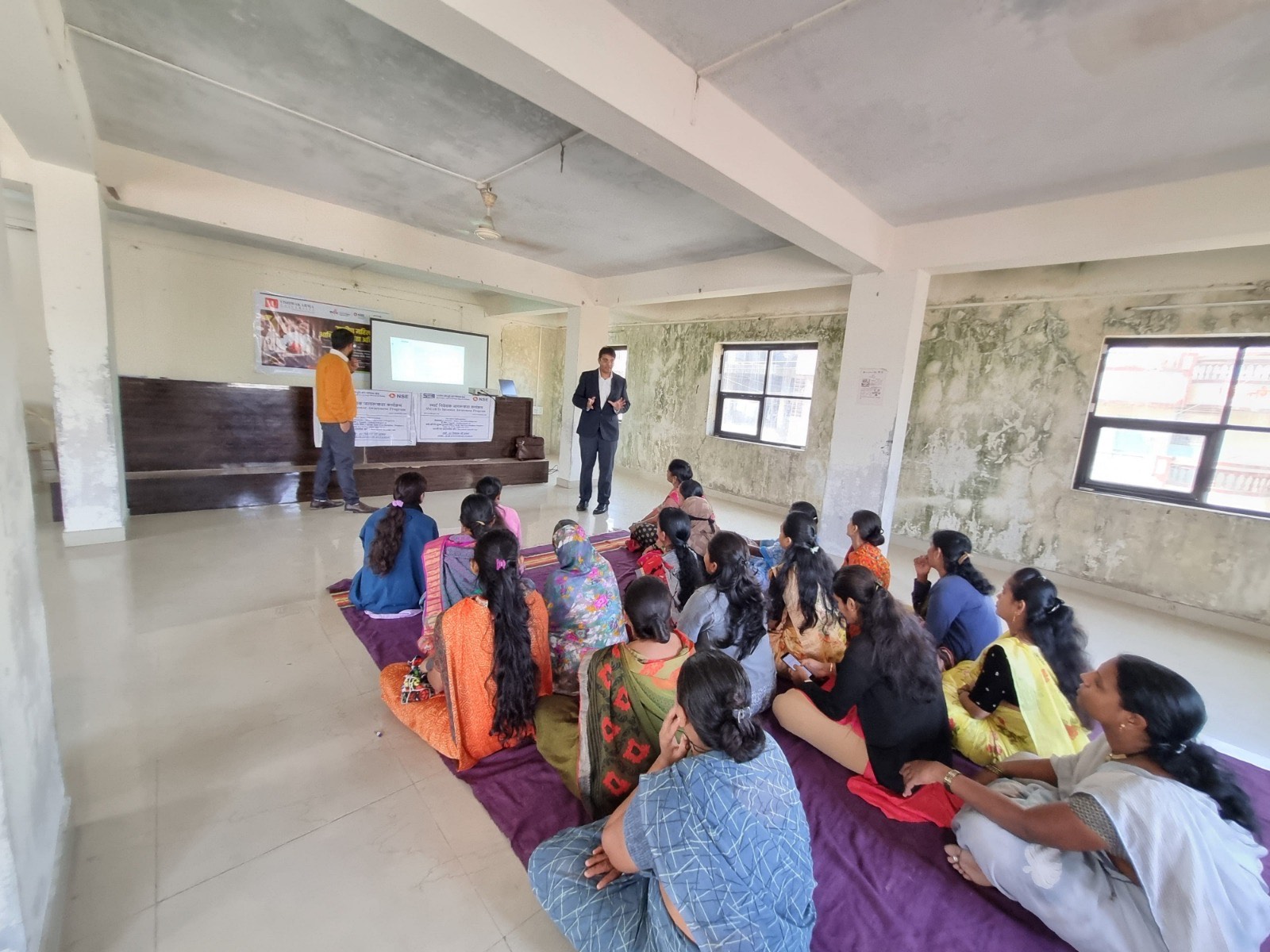
Rural India has always been vulnerable to ponzi schemes and many high promising financial schemes Many villagers have lost their life fortunes by investing in these kinds of schemes. However, women play a vital role in family savings, and awareness among women regarding these schemes and new avenues of investment may cultivate desired results. Considering these thoughts, the empowerment centre has taken several initiatives. It identified villages and implemented the first phase of literacy programmes in Donaje and Mordari. The identified villages were located in hilly ranges of Sinhagad Fort located in east of Pune. As many as 60 women from both villages participated in the programme.
One of the participants in the campaign, Poonam Chavan said, “We save and keep money at home despite the availability of banks. Presence of the banking system is not new to us. But an appropriate investment is necessary for a sustainable future. The financial literacy programme helped us in the form of different avenues of investment than traditional fixed deposits. Now, we can save money in specific government schemes.
The SEBI extension officer Rohit Warman said, “The prime objective of the organisation is financial literacy and to secure them from ponzi schemes. We have focused on women, college students for financial literacy. We got a good response from village women today.
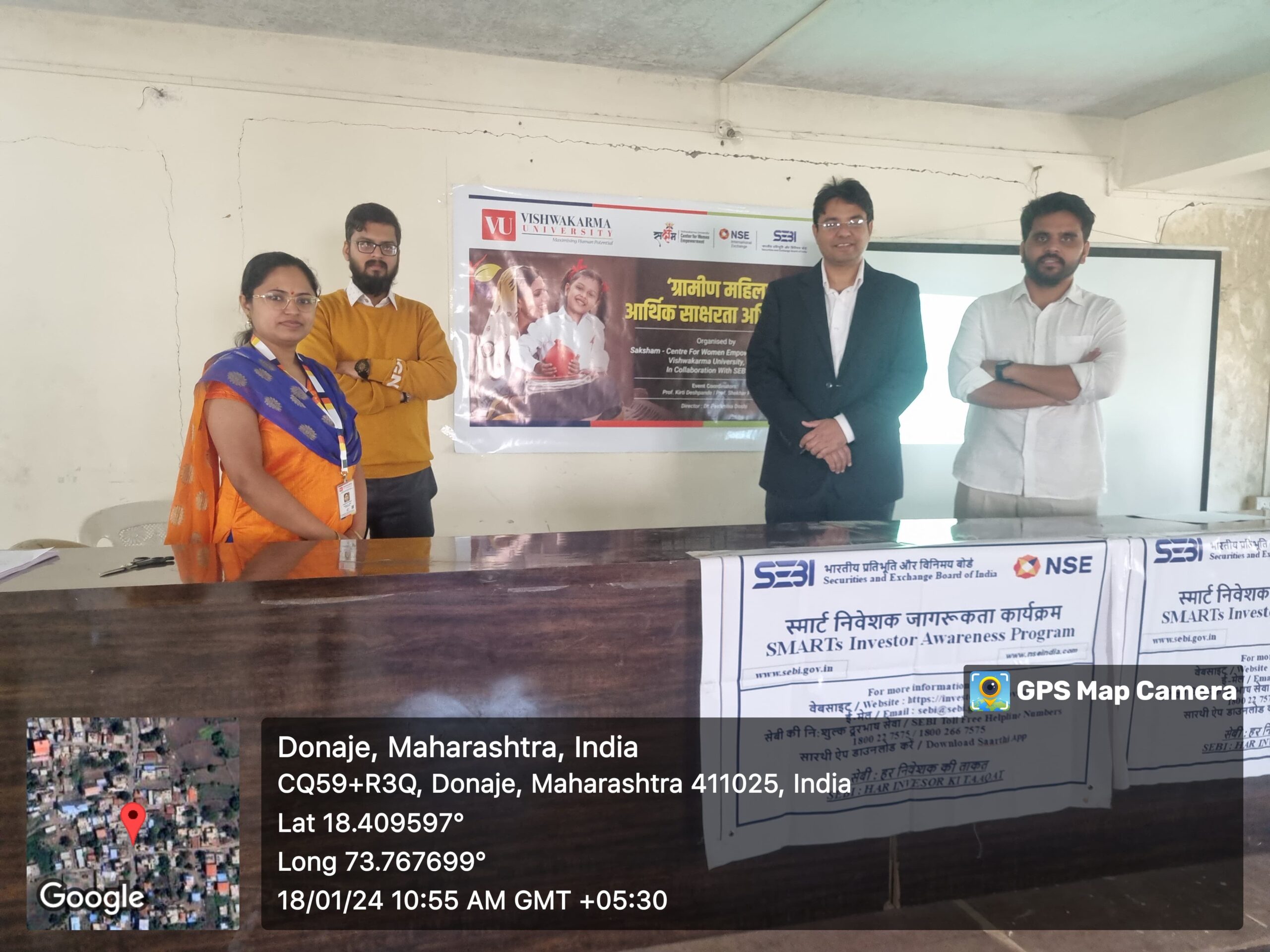
The programme coordinator Prof. Shekhar Paigude said, “ Financial literacy is a major concern in rural Maharashtra. Recent Ponzi schemes and high promises through equity markets have exploited the rural masses. Women play a vital role in the family. Thus empowering women leads towards family empowerment. We got a promising response in the first phase and we will have the same rigour for the next phase.”
By : Aarya Deshpande
(BAJMC Second Year)
What about half of the population?
Public discussion on women’s participation in the world’s biggest electoral
Kapish Shilimkar ( BAJMC Second Year)
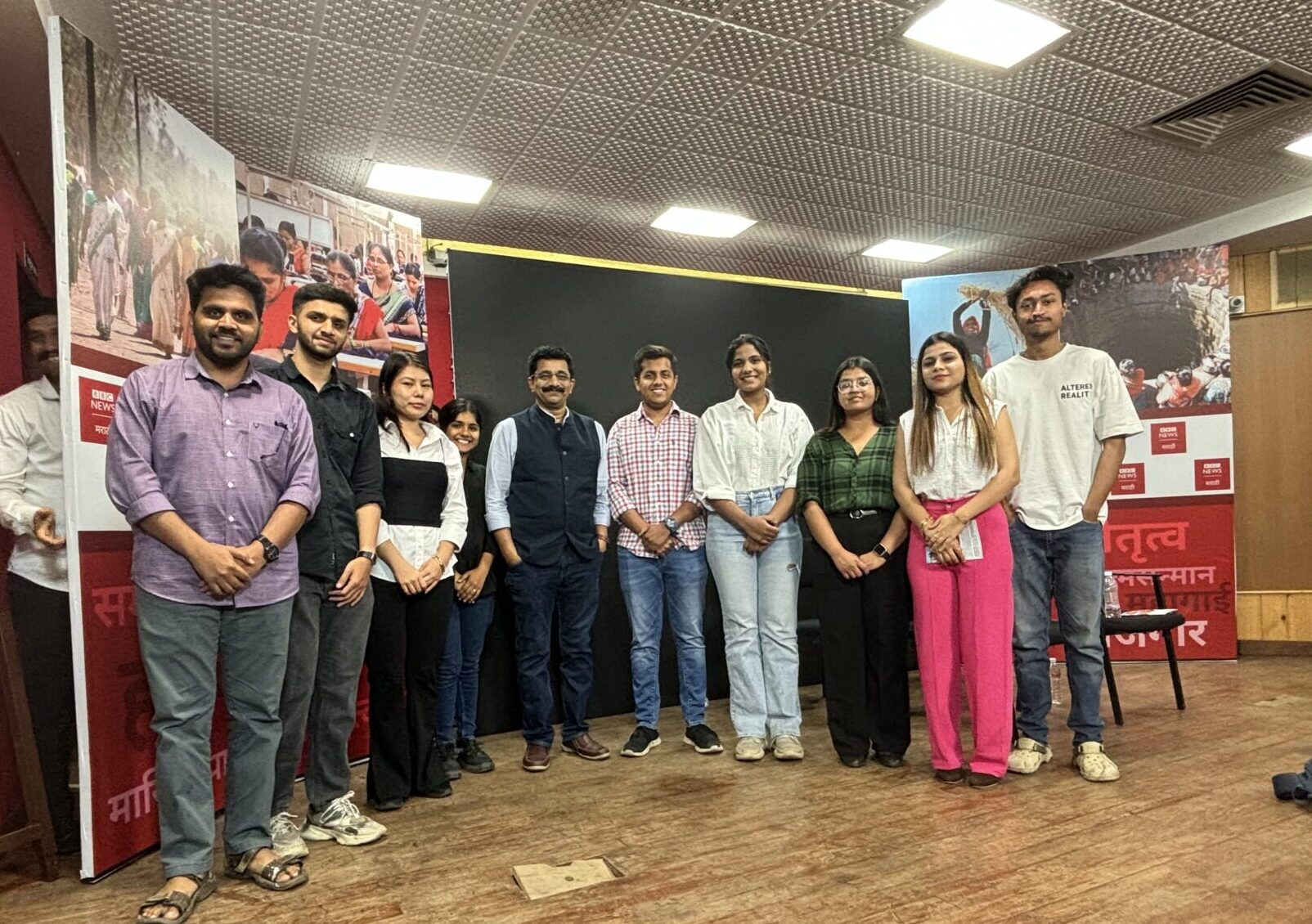
Pune : Women in India, who constitute nearly half of the electorate, have emerged as a formidable force in shaping political outcomes. However, this force has always been ignored in the male dominant political space. On this background the BBC Marathi, a part of BBC world service has organised one day public discussion on ‘Her Manifesto’ to discuss the contemporary socio-cultural and political dynamics of women in India on 1st May 2024 here at Pune Patrakar Bhavan ( Office of Union of Pune Working Journalists Association).
One of the significant topics covered is women's safety, a perennial issue in India, which remains a top priority for many voters. The programme sheds light on the implementation and efficacy of safety measures introduced by the current government and scrutinizes the promises made by the opposition. Personal stories of women from rural and urban areas who have been affected by safety concerns bring a human face to the statistics, emphasizing the urgency of the matter.
Health care is another critical area where women's needs are prominently discussed. The BBC Marathi programme explored how maternal health services, accessibility to quality healthcare, and reproductive rights are becoming important electoral issues.
Economic empowerment of women is also a major focus. However, it also critically analyzes the gender wage gap, the underrepresentation of women in formal sectors, and the challenges women face in balancing work and family responsibilities. The programme featured success stories of women entrepreneurs and self-help groups that have made significant strides, underscoring the potential of economic independence to transform women's lives.
Education for girls is another pivotal issue discussed in the programme. The BBC Marathi team traveled to various regions to report on the status of girl child education, the implementation of schemes like Beti Bachao Beti Padhao, and the barriers that still persist in ensuring every girl gets an education. The stories of girls who have overcome immense odds to pursue their studies are both inspiring and indicative of the progress that still needs to be made.
Political representation of women forms a crucial part of the discussion. Despite various efforts, women are still significantly underrepresented in Indian politics. The programme analyzed the impact of women's reservation in local bodies and the need for similar measures in the state and national legislatures. Interviews with female politicians, activists, and voters provide a comprehensive view of the challenges and opportunities in enhancing women's political participation.
The BBC Marathi programme also emphasizes the importance of intersectionality, recognizing that women from different backgrounds—whether based on caste, class, or region—face unique challenges. This nuanced approach ensures that the discussions are inclusive and reflect the diverse experiences of women across India.
Kapish Shilimkar ( BAJMC Second Year)