
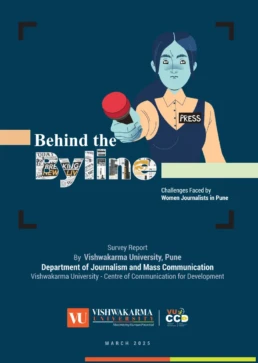
Behind the Byline Survey Report by Vishwarma University Pune March 2025
The survey conducted by the Journalism and Mass Communication Department at Vishwakarma University aimed to examine the challenges faced by women journalists in Pune across various media sectors, including print, digital, radio, and other platforms. The findings provide valuable insights into their demographic and professional backgrounds, high lighting key issues related to gender bias, career advancement, work-life balance, safety and mental health.
Key Findings
Demographic and Educational Background
A majority of respondents (56.3%) belonged to the 35-44 years age group, indicating representation from mid-ca-reer professionals, while younger age groups were under-represented.
Women journalists in Pune are highly educated, with 50% holding master's degrees and 26.6% possessing post-graduate qualifications, indicating the importance of ad-vanced education for career progression.
Professional Experience and Roles
A significant proportion (46.9%) of respondents had over 15 years of experience, reflecting extensive expertise and industry engagement.
The most common roles were reporters (17.2%), followed by freelancers (9.4%) and editorial positions, highlighting the diversity of professional responsibilities.
Media Sector Representation
Print media remains dominant, with 75% of respondents working in this sector, while digital media accounted for 21.9%, signaling the growing digitalization of the journal-ism industry.
Radio and other media platforms had a minimal repre sentation, indicating their niche presence.
Gender Bias and Career Advancement:
50% of respondents reported experiencing gender bias in the workplace, while 35.9% indicated they had not faced such bias. The remaining expressed uncertainty, suggesting the complexities of identifying workplace. discrimination.
Workplace Perception and Pay Equity
31.3% of respondents rarely felt their work was not tak en seriously compared to male colleagues, while 15.6% frequently experienced this issue, suggesting diverse workplace experiences.
Unequal pay remains a concern, with 43.8% of respon dents reporting pay disparities, while 42.2% indicated no such experience.
Work-Life Balance and Mental Health
Balancing work and personal responsibilities emerged as a significant challenge, with 40.6% rating it as ex-tremely difficult and 79.7% experiencing stress or burn-out.
Feelings of guilt about neglecting personal responsibili ties were prevalent among 51.6% of respondents.
The overall mental health score averaged at 3.28 out of 5, with respondents citing workload, safety concerns, and organizational support as key stressors.
Safety Concerns
A substantial majority (75%) believed that women jour-nalists face greater safety risks compared to male col-leagues.
Organizational Support and Policy Recommendations
62.5% of respondents believed they had equal access to resources such as training and mentoring, however, 21.9% disagreed, indicating potential disparities in pro-fessional development opportunities. 82.8% of respondents supported the implementation of gender-sensitive policies to better support women jour-nalists.
Barriers to Success
Key barriers identified included gender bias in promo-tions and assignments, work-life balance struggles, safety concerns, lack of mentorship, and inadequate HR
policies. Respondents called for flexible work arrangements, gen-der-neutral pay policies, and stronger mechanisms to combat workplace harassment.
Suggested Solutions
Women journalists emphasized the need for mentorship programs, flexible work options, improved safety proto-cols, and more inclusive newsroom policies.
There was a strong call for building a supportive commu-nity among women journalists to share experiences and advocate for change.
Perceptions of Research Practices
Some respondents highlighted concerns regarding the lack of follow-up actions from similar surveys, urging greater transparency and actionable outcomes.
To Read More download Report
Behind the Byline_Survey Report by Vishwarma University Pune_March 2025

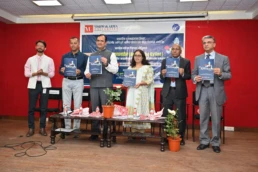
Vishwakarma University Releases Report on Challenges Faced by Women Journalists in Pune
Pune: Vishwakarma University has released a survey report, Behind the Byline: Challenges Faced by Women Journalists in Pune City, highlighting key issues such as gender bias, work-life balance, and career advancement struggles. The report was unveiled on March 7, ahead of International Women’s Day, at the Pune Union of Working Journalists (PUWJ) office. The report was released by President of Vishwakarma University Bharat Agarwal, President of Pune Union of Working Journalists (PUWJ) Suneet Bhave, and PUWJ Secretary Meenakshi Gurav.
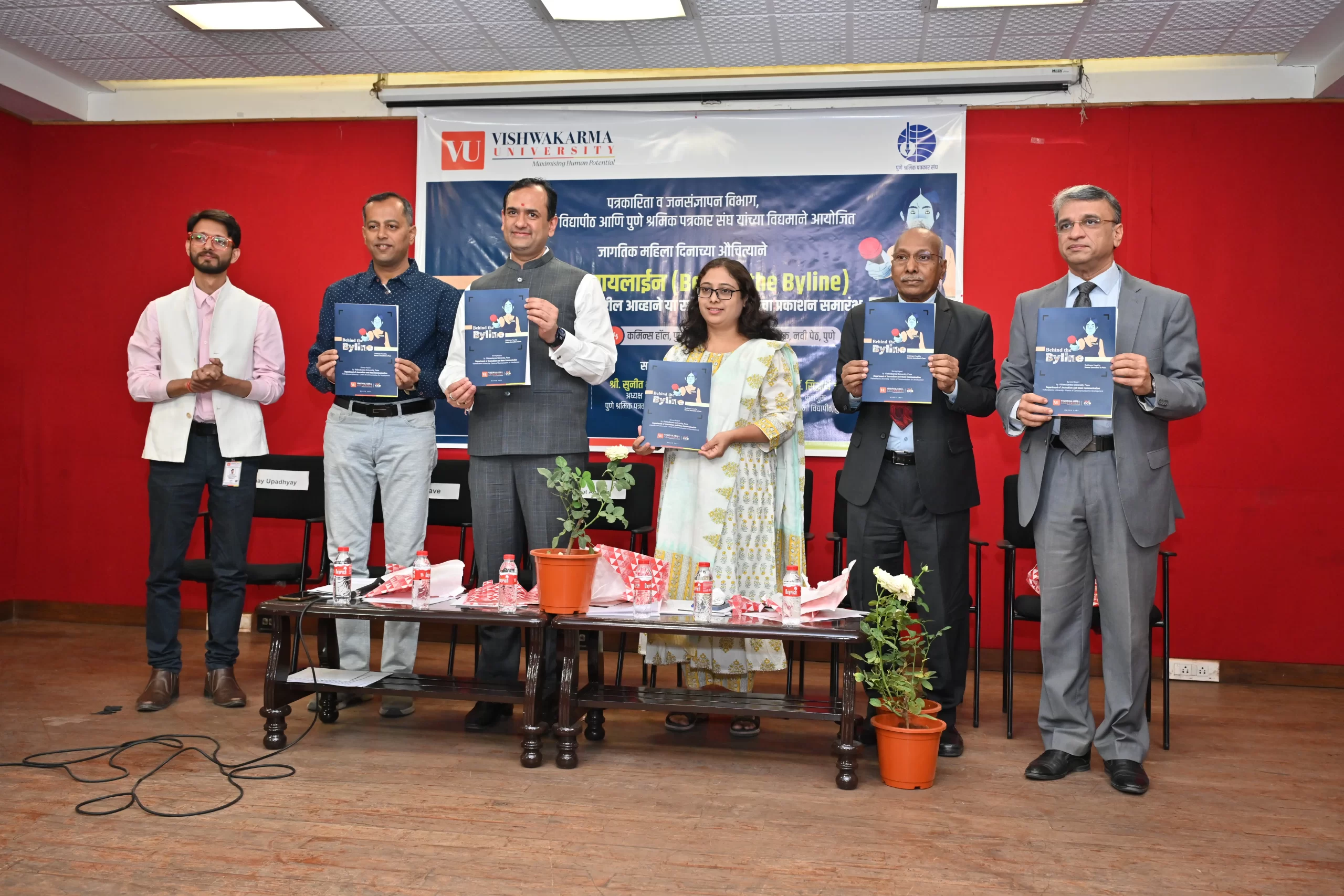
While releasing the report, President of Vishwakarma University, Bharat Agarwal said, “ Vishwakarma University will take the initiative for the empowerment of women journalists. We will work jointly with Pune Union of Working Journalists for evolving technology and professional training.”
The President of PUWJ Suneet Bhave said, “ The President of PUWJ Suneet Bhave said, “Consistency in the field of journalism ensures that there are no obstacles to reaching higher positions. Today, women journalists are working in senior positions across various media organizations.
General Secretary Meenakshi Gurav shared her experiences. She said, "Women journalists should remain aware of their rights."
Vishwakarma University's Vice-Chancellor, Prof. Dr. Siddharth Jabade, said, "The university will work on the recommendations from this survey report."
The survey covered as many as 64 women journalists working across print, digital, and radio media. It found that 50% of respondents experienced gender bias at the workplace, while 36% did not. The remaining participants were uncertain, indicating the complex nature of workplace discrimination.
Balancing professional and personal responsibilities was reported as a significant challenge by 41% of the journalists surveyed. Additionally, 80% admitted to experiencing stress and burnout.
The report also highlighted safety concerns, with 75% of respondents believing that women journalists face higher risks than their male counterparts. Career advancement barriers included gender bias in promotions, lack of mentorship, inadequate HR policies, and work-life balance struggles.
Women journalists in the survey called for gender-neutral pay policies, flexible work arrangements, stronger anti-harassment mechanisms, mentorship programs, and improved safety protocols. The report emphasized the need for more inclusive newsroom policies and the creation of a supportive community to advocate for change.
The Vice President Prof. Dr. Vasudeo Gade was also present at the event.
Behind the Byline_Survey Report by Vishwarma University Pune_March 2025