
Meet Archana Pawar, the woman who never stops chasing her dreams
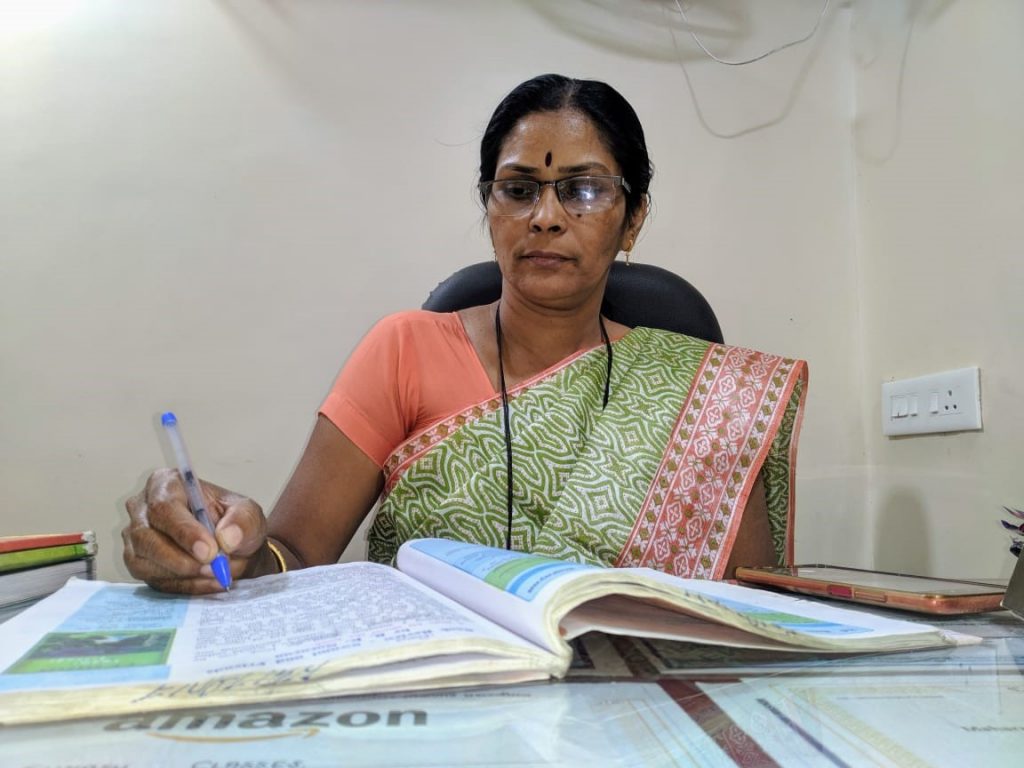
When the going gets tough, the tough get going. Kolhapur-born Archana Pawar epitomises this saying.
Born in a rural family, she faced hurdles at several stages of her life but through her determination, she was always able to overcome them.
Pawar, who once had to struggle to continue her education, now runs a coaching and computer institute for children in Pune.
During the ongoing Covid-19 pandemic, she has been teaching students from the 9th and 10th standards for free. She has alsoensured timely payment of salaries to her employees.
Her empowerment storyhas not materialised overnight, though. It is the culmination of years of hard work, dedication and never-say-die spirit.
Pawar grew up in Kade village of Kolhapur. After completing the 10th standard in 1988, she faced the first major hurdle of her career. She wanted to continue studying but her parents had begun to find a match for her. The parents also worried about her safety as she had to travel to another village for secondary education.
With her uncle and brother supporting her decision, she eventually got the nod from her parents. There was a condition, though—she would have to give the priority to household chores.
Challenging as the following two years were, she managed to finish her secondary education. She now wanted to pursue a bachelor’s degree, but her parents had once again started to put pressure on her to get married.
She then decided that she would marry a man who would not stop her from studying further. Thankfully, her elder brother understood her feelings and found her the desired groom.
Post marriage, Archana relocated to Pune with her husband who was a professor at the Bharati Vidyapeeth University. With backing from her husband, she completed her graduation.
By this time, she had made her mind to be a teacher, and subsequently, earned a Bachelor of Education (B.Ed.) degree. She experienced motherhood in between.
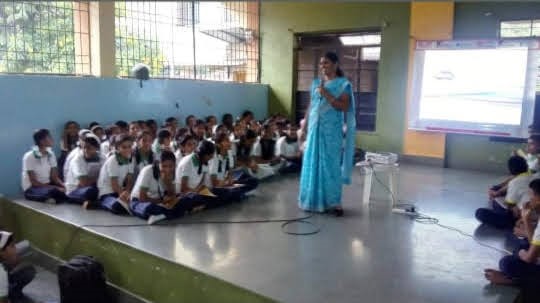
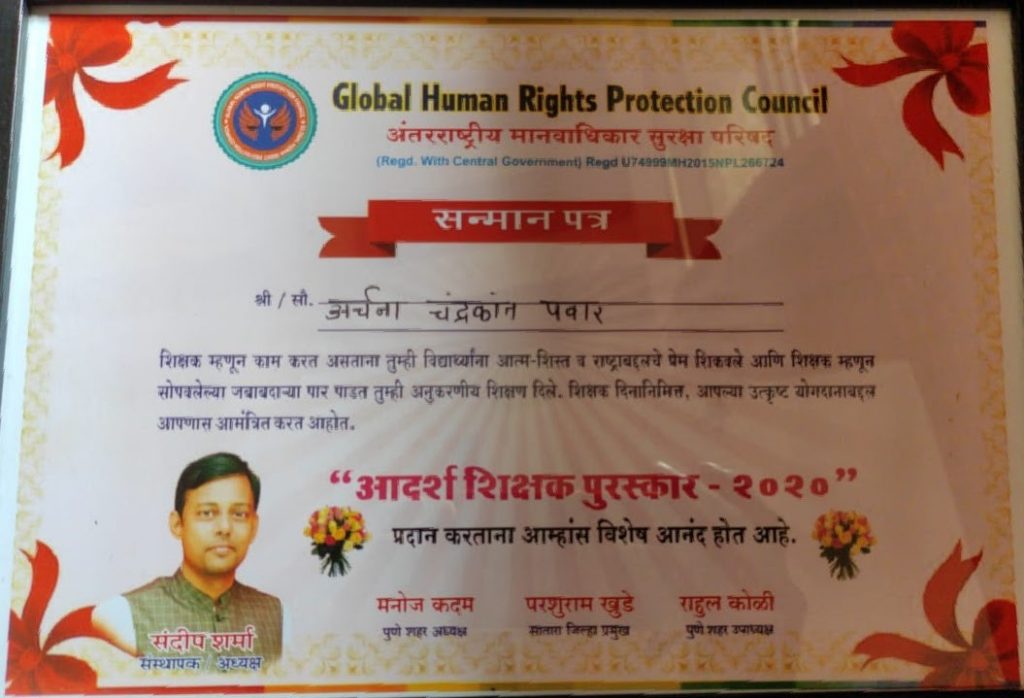
Her dream to become a teacher came true when she got a job at the Samarth Vidyalay, Dankawdi. She served the school with distinction for seven years with several of her students performing well in life. One of her pupils is well-known Marathi actress, Prajakta Mali.
In 2002, she decided to leave the school after not being considered for the post of principal despite fulfilling all the requirements. Following a period of brief struggle, she started giving tuition in her neighbourhood.
Soon, her popularity grew and with that, the number of students visiting her for tuition increased too. By 2008, she started hiring other teachers to work under her.
Later, to keep up with the demand of time, she did a computer certificate course before applying for the license to start computer classes in her institute. As it had happened in the past, she was again able to achieve her goal.
Kiran Yadav
BA Journalism & Mass Communication third Year (6th semester)
Vishwakarma University Centre of Communication for Development, Pune

Empowerment Story Competition organised in December 2020-Top 10 Stories
Three Idiots and a miracle
By Kunal Bodawade
2020 was a crucial year and many lives took a drastic turn. All because of an unforeseen pandemic that no one was ready for. Even the nations that claimed themselves a superpower, failed to safeguard the life of their citizens. India was no exception. Millions of helpless people were at the mercy of nature and destiny, waiting for a miracle to save them. This is the story of one such miracle.
Fear dwelt in everyone’s heart that if they stepped out, they would probably end up in a hospital and fail to meet their loved ones again. But some fools, that’s what others safely ensconced in the comfort of their homes preferred to call them, took it upon themselves to fight with their bare hands and loads of never say die spirit. To me, they were the real superheroes wearing masks and PPE kits in the form of medical practitioners, law enforcement personnel, and faceless volunteers who stood up like a strong wall against the deadly first wave of adversity and made the country stand on its feet again.
Atharva Pangave, Yash Deshpande, and Hrishikesh Joshi students of Journalism and Mass Communication, Vishwakarma University, are all your boy-next-door types. But their feat is nothing short of an achievement.
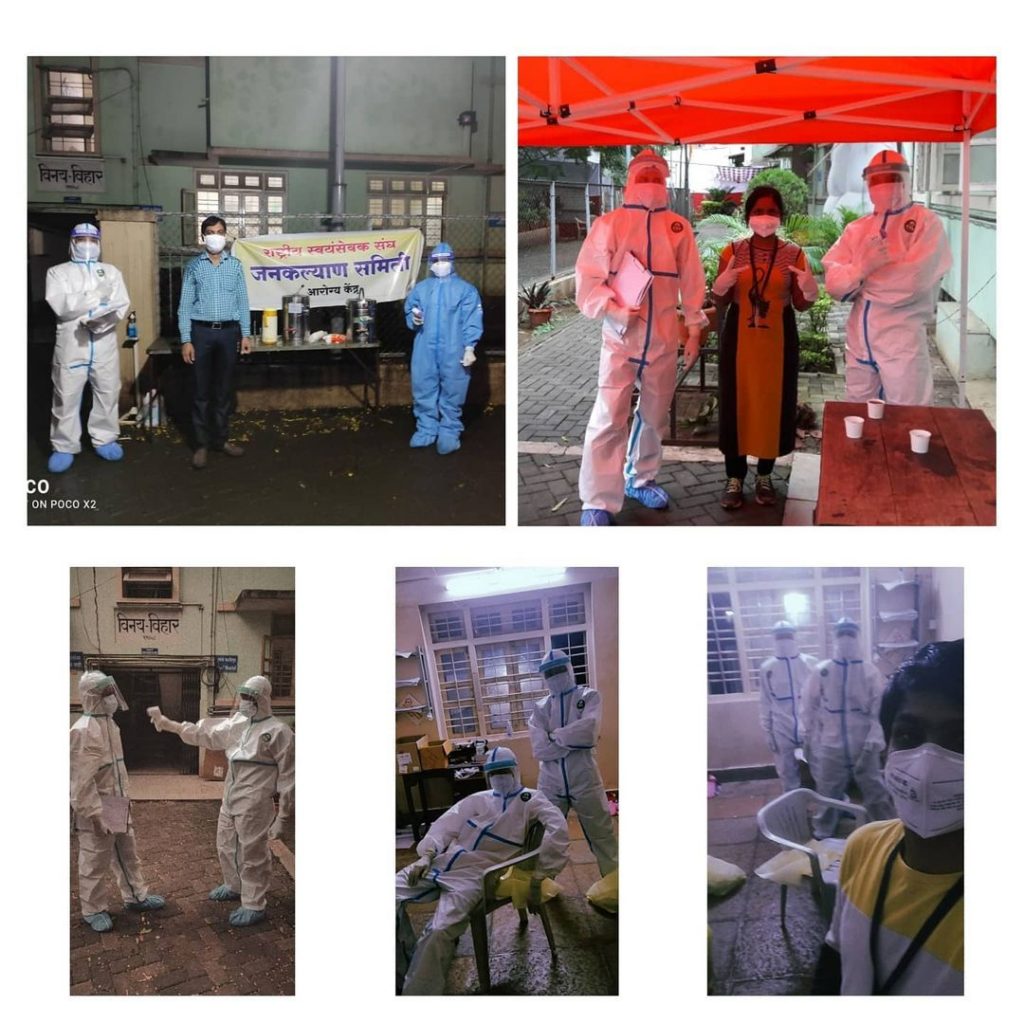
When the opportunity came knocking to serve in a nearby quarantine center, the three of them without so much as batting of an eyelid grabbed it with both their hands. Narrating about the day they stepped into the center, Hrishikesh says, “We felt like we were heading for some big mission and that the whole nation was cheering for us”. “We are training to be media professionals and while working as volunteers we realised what our faculty meant by dealing with raw emotions”, added Atharva, “there were many patients of different age groups and the most difficult task was to calm them down and provide comfort to those who were scared”. Yash said, “Our main job was to take a note of their body temperature and oxygen level and give this report to the doctor on daily basis, and also look after their food, medicines, hygiene, and sanitation.”
“The job in the quarantine center was not an easy part to play wearing the PPE kits throughout the day. One had to be mentally and physically prepared as the quarantine period lasted for 21 days, away from friends and family.” Hrishikesh recalled, “We volunteered for the first 14 days followed by 7 days of compulsory quarantine. We took the covid test on the 6th day of quarantine. Only if the results were negative we could go home but still had to maintain some distance from family members.”
The risks were big. But as I said, only idiots can think of creating miracles. All for a greater cause. To change the destiny of a nation.
Kunal Bodawade
BA Journalism & Mass Communication Second Year (4th semester)
Vishwakarma University Centre of Communication for Development, Pune
Empowerment Story Competition organised in December 2020-Top 10 Stories
कोरोनासोबत डॉक्टरांचा लढा…
By फातिमा इस्माईल इनामदार
सर्वत्र कोरोनाची महामारी पसरली असता आपल्या काही सुपरहिरोंनी खूप चांगले काम केले. तसेच सांगली जिल्ह्यात असणार्या शिराळा तालुक्यातील डॉ. नितीन जाधव व त्यांच्या सहकारी कर्मचार्यांनी खूप मोलाचे काम केले.
आपल्या देशात विविध प्रकारच्या देवांना मानले जाते, त्याच बरोबर डॉक्टरांनाही लोक दुसरा देव म्हणतात. 2020 हे वर्ष पूर्णपणे कठीण परिस्थितींनी भरलेले आहे. तरीही डॉक्टरांनी या महामारीच्या विरोधात चांगल्याच प्रकारे लढा दिला.
डॉ. नितीन जाधव यांचे वय 52 वर्ष. त्यांनी एम. बी. मेडिसिन असे शिक्षण घेतले आहे. तसेच आनंद नावाचे त्यांचे स्वतःचे हॉस्पिटल आहे. त्यांच्या कुटुंबामध्ये दोन मुली व त्यांची पत्नी असे एकूण चार सदस्य आहेत. कोरोनाच्या या महामारीमध्ये त्यांनाही सामान्य लोकांप्रमाणे सुरवातीला भीती वाटली. पण नंतर जागतिक संशोधन, तसेच इतर बाजू समजल्या. त्याचबरोबर त्यांचे शिराळा तालुक्यातील उपजिल्हा रुग्णालयामध्ये सरकारतर्फे पोस्टिंग झाल्याने कोरोना रुग्णांसाठी काम केल्यानंतर माझी भीती निघून गेली, असे डॉ. नितीन जाधव म्हणतात.
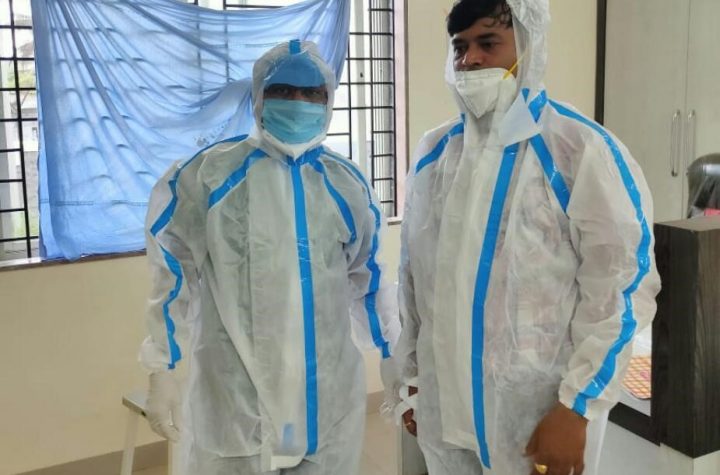
कोरोना रुग्णालयामध्ये काम करण्यासोबत ते त्यांच्या दवाखान्यामध्ये देखील काम करत. दिवसाच्या 24 तासांपैकी 14 तास ते काम करत. कोरोना रुग्णांचा उपचार करत असताना त्यांना पी.पी.ई किट, तसेच लागणारी सर्व औषधे, डॉक्टरांची वेळोवेळी तपासणी, त्याचबरोबर विविध टेस्ट घेण्यासाठी लागणार्या मशीन सरकार वेळोवेळी पाठवत आहे. या सर्व महामारीत सरकारने काही चांगले निर्णय घेतले, असे डॉ. जाधव म्हणतात.
बाधितांचा उपचार करताना मुख्यतः ब्लड टेस्ट करत. त्याचबरोबर ब्लड शुगर, किडणी फंक्शन्स, सीआरपी, एलडीएच , रॅपिड ऍन्टीजन व आर.टी.पी. सी आर या मुख्य प्रमाणावर घेतल्या जाणार्या टेस्ट आहेत. या रुग्णालयात त्यांच्या सोबत काही एम बी बी एस, बी एच इतर स्टाफ हे सर्व सहकारी होते. या रुग्णालयात त्यांनी 800 रुग्णांचा उपचार केला. त्यापैकी 95 ते 96% कोरोनापिडीत रुग्ण बरे झाले.
आपल्याला साधारण पणे सर्दी,खोकला, ताप हे होताच असतो.पण यासोबत अंग दुखणे, दम लागणे, तोंडाची चव जाणे,कोणताही सुगंध ओळखता न येणे, पचन प्रक्रिया बिघडणे ही सर्व लक्षणे आढळल्यास तो कोरोना आहे हे स्पष्ट होते.
सरकारने कोरोनाचा उपचार करण्यास सोपे जावे व रुग्ण लवकर बरा व्हावा म्हणून एक प्रोटोकॉल तयार केला आहे. माईल्ड केसेस, मॉडर्न केसेस व सिरियस केसेस हे विभाग बनवले आहेत. माईल्ड केसेस मध्ये रुग्णांना औषधे, व्हिटॅमिन झिंकच्या गोळ्या दिल्या जात. मॉडर्न केसेस मध्ये रुग्णांना इंजेक्शन दिले जात. तसेच सिरीयर केसेस मध्ये रुग्णाला सलाईन लावणे व इतर उपचार केले जात. यानंतर रुग्णांना होम क्वारंटाइन करुन रुग्णालयामार्फत औषधे पोहोचवण्यात आली.
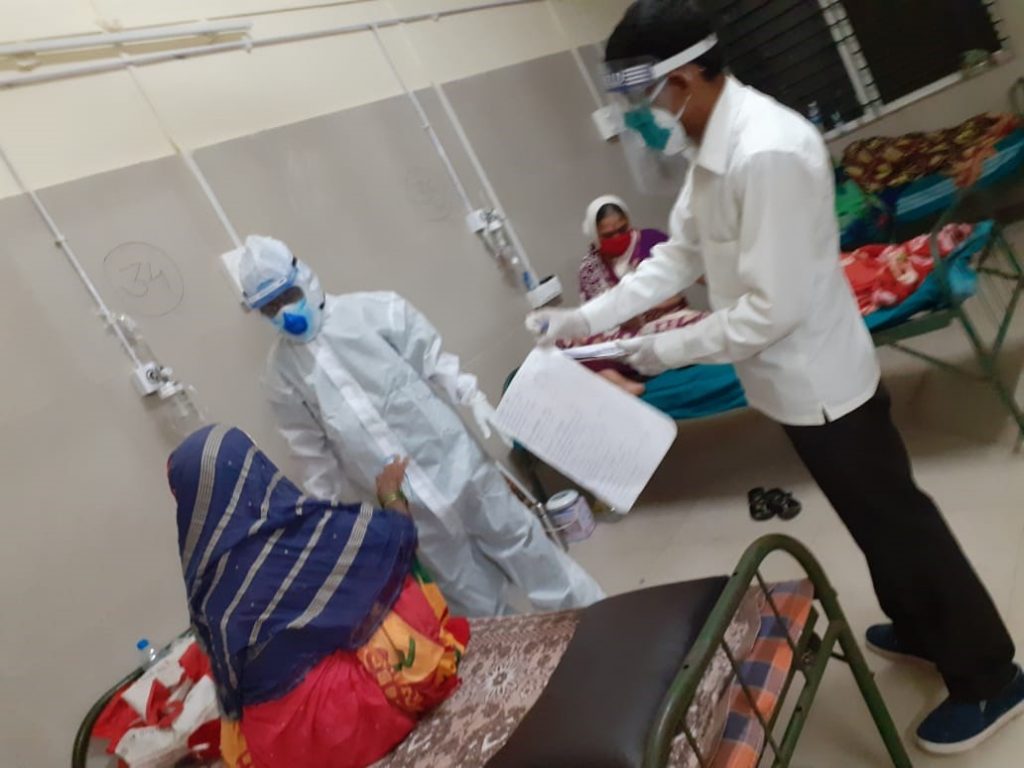
कोरोना होऊन गेल्यानंतर त्या रुग्णाला पुन्हा कोरोना होण्याची शक्यता खूप क्षुल्लक प्रमाणावर असते. सहसा कोरोना पुन्हा होत नाही. अलिकडे कोरोना रुग्णांचे प्रमाण कमी झाले आहे. सध्या कोरोना वाढण्याची संभावना खूप कमी आहे असे डॉ. जाधव यांचे म्हणने आहे.
कोरोना वाढू नये म्हणून लोकांनी शारीरिक अंतर पाळणे, मास्क व्यवस्थित लावणे, गर्दी न करणे, सॅनिटायझरचा वापर करणे असे काही स्वतःहून नियम पाळायला हवेत, असे डॉ. जाधव म्हणतात. लोक काही पथ्य पाळत नाहीत, खोकताना, शिंकताना काळजी घेत नाहीत, याची डॉ. नितीन जाधव यांना खंत वाटते.
हे सामाजिक कार्य करून, या कोरोना रूग्णांना बरे करून मोठ्या प्रमाणावर मनाची शांती लाभली. ‘जनसेवा हीच ईश्वरसेवा’, असे डॉ. नितीन जाधव मानतात.
No of words- 451
Fatima Inamdar
BA Journalism & Mass Communication Second Year (4th semester)
Vishwakarma University Centre of Communication for Development, Pune
A Documentary Film Maker’s Odyssey: A Unique Commemorative Calendar
by Dr. Kiran Thakur
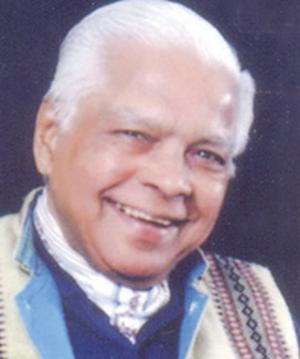
I was saddened by the black and white images of Lal Bahadur Shastri’s last living picture after his death on January 11, 1966. Millions of Indian newspaper readers saw the pictures later. Like these readers, I too did not know the name of the photographer then. Years later, I came to know the name of Prem Vaidya(February 26, 1927 – July 10, 2014) from his son Abhay who was a student of the Department of Communication and Journalism in Pune. I was his teacher in the department and became his colleague as a newspaper journalist. Later, I frequented his house in Navi Peth to see his parents, Pramila and Prem while Abhay worked for newspapers like The Times of India, DNA, and recently, Hindustan Times.
Like Abhay, his father was also a man of few words. He had settled in Pune after retirement from the central government’s Films Division where he had worked as a documentary filmmaker and captured so many great events in post-independence Indian history. Their cosy little apartment was a storehouse of a rich treasure of documentaries, photographs, clippings, and books. Abhay and his mother obviously knew the value of the treasure. After the death of the parents, Abhay, his journalist wife Geeta Nair, and sisters Meghana Sane and Anuradhaa Shastri, along with their husbands Vivek and Veer Bhaskar, set up the Pramila & Prem Vaidya Archive.
The family has occasionally organised some activities to let the people have a peek into the treasure. Abhay, now Associate Director at the policy research think tank, Pune International Centre, and has brought out something that is path-breaking.
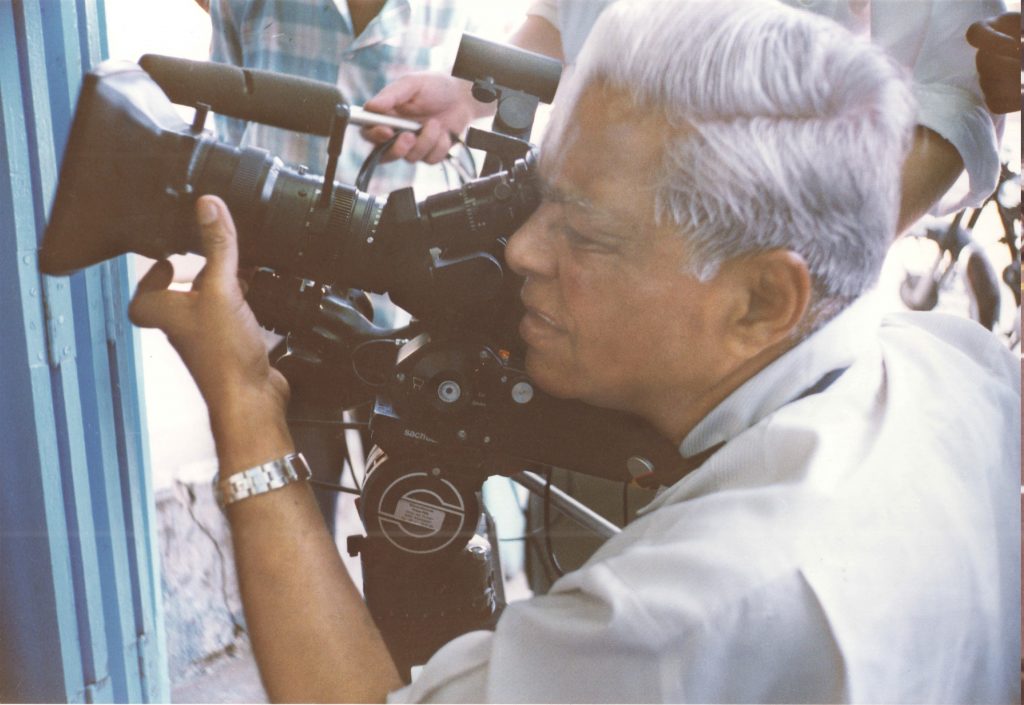
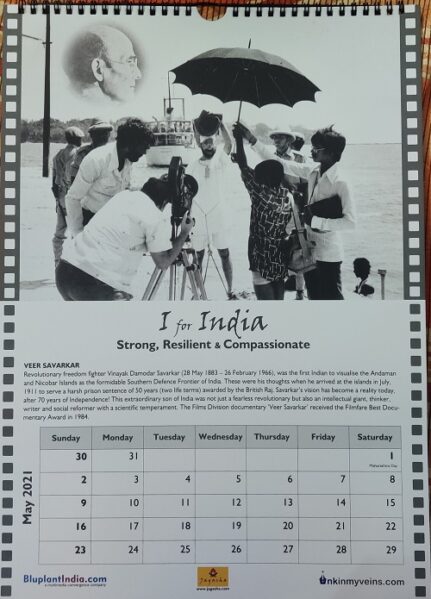
This 10th January, we were delighted to see that historic photograph of Lal Bahadur Shastri, in an innovative format conceptualized by Abhay: It is precious memorabilia, a commemorative calendar for the year 2021, with 20 black and white photographs of great personalities and historic events of the 19th century. His concept centers around the theme ‘I for India: Strong, Resilient and Compassionate.’
And what a selection of the events documented by Prem Vaidya!
This collection includes the birth of a new nation called Bangladesh in 1971 and Bangabandhu Sheikh Mujibur Rehman’s speech in Dacca (now Dakha) after the surrender of Pakistan. Prem Vaidya had filmed the historic 1971 war for the Government of India, just as he had covered the 1965 war in the western sector.
The collection of rare, historic photographs in the commemorative calendar, includes Bharat Ratnas and Prime Ministers, Pandit Jawaharlal Nehru, Indira Gandhi, Lal bahadur Shastri, and great newsmakers of Prem’s time, JRD Tata, Veer Savarkar, PuLaDeshpande, Sir Edmund Hillary, Yuri Gagarin, Acharya Vinoba Bhave, Sir M Vishveswaraya and Jaya Prakash Narayan.
Prem was a member of Prime Minister Shastri’s delegation to Tashkent for the India-Pakistan Peace Talks and the historic photograph was taken on the night of January 10, 1966 when Shastriji was taking his after dinner paces inside his dacha (villa).
A photojournalist or a documentary filmmaker generally tries to avoid getting photographed. Prem Vaidya, who was in this profession for over 31 years, must have had scores of occasions to get into the camera frames. But at times he was also a part of history.
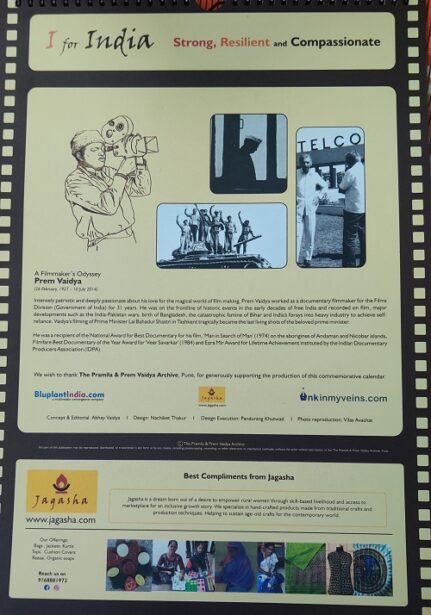
Among them was this one, that Prem happily allowed himself to be clicked. Abhay was justified to include it in this commemorative calendar. In this photograph, Prem is seen wearing a belt of live machine-gun cartridges from a captured Pakistani tank. The victorious Indian soldiers garlanded him thus because, as they said, “they had nothing else to offer at that point of time!” That was the epic tank battle of Phillora in the Sialkot sector. It was the second biggest tank battle since World War II. More than 60 Pakistani tanks were destroyed by the Indian forces. Here he was to record that stunning victory of the Indian armed forces.
My compliments to Abhay’s team who contributed to the novel memorabilia. Designer Prof Dr Nachiket Thakur and Pandurang Khutwad (Design Execution) and Vilas Avachat (Photo reproduction).
The calendar also features Jagasha (www.jagasha.com ), a startup enterprise that seeks to empower rural women through the sale of their hand-crafted products; www.BluplantIndia.com , a multimedia convergence startup and www.Inkinmyveins.com , a content development startup.
The calendar is available in two formats: An A3 size collector’s edition on textured matt paper, priced at Rs 300/- and a foldable art paper edition priced at Rs. 160/-. Printed by Krishna Printers, Aundh Road, Pune it is available for sale at the stationery superstore, Venus Traders on FC Road and at Express Book Service, Pune’s oldest bookshop on East Street, Camp.
Abhay and his family members are keen to make this inspiring calendar available to the young people of India and are taking efforts to reach out to students in higher secondary classes and junior colleges. They feel that this calendar with inspiring images from Indian history should be there in their classrooms and the library as they learn history from the textbooks.
The commemorative calendar will be a unique gift to friends and relatives interested in memorabilia that can adorn walls at homes, classrooms, and offices. It is available at the retail outlets mentioned above, or you may write directly to Abhay at abhayvaidya.ht@gmail.com
Dr. Kiran Thakur
Professor Emeritus
Director, Vishwakarma University Centre of Communication for Development
drkiranthakur@gmail.com

Empowerment Story Competition organised in December 2020- Second Award Winning Story
The Life of ASHA Who Spread 'Hope' In Rural Areas During Lockdown
By Pratiksha Jadhav
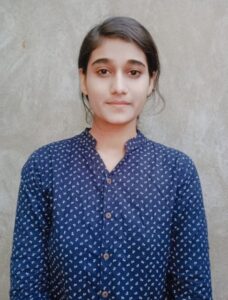
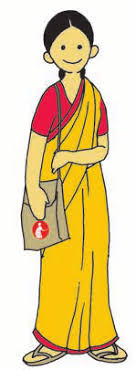
“During the lockdown, my six-year-old son used to stay at home with my mother-in-law when I went on duty. For the first two or three days, when I used to come home in the evening, he would come running to me cheerfully, but I would warn him to stay away. This moment can be tearful for every mother”, said an ASHA (Accredited Social Health Activist) worker.
Usha Shinde works at Murshatpur village in Ahmednagar district as an ASHA since 2010. She began waking up at 4.30 a.m. instead of 7 a.m. to finish housework and cooking so that she could visit people and complete her duty at the scheduled time. The Covid 19 survey began in April. Usha and her colleagues visited about 40 homes every day for survey and checkup.
Helping people especially children, women, and senior citizens of rural areas in seeking health services, collecting health-related data, vaccinating babies were my normal tasks. After covid, many other tasks were added and I worked for 7-8 hours instead of 4 hours.”
ASHA workers played an important role in rural areas. They are among the frontline warriors.
“Wasn’t it risky to come in contact with many people? But we completed each task without complaining. We haven’t received any personal protection equipment excluding masks and bottle of sanitizer”, said Usha.
She and her colleagues use scarves, homemade masks, or stole to cover their faces.They had to pay more attention to pregnant women, senior citizens, people who were under medical conditions.
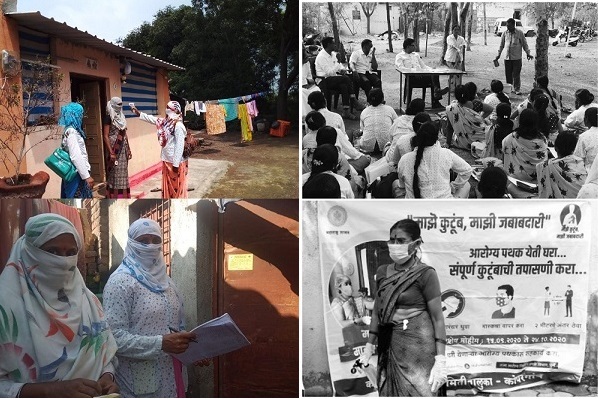
“I was doing my job safely and I was happy with it but the only question I had, will my family suffer because of me? My family always supported me, but because of Corona’s fear, they thought I shouldn’t go to work, but if I had quit my job, our financial situation would have been worse. My husband is a farmer. But not much is produced from agriculture”.
Usha earns near about 7000 rupees per month but it is not enough as the house expenses are high.
“I have been working for people for 10 years but during the covid-19 my colleagues and I had to deal with a lot of people who were not cooperating with us”, said Usha. Some people would not come out of their house just to avoid ASHAs and their instructions. People would have thought, these women visit around 50 houses every day, so coming in contact with these women can cause corona, and this assumption made people react impertinently.
In any case, we have always stood and will stand for the people in rural areas. I used to think my family would be in trouble because of me. Today my family is proud that I worked during the Pandemic, helped people, and taken part in the fight against corona as a warrior.
Pratiksha Jadhav
BA Journalism & Mass Communication, TYBA Vishwakarma University Centre of Communication for Development, Pune
Empowerment Story Competition organised in December 2020 - First Award Winning Story
Award Winning Story: First Award
The hands that rocked the cradle fought Covid-19 with grit
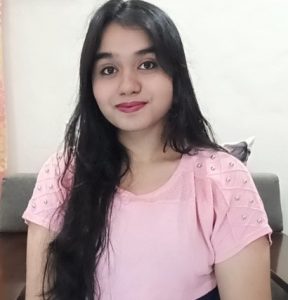
By Sheetal Akhade
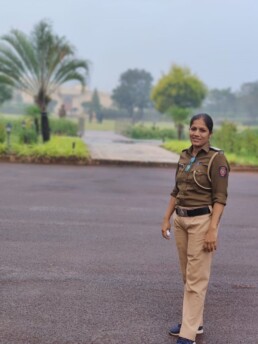
As her eight-year-old son didn’t want her to go out, she used to leave home while he was asleep. Despite the fear that she would bring the Covid infection while returning home, police woman Neelam Karpe continued to perform her duty during the pandemic.
Neelam Sachin Karpe is a police naik at Mundhwa Police Station in Pune. She has been working at the police station for the last four years now. Neelam is also a mother of eight- year- old Sharvil. She has her old mother-in-law at home who looks after Sharvil when she is on her duty. Neelam’s husband Sachin Karpe works in a corporate company and needs to stay away from the family due to his own work.
During the lockdown period, Neelam had worked with utmost dedication. Every day this selfless warrior is giving her best to her duty while cutting herself off from her family and her loved ones. Further talking about the challenges she faced while serving to her duty, she said: “It initially was too difficult for me to do the duty. There was a fear of my family getting infected due to my being outdoors.”
Having an older member at home, Neelam used to fear her catching the infection quickly. As a result of which she used to maintain social distancing in her house itself. Young Sharvil is unable to understand this sudden change in his mother’s behaviour.
Being a woman, she had to do the monotonous housework after coming back from the duty. “It makes the work more hectic while taking complete precautions against the virus,” says Neelam.
She describes her job as unconventional during the lockdown period because she was asked to perform tasks that were not there in her charter of duties. She had been many times asked to guard the containment zones and needed to make sure that the supply of essentials in the area is streamlined.
But even if she was handling so many works and responsibilities, she never gave up. While the majority of people were busy protecting themselves from virus, Neelam and many Covid-19 warriors fought the battle on the ground. The police mother performed her duties for the nation and her family with determination.
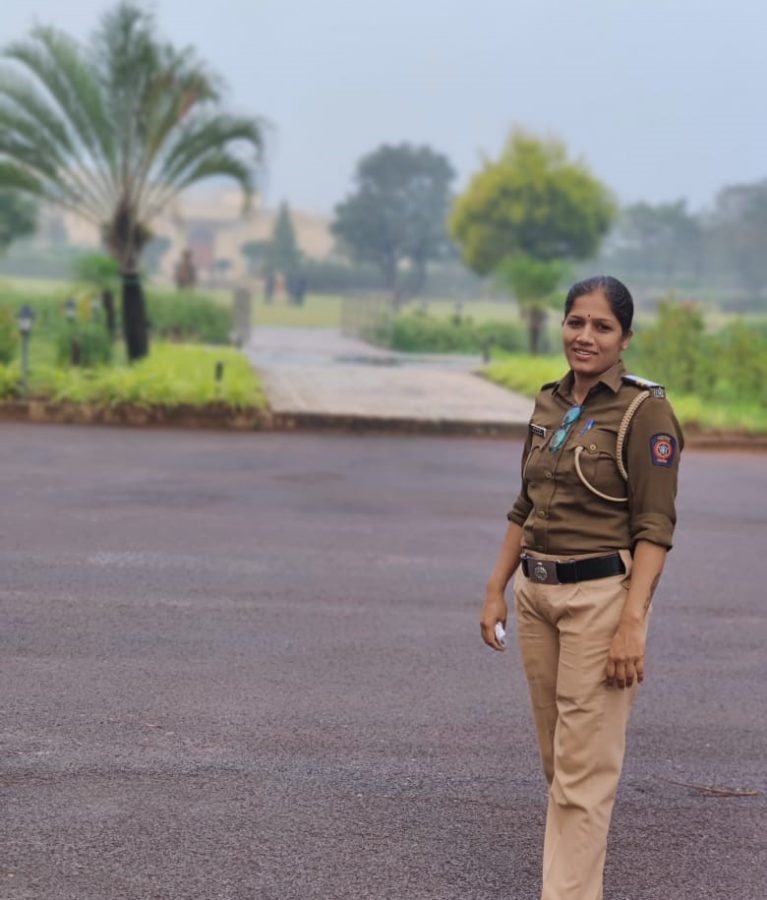
Sheetal Akhade
BA Journalism & Mass Communication Second Year (3rdsemester)
Vishwakarma University Centre of Communication for Development, Pune
miss.sheetal1108@gmail.com
How PUWJ served journalists and their family members during COVID 19
Pune Patrakar Sangh was founded in 1940 with only a few members. They were mostly journalists known for their literary writing in Marathi. Some of them worked for the freedom for the country, some for social reforms. For the next several years, the organization was nearly dormant. It became active when working journalists such as B R Vats in Delhi, T R Ramaswamy in Chennai and Madharao Sane in Pune were at the forefront of the Indian Federation of Working Journalists. In 1974 Gopalrao Krishna Patwardhan became President of the Pune Patrakar Sangh and was supported by me and Prakash Kardaley. That was a landmark year as the Sangh became Pune Shramik Patrakar Sangh (Pune Union of Working Journalists), a trade union of the employee journalists.

I have been a witness to the evolution of the PUWJ into prominent a city organization that undertook numerous activities covering issues related to professional journalism, trade union matters, cultural, social and educational training was undertaken in increasing number. Patrakar Sahayyata Nidhi, blood donation and several other welfare activities were undertaken. Journalist organisations elsewhere in India may have organised such activities. But the PUWJ did something else that was unique in the country. Here are the details:
The Corona 19 had affected not only the general population but also the journalists in Pune and elsewhere. The members of (PUWJ) experienced the ill-effects of the pandemic. One Journalist, Pandurang Raykar, lost his life. On other days, several reporters and sub-editors were rushed to hospitals in different parts of the city.
Many colleagues lost jobs because the newspaper owners reported that the newspapers had suffered heavily in their businesses, in circulation and advertisement revenue. The Number of pages were reduced, loss-making editions were closed, and several newspaper establishments were closed. Salaries of employees were slashed to around 50 per cent in the case of the newspaper establishments that managed to survive. The white-collared employees- the journalists - were unable to find alternative sources of income. There was gloom in every sector of the economy. The newspaper industry was no exception.
Several members of the PUWJ and their families reported nervous breakdown. Many found it difficult to meet expenses for routine treatments. Several medicines were not available in the market. Some were sold in the black market at exorbitant prices.
Oxygen was scarce. Ambulance services attached to private hospitals were expensive. Nurses and the paramilitary staff of the hospitals were overworked.
In this all pervading gloom and desperation, the PUWJ tried to tackle the situation to help its journalists and their family members.
Worked in unison
PUWJ President Prasad Kulkarni says its office bearers and executive committee members worked in unison to tackle the situation. The goodwill and the credibility of the PUWJ came to the help of the organisation. As challenges cropped up one after another, solutions were found out without any loss of time.
For example, we realised that the experts in different medical fields, such as nervous breakdown, and trauma, were not available to our members and their families at affordable costs. Psychiatrists were required in some cases, he says.
Our journalist colleagues used their contacts with the Indian Medical Association to organise help in this area. Dr Sanjay Patil former president of Indian Medical Association, Pune pooled the experts to form an informal advisory board of specialists. They were available to the needy PUWJ members and their families. They ensured that the confidentiality of the patients was maintained.
Earlier in April, the PUWJ organised a Corona pre-testing. It tested oxygen levels, pulse and symptoms for Covid-19. Around 200 members participated. Only two people showed symptoms.
The next tests were swab tests. Around 200 journalists participated. None of them tested positive. This was a major drive sponsored by PUWJ in collaboration with Pune Municipal Corporation with the initiative by Mayor Muralidhar, Sahyadri Hospital’s Dr Charu Apte and Puneet Balan group.
As a measure to boost the immunity, dosages of Arsenic Album 30 were given to all members and their families. Around 400 members and their families took this medication.
At one point, oxygen supply system for the patients was not easily available in Pune at reasonable costs. When Mr Vikram Salunke of the Accurate Engineering came to know about it, he offered a set of the system. He arranged also to train a couple of tech-savvy journalists to use the system to during emergencies.
The PUWJ members came across instances where medical stores and private hospitals charged exorbitantly for remdesivir injection vials. These vials were considered useful for corona treatment. The PUWJ liaisoned with Mr Anil Belkar, the Secretary of Pune District Chemists Association for supply of vials and other pharmacy products at fair price and without delay.
Mr Vishwesh Kulkarni of Yashashwi Academy for Skills provided website development course at extremely discounted cost. Some of the members, who have lost the job, participated in this course. After successful completion, they have started, their own news websites.
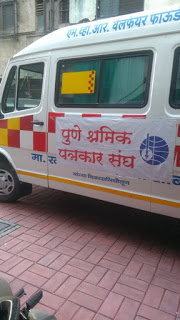
Another major help the Patrakar Sangh began offering was the ambulance service. It was the period when the corona was at a peak. The number of patients in the city and district was rising every day. Beds and Hospitals were limited. There was panic in the city as the newspapers and television channels reported a number of deaths and an increasing number of patients. Ambulances and hearses were limited. They were hired to carry the patients and bodies to a long distance. With the result that the patients were kept waiting. There was heavy pressure on the state government’s 108 service for the ambulances. The 108 operators declined to provide their ambulances to ferry patients to private hospitals on arguing that the 108 was meant for emergencies faced by the government hospitals. This led to more panic, impatience, and bickering among these agencies and the affected people.
This created more panic among the patients and their relatives. Scores of families of journalists experienced such panic. This led to innovation to organise a service of an ambulance for journalists. That was unique, not thought of and successfully executed by any organisation of journalists in India, and perhaps outside the country. In Pune, PUWJ organised the service with the support of the MVR Welfare Foundation. Its Head, Hematologist Dr Vijay Ramanan offered the ambulance belongs to MVR welfare foundation.
Shivsangram Sanghatana’s founder leader Vinayak Mete came forward to provide us an ambulance until the PUWJ members required it during the COVID 19.
The youthful PUWJ office bearers had vowed not to seek and accept charity for any of our activities. Accordingly, they prevailed upon the Sanghatana leaders to accept at least Rs. 101.00 as a token for the payment for ambulance.
The journalists in Pune would remain grateful to the PUWJ team for these facilities and services that can perhaps be quantified. There was something else that can not be quantified. The president, office-bearers and executive members risked their own health to run around to hospitals and doctors to organise these facilities and services to save the lives of members and their family members.
Pune Shramik Patrakar Sangh
Prasad Arun Kulkarni, President
Abhijit Barbhai, Vice President
Sukrut Mokashi, Vice President
Chandrakant Hanchate, General Secretary
Sunil Jagtap, treasurer
Laxman More, secretary
Vijay Mhaske, secretary
Prashant Bidwe, member
Tanishqa Dongare, member
Amol Kavithkar, member
Sandeep Patil, member
aja Gaikwad, member
Sandeep Marathe, member
Kuldeep Jadhav, member
Shrishkumar Randive, member
Vijaykumar Kulkarni, member
Abhijit Bhise, member
Pune Patrakar Pratishthan
Prakash Bhiote, President
Vitthal Jadhav, secretary
Skurut Karandikar, treasurer
Mahendra Badade, trustee
Yogesh Kuthe, trustee
Authored by
Prof Dr Kiran Thakur
Former PUWJ President
Director
Centre of Communication for Development, Vishwakarma University
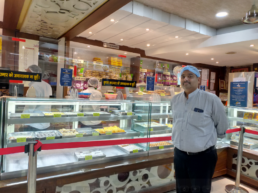
Covid 19 brings mithaiwala fraternity Closer, Owners and employees follow norms for customer care
By Mohini Sharma (VUCCD News Service)
Indore, Oct 24 - The Covid 19 has further brought together the fraternity of the Mithai and
Namkeen producers in the country. They have learned to take initiative not only to better
their business, but also care of their staff help fellow halwais.
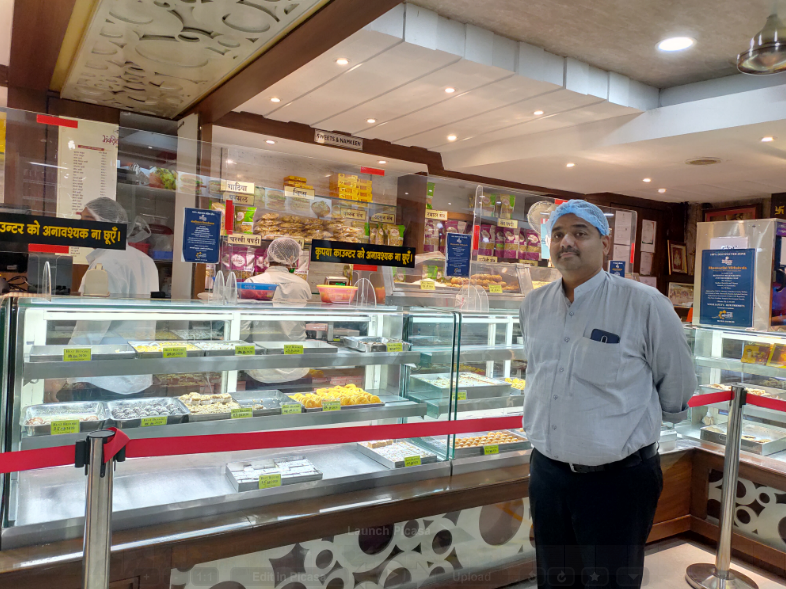
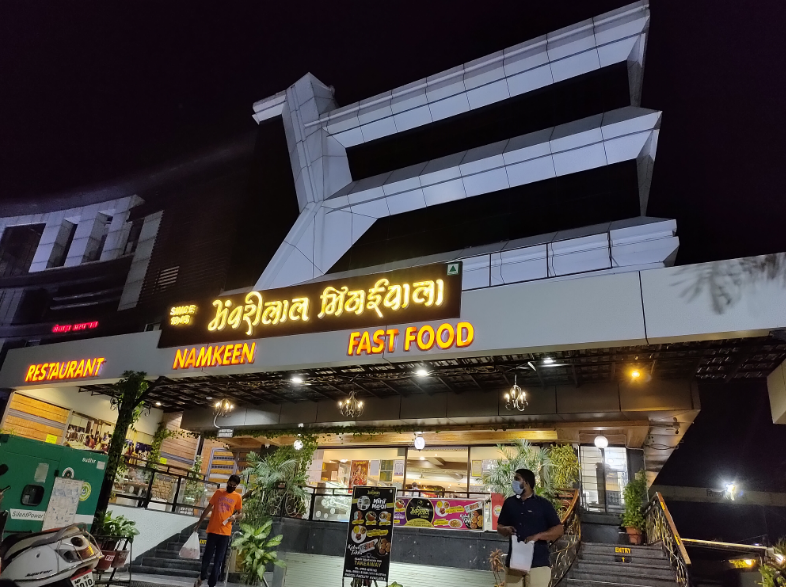
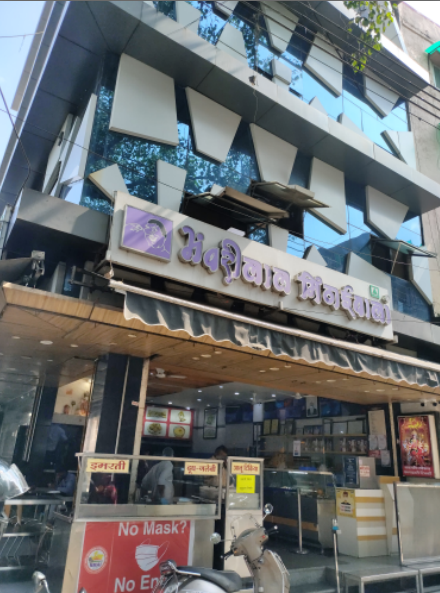
Take the case of the Bhanwarilal Mithaiwala in Indore district of Madhya Pradesh. The
owners of a chain of four shops have themselves learned the need and importance of the
government rules and regulations. As the founder of the business group in 1945, Bhanwarilal
Saini, and his seven generations have established the quality and business ethical norms
followed by the present generation.
The Covid 19 taught the Sainis something their forefathers and their peers have not heard of
during their time. It related to the norms set by the government and the FSSAI (Food Safety
and Standards Authority of India). Mr. Anil, one of the four Sainis of the current generation,
took the responsibility of organising the training as the Secretary of Mithai and Namkeen
Association in India from last two years. His brothers-- Praveen, Naveen, and Sunil -- and
their peers in the Association joined in to understand the changes and the need for
upgradation in the industry.
The Corona was a global calamity and everyone in the trade did not grumble in following the
new guidelines and norms. Mr Praveen recalls that when the Prime Minister Narendra Modi
made the first announcement of the lockdown the Mithai and Farsaan business trade did not
hesitate to respond to the government directives. Not only the Bhanwarilal Mithaiwala but the
entire business in the country responded without any hesitation.
They distributed all the prepared Mithais and farsaans freely to the police and other
government staff on duty. They dumped all the extra raw material without caring for the
losses they had to incur. The Bhanwarilal Mithaiwala paid salary to a total of 80 members of
staff works during the lockdown period along with the two meals a day. and daily two times
meal during the lockdown. Similar gesture was offered by the mithai shops in the country.
Mr Praveen says the staff of the shops had in the country faced unforeseen difficulties even
after the unlock. In his own shop, for example, ten members from the family of 20 contracted
COVID positive on 5 th September. They immediately shut all the shops and factory, tested
every worker. They had to dump tonnes of mithais prepared for the weekend. After sitting for
months at home, they again have to self-quarantined for around a month.
Now, the owners and staff of the Sainis know the norms and follow a drill meticulously, with
the help of the Arogya Setu app they disinfect all the shops, the factory and their houses. The Bhanwarilal Mithaiwala’s have attended around 10 sessions of FSSAI on working in unlock. They have participated in the tests and got certified each of them.
‘Every worker wears a mask, gloves, and caps all the time. Medical check-ups are done quarterly. Temperature and oximeter are checked three times and get full body sanitised four times a day.
‘The staff follows the drill meticulously. When the alarm rings in every 50 minutes, leave the work, get hands washed, sanitised, dry and then return to work.
‘They insisted on not increasing the staff for Diwali and the festive season and work in limit for the security purpose and under government norms’, he says.
SGM Abhilash Mishra appreciated their work and sites their work as examples to other shopkeepers for showing loyalty and trustful service.
A senior military officer from Delhi recently visited their factory, was highly impressed with their laboratory process and decided to set their 35 messes of the army same as Bhanwarilal’s.
Words: 621 (End of message)
Author: Mohini Sharma
Email: mohshine2018@gmail.com
Class: 2 nd Year, Journalism and Mass Communication Department, Vishwakarma University, Pune
Mentors: Prof Vaibhav Thakare/Prof Dr Kiran Thakur, Vishwakarma University, Centre of
Communication for Development (VUCCD), Pune
Covid 19 leads to luxury car damage in Mumbai as rodents chew its wiring: owner forced to disposed it off
By Correspondent
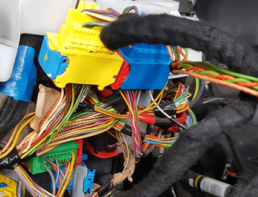
Pune, October 29, 2020 - Covid 19 has cost a Mumbai resident very dearly in an unexpected way. He had to dispose of his luxury car recently, only because rats and rodents chewed its wiring during the lockdown period!
He managed to drive his car with his family to Pune. It was a non-stop three hour journey without any event till they reached his destination by evening. The next day morning, he realized that he could not start the car. The mechanic announced that there was a short circuit of wiring inside the bonnet.
Since March 2020 when the first lockdown was announced, his car was stationed at his car park at Mumbai’s Malad West, located along the suburban railway track.
The track has a swamp, grass, and filth that are a permeant abode of a colony of rats, rodents, reptiles and mosquito not visible to the residents. Like most residents of the area, it never struck him that any of these can create such a problem for his car.
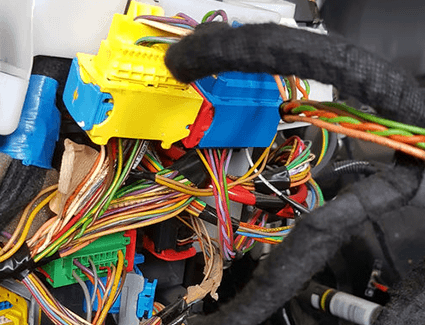
The auto-mechanic in Pune was not surprised. He said the rats - a swarm of them- can leave a trail of bread crumbs, other eatables; stink of their urine and excreta wherever you take the car.
Is it a once-in-a while incident or a serious perennial phenomenon? India data is not available, but it seems to be such a major cause of worry in USA that The Washington Post assigned its senior journalist to do a story published on Feb. 13, 2020 https://www.washingtonpost.com/science/2020/02/13/rats-will-devour-your-car/
The feature in its Science Section says ‘No one tracks rat damage to cars, but there are signs it is a growing problem (in the USA) amid a nationwide rat population boom. .. .. In recent years, a dozen class-action lawsuits have been filed against auto manufacturers on claims that today’s eco-friendlier wiring is irresistible to rodents.’
‘You take your car 20 to 30 years ago, they didn’t have that many wires,’ said a service fleet manager. ‘Now you have wiring for everything. There are so many different sensors and computers and modules.’
The Mumbai-based garage mechanic agreed when the car was towed back to Malad West last month. The owner had used the car for over nine years. He now realized that the company has already stopped its manufacture and its spares are not available in its service stations across India. About seven residents of the multi-storied building reported damage to their cars.
Only an enterprising auto mechanic with expertise in car’s electrical wiring would probably repair the wiring. He gave an estimate that was prohibitive and not worth trying. Instead, he preferred to book a new car for delivery during the coming Diwali!
You may find the following useful :
https://www.youtube.com/watch?v=vfK23m5v_2g
https://www.youtube.com/watch?v=HCDWCKZGB24
https://www.mercurynews.com/2018/11/26/how-to-keep-rats-from-chewing-the-wiring-in-cars/
उंदीर घुशींचा प्रताप..कारच्या वायरी केल्या फस्त
पुणे, नोव्हेंबर २, २०२०. कोव्हीड १९ चा आणखी एक वेगळा फटका अनपेक्षित रित्या मुंबईच्या एका कार मालकाला बसला. शेवरलेट क्रूज या लक्झरी कारच्या बॉनेट मधल्या सर्व वायरिंग उंदरांनी फस्त केल्या. एवढे नुकसान झाले की त्याला ती कार विकून टाकावी लागली!
महामार्गावरील वाहतूक पुन्हा हळूहळू सुरु झाली, तेव्हा या कार मालकाने धाडस करून ती कुटुंबियांसह स्वतः चालवत पुण्याला आणली. मात्र दुसऱ्या दिवशी ती चालू होईना. मेकॅनिकला बोलावलं तेव्हा उंदीर घुशींनी बॉनेट मध्ये काय प्रताप करून ठेवला आहे हे कळलं.
मार्चमध्ये कॊव्हिड 19 मुळे देशातील सर्व व्यवहार ठप्प झाले, तेव्हा ही गाडी त्यानं आपल्या कार पार्क मध्ये ठेऊन दिली. ती परत बाहेर काढायची वेळच आली नाही.
परवा पुण्याच्या वर्कशॉपमध्ये ती आणली तेव्हा वायरिंग आणि संलग्न पार्ट दुरुस्त करण्याचा खटाटोप सुरू झाला पुणे, मुंबई, चेन्नई अशा सर्व सेंटर मध्ये ते मिळे ना. कंपनीने गाडीची निर्मिती बंद करून बराच काळ लोटला आहे. गाडीचे पार्ट आता कुठेच मिळत नाहीत अशी माहिती मिळाली.
एका जाणकार तंत्रकुशल मेकॅनिक ने प्रयत्न करून बघतो, पण वेळ लागेल असे सांगत त्याने खर्चाचा अंदाज दिला. कार नऊ वर्षांपूर्वी विकत घेतली, इतकी वर्ष वापरली, हे लक्षात घेता ती आता विकून टाकावी या निर्णयाप्रत मालक आला .
उंदीर, घुशी साप,शेवाळ आणि डास आदींचे साम्राज्य
उंदराच्या प्रतापाचे या मेकॅनिकला आश्चर्य मात्र वाटले नाही. रेल्वे ट्रॅक च्या शेजारी दलदल, गवत, ओला सुका कचरा, आणि गटारं यामुळे उंदीर, घुशी साप,शेवाळ आणि डास आदींचे साम्राज्य आहे. उंदीर घुशी बॉनेट मध्ये आणि डिकी मध्ये सहज शिरतात. त्यांचं अस्तित्व लक्षात येतच नाही. लांबच्या प्रवासात त्यांनी कुरतडून टाकलेले वायरिंग, पाव भाजी आदीचे तुकडे, त्यांची विष्ठा-मूत्र आदी कारच्या खालच्या भागातून त्यांचा मार्ग ‘अधोरेखित’ करून जातात कारचे नुकसान होत राहते
‘वॉशिंग्टन पोस्ट’ या दैनिकाचा अभ्यास
असे किती नुकसान होत असेल याची भारतात आकडेवारी उपलब्ध नाही. त्याचा एकत्रित पणे विचारही झालेला नाही. अमेरिकेतील प्रतिष्ठित ‘वॉशिंग्टन पोस्ट’ या दैनिकाने मात्र हा विषय मोठ्या गांभीर्याने घेतला. त्यावरचा लेख 23 फेब्रुवारी २०२० रोजी प्रसिद्ध केला (https://www.washingtonpost.
वीस- तीस वर्षांपूर्वी कार बनवत तेव्हा त्यांना एवढे सेन्सर्स आवश्यक नसत, पण आता इतके सेन्सर्स आणि इतकी संगणक यंत्रणा लागते, त्यामुळे वायरिंग देखील त्या पटीत वाढते. त्या वायरिंगची चव उंदीर घुशींना आवडते. त्यामुळे संधी मिळायची ते वाटच पाहत असतात, असं जाणकार म्हणतात असं या लेखात म्हटलं
पुण्याहून मुंबईला कार मालकाने टो करून गाडी परत नेली, तेव्हा तेथे ही दुरुस्तीचा अंदाज त्याने घेतला. आकडा ऐकून दुरुस्ती करण्यापेक्षा त्याच दर्जाची सेडान घेणं परवडेल असं मानून त्याने येत्या दिवाळीत नवी कार त्याने बुक केली आहे.
Author: Prof Dr Kiran Thakur (kiran.thakur@vupune.ac.in)
Editor: Prof Vaibhav Thakare
Vishwakarma University Centre of Communication for Development
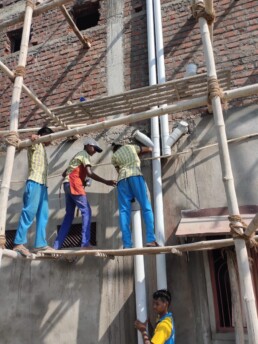
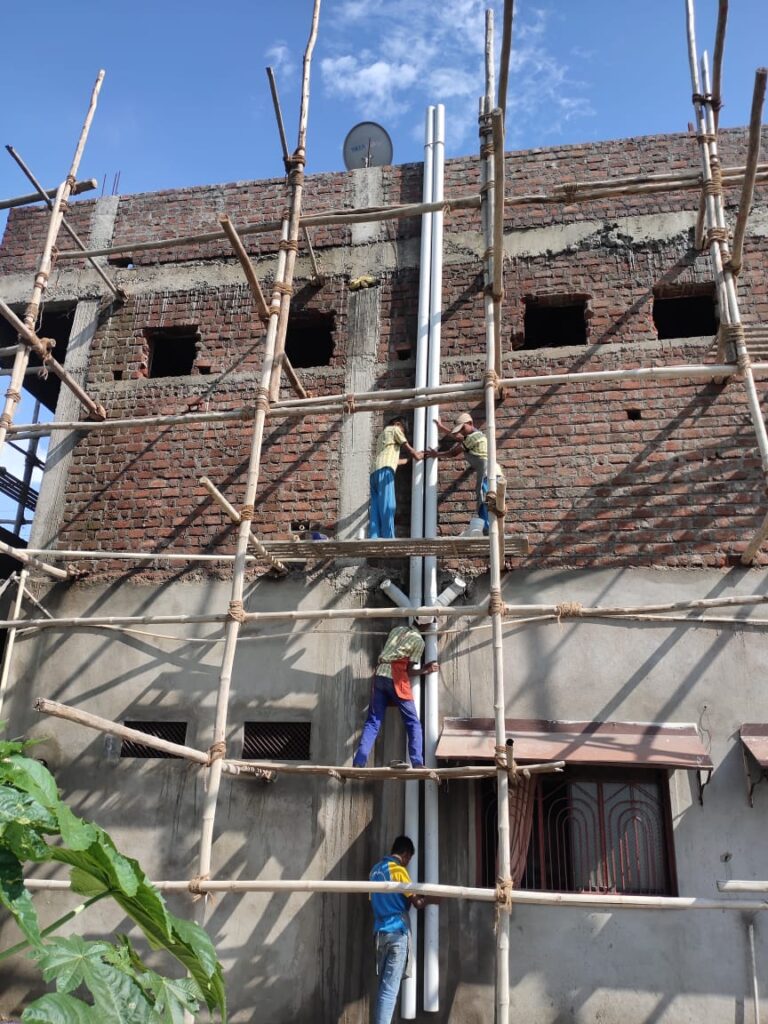
Adivasi Children Learn technical skills during COVID
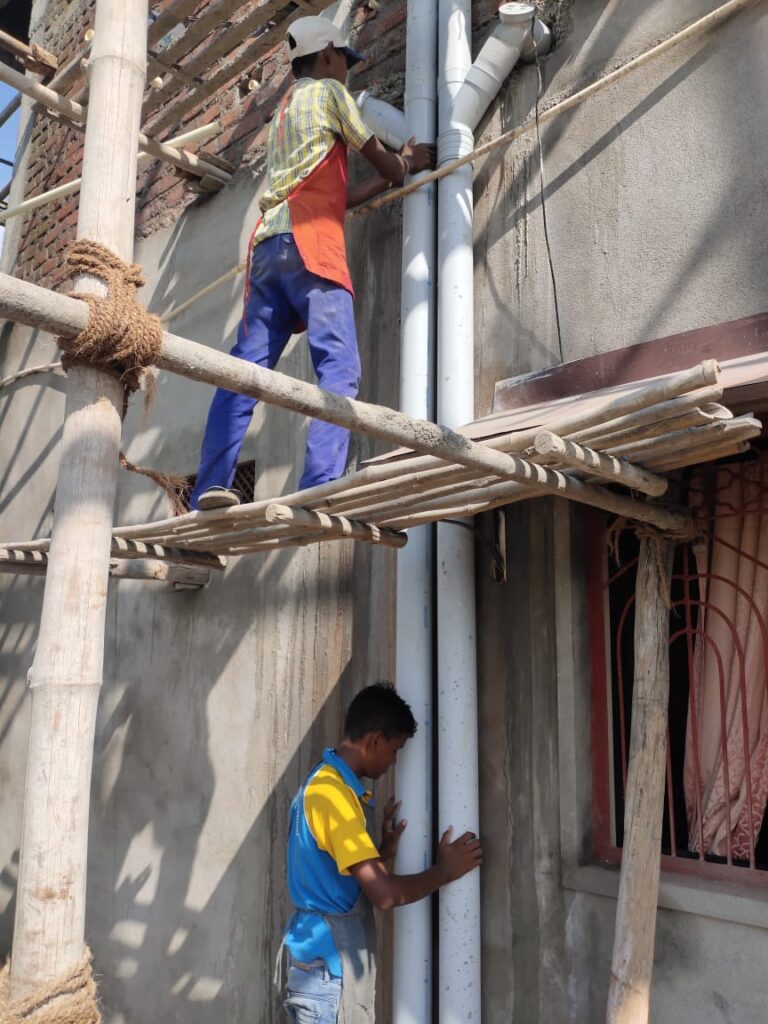
Lepa,Madhya Pradesh- Covid 19 was a blessing in disguise for the Adivasi children of Nimad region. They could get a good training in areas they did not know earlier such as plumbing, carpentry, vending, dairy farming, stitching and organic farming.
They received the training from the former students of the famed Vigyan Ashram, Pabal, at
Maharashtra’s Pune district who did not have anything to do during that critical period. These
former students are activists of the Nirmar Abhyudaya Rural Management and Development
Association (NARMADA) set by Ms Bharati Thakur.
The NARMADA workers volunteered to take up her proposal to train the tribal boys and
girls at the campus of the Ramkrishna Sarada Niketan at Lepa Punarvas, Bhatyaan and other
places nearby. The outcome of the successful training is now visible. The tribal students
contributed to the construction of school buildings, goshala, rainwater harvesting setup and
toilet blocks.
For the NARMADA, it resulted in substantial savings with this deployment of the Adivasi
youth. For adivasi studentst, it was a lifetime achievement getting trained in electrical,
mechanical, and civil engineering other technical areas. Both the trainers and trainees used
the time for mutual advantage when the schools’ teaching and non-teaching staff had no work
to day. The most adisasi families of the region, including the trainees, had worries to earn
livings for food and glossary. In case of these trainees, the NARMADA offered all this and
also the opportunity to learn cooking.
The NARMADA has been founded by Bharati Thakur, a former central government
employee of Nashik, in Maharashtra, after she completed Narmada Parikrma in year …. She
decided to settle at Lepa Punarvas to set up schools near Mandaleshwar in year ..By last year,
about 1700 students were enrolled until the COVID 19 affected the school complex.
Bharatiji and her small team have continued their activates during the last difficult seven
moths trained the Adivasi in skills that their counterpasts most urban well-to-do could not
dream to do.
https://narmadalaya.org/main/
By Sheetal Akhade (Second Year), Department of Journalism and Mass Communication, Vishwakarma University, Pune.
edited by : Prof. Dr. Kiran Thakur
कोविड काळात आदिवासी विद्यार्थ्याना प्रशिक्षणाचा अनपेक्षित लाभ
शीतल आखाडे
लेपा पुनर्वास, नोव्हेंबर ५, २०२० (वि वि वि वार्ता)
कोविड 19 ने देशात सर्वत्र संकटांची मालिका उभी केली. पण मध्य प्रदेशातील निमाड भागातील काही आदिवासी मुला-मुलींना कोविड चा अनपेक्षित लाभच झाला. या पंचवीस-तीस शालेय विद्यार्थ्याना कौशल्य आणि उपयुक्त अनुभव मिळत आले. आता लॉक डाऊन संपत आला असताना च त्यांना नोकरी-व्यवसायात संधी मिळवण्याची शक्यताही निर्माण झाली आहे.
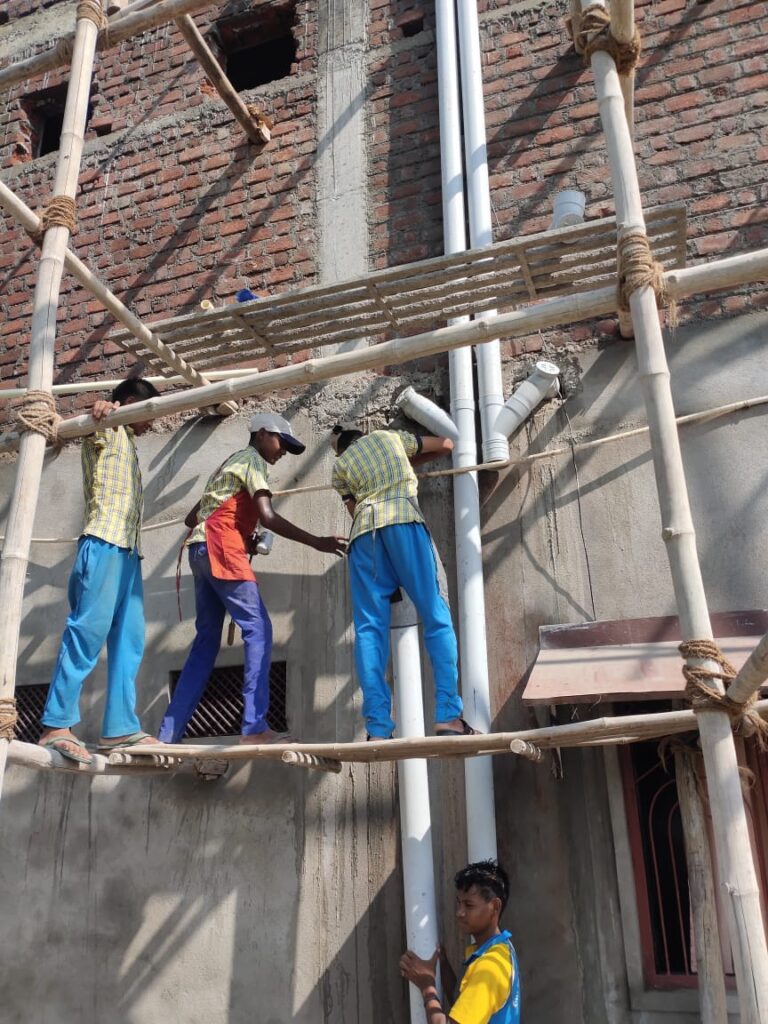
नर्मदा काठी खरगोन जिल्ह्यात लेपा पुनर्वास या खेड्यात या विद्यार्थ्यांनी प्लंबिंग, वेल्डिंग, इलेक्ट्रिकल वायरिंग,सुतार काम, रेन वॉटर हार्वेस्टिंग, गो पालन, शेती, बांधकाम आणि शिलाई आदी कौशल्ये प्राप्त करून घेतली आहेत.
बाहेरच्या जगात फारसे माहीत नसलेल्या या छोट्या खेड्यात ‘नर्मदालय, या संस्थेच्या प्रांगणात त्यांना हे प्रशिक्षण मिळाले.
या संस्थेच्या संस्थापिका आणि विश्वस्त भारती ठाकूर यांनी कोविद च्या काळात संस्थेच्या कार्यकर्त्यांसमोर या आदिवासी मुला मुलीना अशा गोष्टी शिकवू या का अशी कल्पना मांडली. पुणे येथील विज्ञान आश्रमात प्रशिक्षण घेऊन आलेल्या या पाच-सहा कार्यकर्त्यांनी ही कल्पना उचलून धरली.
बाहेच्या आदिवासी विद्यार्थ्यांच्या निवास भोजनाची व्यवस्था सुद्धा येथे झाली. नर्मदालयाच्या वसतिगृहात आणि भोजनालयात व्यवस्थापनाचे आणि स्वयंपाकाचे देखील प्रशिक्षण येथे त्यांना आपसूक मिळाले.
नाशिकच्या आर्टिलरी सेंटरला कार्यरत असणाऱ्या श्रीमती भारती यांनी नर्मदा परिक्रमा केल्यानंतर स्वेच्छा सेवानिवृत्ती घेतली. वर्ष २००५ मध्ये निमाड परिसरात छोटे बाल मंदिर त्यांनी सुरू केले. संस्थेच्या उपक्रमात आता रामकृष्ण सारदा निकेतन, निमाड अभ्युदय ग्रामीण व्यवस्थापन आणि विकास (नर्मदा) आणि अन्य असे उपक्रम मिळून आता १७०० विद्यार्थी शिकतात. विद्यार्थी, शिक्षक आणि कर्मचारी अशा सर्वांनाच कोविड मुळे घरी बसण्याची वेळ आली हे लक्षात घेऊन असे कौशल्याधिष्ठित प्रशिक्षण देण्याचा उपक्रम आम्ही हाती घेतला. त्यात खूप यश मिळाले, असे श्रीमती ठाकूर यांनी सांगितले.
देशात इतर ठिकाणी सर्वानाच घरी बसण्याची वेळ आली, पण या आदिवासी मुलांना मात्र खूप अनपेक्षित चांगली संधी मिळाली, याचा आम्हाला आनंद वाटतो. असे त्यांनी सांगितले.
(शब्द संख्या २६५)
विद्यार्थी : शीतल आखाडे
विश्वकर्मा विद्यापीठ विकासवार्ता केंद्र) (विविवाके) ०५. ११. २०२०
संपादन : प्रा वैभव ठाकरे, डॉ किरण ठाकूर