Woman in Uniform
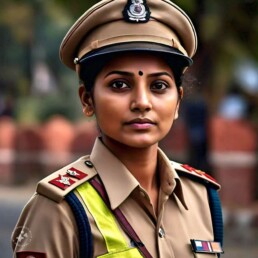
Gender equality is one of the prerequisites for social progress. The experiences of women police officers broadly illustrate their dedication to contribute to the society and fight against crime, as well as their struggle against common prejudices and stereotypes. One such woman officer is Deepti Jadhav, who is a police constable Pune city police. She shared the story of challenges and experiences to VUCCD.
Amitava Basu ( BA Second Year Student)
Q : Hello, good morning madam. I welcome you for this conversation. Can you tell us the motivation behind joining the police force? Did you get inspired by an event or incident which brought you here?
Deepti Jadhav : Serving my country, community was my biggest motivation to join the Police force. It is not a preferred choice for many women. This requires courage and commitment towards the society and also the passion to protect the vulnerable in the society. This journey is not only restricted to physical strength but also requires mental resilience.
Q : Madam, was there any incident which reaffirmed your commitment and proved your decision to join force was the right one?
Deepati Jadhav : When we were heading towards Gadchiroli, a district in Maharashtra a bomb blast took place almost near our car, many of our police officers, constables got badly injured and some were almost on the verge of losing their lives, our team was also injured but we tried and carried the injured to the nearby hospital as soon as possible, it was one of my biggest and dreadful experience There are comes many challenges in our journey. I stood with my colleague and performed my duties. Gender is secondary when you're with dedication and for a larger goal.
Q : The gendered infrastructure and working environment is an important factor. Would you like to share your experience?
Deepti Jadhav : Yes, we get facilities that one woman police officer should get like during training, gender sensitivity training, maternity leaves, we have many facilities. We get flexible working hours and the working hours are almost the same as the men. In case of any emergency then we have to work extra hours but the time is flexible and well facilitated.We do all activities like our male counterparts.
Q : Don't you think that by giving women related cases to women officials is gender reinforcement of stereotypes?
Deepti Jadhav : No, we almost share all the cases equally.
Q : Can you shed light on your experience as a traffic officer? Is there any difference between male and female officers handling the traffic related issues.?
Deepati Jadhav : The power of the uniform stays the same irrespective of gender and, there is no scope of disrespecting or misbehaving with female officers.


Women in Law: Megha Wagh's Story of Perseverance and Progress Amidst Gender Challenges
For many, the battle of equality is not just fought in the courtroom, but is a
constant reality.In a conversation with VUCCD, senior lawyer Megha Wagh
shared her insights, experiences, and thoughts based on the ongoing challenge
that women in the legal sector face.
Minnati Krishna (BA Second Year Student)
In a profession that prides itself on upholding justice, the scales often tip
unfairly towards women. Despite comprising nearly half of law graduates in
India, female lawyers continue to navigate a legal system where their mere
presence and competence is often questioned or met with scepticism, if not
outright bias.
For Megha Wagh, an advocate with a private practice of her own for almost
twenty years, the view on the fight against such prejudices and injustice is not
just professional but also personal. Megha Wagh started her law journey by
graduating with a law degree from the ILS (Indian Law Society) Law College in
Pune.
Her journey not only sheds light on the systematic biases present in industry but
also the resilience and determination required to rise above such biases to carve
out a successful legal career.
The legal profession in India started in the colonial era when the British started
legal education and institutions. However, from the very beginning, the field
had been overwhelmingly male-dominated. From the beginning women were
barred from practising law and legal education was inaccessible to them due to
societal norms.
Corneila Sorabji was the first woman to start practising law in the late 19th
century. She had to face tons of opposition, and despite her qualifications, was
not allowed to plead in court and had to work under male lawyers. It wasn’t
until the 20th century that women started entering this field, however, their
number remained limited and they were confined mostly to lower-status roles.
Lawyer Megha had to face certain prejudices. Due to her marriage and the
constant requirement to travel around the country, she had quite a big break in
her career.She would work part-time for law colleges when she was in Pune.
When she finally settled down in the city, she started her own private practice.
When asked about her career, she said, “The first thing they ask a woman about
is marital status and family credentials. This highlighted an employer's attitude
towards a woman. The line of questioning in job interviews usually revolves
around a woman and her marriage and family or future aspiration to get married
and start a family. No man would ever be asked about his marriage or his
personal family life as the very first question in a job interview.”
She had to face quite a lot of prejudices and assumptions that she wasn’t very
serious with her work because of the huge career gap. She also faced many
prejudices based on her age. She started her career at a very late age and was
faced with many questions by her young peers about why she was working at
her age and why she wasn't just sitting at home. She says, “Many people
assumed that I was working just to waste the time and was not that serious
about my job. This not only demotivates a woman but also creates untrue
assumptions about her choices. It also questions her competence and her
qualifications. Women have to face several taunts especially in male dominated
areas where men look down on them.”
When asked about cases and their payments, she said, “Cases don’t differ as per
gender but the payment that they receive does differ. When it comes to
payments, clients often look down on women because they feel she is not
competent enough to ask for such an amount. Men tend to get a better fee and
often are not questioned about their rates. When it comes to cases, clients tend
to avoid taking big cases, like criminal cases, to her but would often take family
related cases as they feel that women are more sympathetic and understanding.
Female lawyers tend to get women-centric cases to a large extent. She had a
different view in this regard and does not support gender reinforcement.
“Women tend to go to female lawyers with their cases because they believe that
female lawyers have the same level of empathy and understanding as them.”
Another gender bias that is prevalent is the choice a woman has to make when it
comes to her career and her family. A woman can do some outstanding work
between 9-5 and then log out to handle her family. If she is given some work
during the afterhours and she refuses to complete it, she is immediately branded
incompetent despite her best work during the assigned work hours. “Women
have to constantly fight to prove their competence and their worth. Initially, a
woman’s salary is low but as she keeps proving her worth, she is open for
promotions. However, when it comes to men, they never have to try and
“prove” their competence or worth,” she claims.
Gender discrimination in India's legal sector remains a significant challenge,
rooted in a long history of male dominance and deep-seated biases. Through the
experiences of Advocate Megha Wagh, it becomes clear that while progress has
been made, the journey toward true equality is far from over. Her story reflects
the resilience and determination required to navigate a profession that still, too
often, views women as outsiders.
From the driving seat
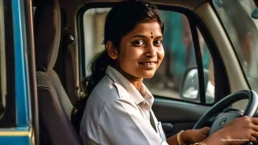
In a world where stereotypes often dictate what roles men and women should play, women have been breaking the glass ceiling and taken up the journey of empowerment. In a patriarchal society when fronts have always been occupied by men, there is an exception to it. Kavita Shinde, one of the first few cab drivers in the city, explains her journey and challenges to VUCCD.
Sakshi Pandhare
Kavita in her forties, wakes up early in the morning, prepares food and gets ready to pick up children for school. Kids hug her before leaving and this is a fifteen years old ritual. Kavita Shinde is among the first few women van drivers in the city. She has been driving and taking care of children for the past one and half decades. She loves the idea of driving and didn't restrict herself from stepping into a male dominated sector.
She remembers the old days. She said, “Back in 2009 only 2 women started driving, which marked a benchmark for her. She thought of a question “Why not me?”. After completing her learner’s driving license, she started going on long drives with her family. Her family complimented her and encouraged to buy a van and start earning as a van driver for school.”
It has always been considered difficult for women to enter in the male dominated profession. Kavita was quite lucky as her husband supported and encouraged her passion for driving and to become an equal partner at home. Kavita says, “Family support is vital for professional focus. If you have peace at home, you can chase your dreams. My family supported me. It was quite difficult in the beginning for them. But they stood with me.”
She points out complexities of her profession for women. She said, “ This occupation is fraught with complexity and stress. The primary concerns for a female driver are passenger behavior, inadequate parking facilities and restroom facilities.”
For Kavita, her family is important. She mentioned that her husband upholds daily chores like, buying groceries, cleaning house, helping the kids with their homework and every other daily task. Her occupation gave her an identity in society, and reinforcement of financial stability and security.
One important factor, for a female driver is, limited access to clean and safe restroom facilities. In the absence of well-maintained restrooms, it forces her to take a few leaves from her working days. Making it more difficult for her to perform duties comfortably, impacting her overall work.
She has belief in women's capacities. She says, “ Women are in all domains. Like driving bikes to trucks, a woman is proving that skill and capabilities have nothing to do with gender. This paves the way for an inclusive workforce.”
Women van drivers are showing that skill, patience, and professionalism are not limited by gender. Their presence on the road uplifts more women to explore driving as a profession.
Pioneering Change: How Women's Leadership is Reshaping Rural Governance
Women participation in rural local bodies has changed the rural political landscape in the last decade. Women leading on many fronts face multifold challenges ranging from independence to gender-based discrimination and reinforcement. To understand the challenges before women and their ways to deal, the VUCCD team conducted an interview with Sarpanch Shilpa Gaikwad of Khanapur village in the Pune district. An interview is given below
By Shoaib Tadvi
Significant representation of women in local governance has played a crucial role in enhancing the decision-making process and ensuring the women's issues are adequately addressed at the village level. Shilpa Sudhakar Gaikwad, Sarpanch of Khanapur village near Pune has been determined to engage with the people of the village, especially the women to solve their problems. For the last two years, she has looked after the complexities which women face in the society.
"Savitribai Phule and Mahatma Phule are my sources of inspiration."
When asked about inspiration to be in public life and politics Shilpa Gaikwad says ,”I was persuaded by the well-known social workers, Savitribai Phule and her husband Mahatma Jyotiba Phule who took an initiative women empowerment, and their education, which changed the society & narrative towards women.”
Khanapur Gram Panchayat has a majority of women with six women and five men. The Maharashtra government had extended the reservation for women from 33% to 50 % in 2011 for women. ( https://www.thehindu.com/news/national/other-states/Maharashtra-Assembly-approves-50-quota-for-women-in-local-bodies/article14683126.ece/amp/ )
Shilpa Gaikwad thanked the former central minister and chief Nationalist Congress Party ( Sharadchandra Pawar) for increasing the percentage of reservation for women in local bodies.
She was aware about the status of women in the society. She finds male dominance is a major challenge in public life. When asked about the possibility of contesting without constitutional safeguards, she said, “No, according to our tradition women cannot be part of public life. First preference naturally for men.
“Even if I am a female Sarpanch, people give me that dignity but I do get disagreements as well. Many people have a generational belief that a female can not both lead as well as take care of her family. For me wealth is termed as learning and solving problems for these people. At the end these are people who will stand by you, and elect you, and judge you.”
Sarpanch Shilpa Gaikwad has taken several women centric initiatives since becoming head of the village. As many as 50 women from the village have been trained with stitching machines to start earning in the village. She asserts, “self earning is a major phase of empowerment. When women understand the structure and politics of money in their life that day will be a day of liberation for them.”
Sarpanch shilpa Gaikwad had a mission to make the village free from all waterborne diseases. Gram Panchayat has installed the filtration plants in the village for clean potable water. She said, “We have overcome the water supply issues that we dealt with. Providing clean and potable water is a major challenge. We have installed filtration points in the village.
She gives credit to the constitutional shield and democratic legacy inherited in the past seventy five years. When asked about the gender based discrimination challenges in the administration, said, “Everything here works according to the laws,which are designed equally.’The work I do is for the society first, then for the government. I am not here for the title or designation.
She further added, “ I encourage women to get out of their comfort zone and build good portfolios, to create their own identity. ‘I believe that we should take the benefit from the schemes introduced by the government like various schemes.. A woman should herself take an initiative. Knowledge is the key. A woman in today’s era can't be dependent on men.”
“We have monthly meetings to discuss current topics. We organise a Gram Sabha every six months where women proactively get involved and share their problems. When we have Sarpanch Meetings, we discuss schemes like, self help groups, or job-related schemes or roles. I always put my thoughts and ideas, and help people, so they can get along with me.” She said when asked about her priorities.”
“I want my village to set an example for other villages in the district. My future plans for Khanapur are maintaining Zilla Parishad schools, taking in-charge of their meals and water. I want to install CCTV cameras in the village along with the touch screen TV facilities to monitor the activities of the villagers considering the women's safety.”
By Shoaib Tadvi
Shoaib Tadvi is second year student of Bachelor of Journalism and Mass communication at Vishwakarma University. He writes about women empowerment, LGBTQ+ community and other contemporary issues.

Damini Sinha: Living Her Truth
Shoaib Tadavi (BAJMC S.Y.)
Pune (August 1, 2024): In 2014, the Supreme Court of India recognised transgender people as the 'third gender,' affirming their right to self-identify and granting them voting rights. This landmark decision marked a significant step towards inclusion, yet societal attitudes and acceptance lagged behind.
Damini Sinha, a 44-year-old transgender woman from Pune and the first trans software engineer, shared her story of living authentically and embracing her identity as a woman. In 2007, Sinha worked in an IT company as a male employee but struggled with her identity, feeling an inner conflict between her outward appearance and true self. She recalls, "There was no identity before 2014. I have been working since 2007. I had to go like a male, neglecting and always questioning my true identity. Before 2014, we didn’t even have acceptance or identification for transgenders. After the 2014 Supreme Court judgement, we got our identity, but acceptance is still missing. But at least we have our identity."
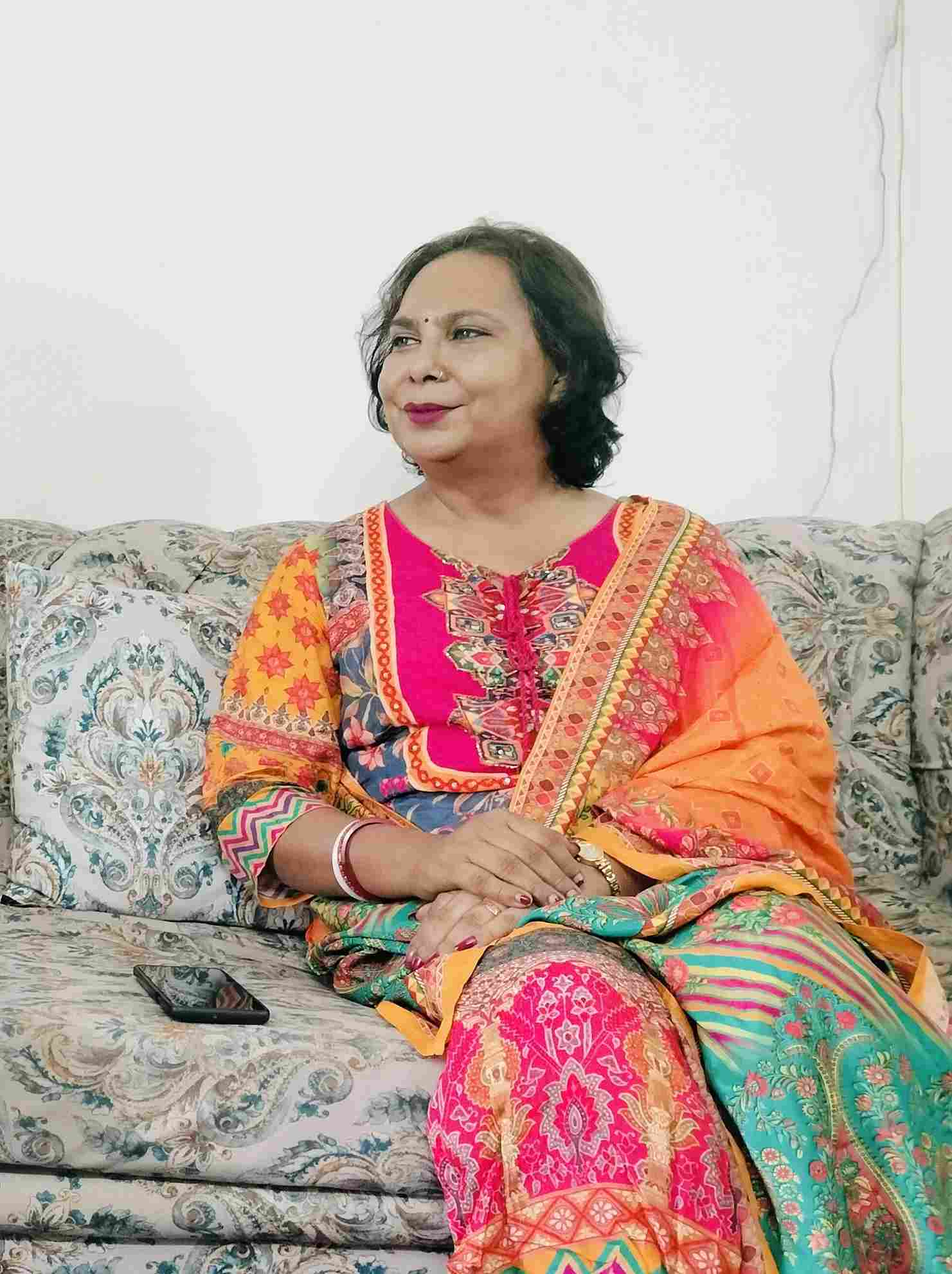
Despite having a stable job and supportive friends and family, Sinha faced societal judgement, with many dismissing her feelings as "unnatural." This inner turmoil led her to alcohol abuse and contemplating an escape from her distress. However, she chose sobriety and embraced her true identity, renaming herself and embarking on a new journey.
After her transition, Sinha feared being included in the ‘hijra’ community against her will. She explains, "Back then, I thought if I feel like this or after transition, I will have to leave my job and join the hijra community. Every hijra is transgender, but every transgender is not a hijra."
Initially unfamiliar with transgender communities and the term 'LGBTQ+,' Sinha feared societal rejection and financial instability, often associated with being a transgender person in India. However, she resolved that her gender identity would not dictate her career or economic status, showcasing resilience and determination.
In 2019, the Supreme Court passed the Transgender Persons (Protection of Rights) Bill, which aimed to protect transgender individuals from discrimination and ensure their representation in employment and education. However, despite legal progress, societal attitudes remained slow to change. The lack of gender-neutral or transgender-specific facilities and comprehensive education on gender diversity highlighted ongoing challenges. According to a report by the Times of India, 487,000 individuals identified as transgender, with a literacy rate of just 56.07%. The National Human Rights Commission's report revealed that 99% of transgender people in India face social rejection, emphasising the discrimination and exclusion they experience.
While some organisations and individuals advocate for transgender rights, others exploit the community for profit or publicity. Sinha's visit to the Commissioner of Welfare Office, where promises were made for gender-neutral toilets in Pune, exemplifies unfulfilled commitments. After the transition, she received many invitations from various organisations. She significantly remembers one event where she boldly questioned the audience, "How do you recognize me? As a transgender or hijra?"
However, there are positive strides, such as Sassoon Hospital's special transgender ward and Pimpri-Chinchwad's installation of transgender toilets. Sinha believes, "Awareness and sensitisation programs are crucial for promoting acceptance and understanding of transgender and LGBTQ+ communities. They help challenge stereotypes, reduce discrimination, and build a more inclusive society."
Notable figures like Gauri Sawant and Laxmi Narayan Tripathi continue to inspire and advocate for transgender rights, though the broader conversation often focuses on personal stories rather than systemic change. It's essential to recognise that historically, Indian culture, as reflected in ancient texts like the Ramayana, respected and included transgender individuals, a perspective lost during British colonisation.
"Awareness and sensitisation programs are crucial for promoting acceptance and understanding of transgender and LGBTQ+ communities. They help challenge stereotypes, reduce discrimination, and build a more inclusive society."
Despite the social and cultural barriers Damini has faced, she gracefully lives her life by the mantra, "It’s a small life. I want to make memories even in my hard times. I will live my life for myself."
Transgender people are humans deserving of the same rights as anyone else. As India progresses, it is crucial to challenge outdated mindsets and ensure that transgender individuals can live with dignity and equality. Damini's words resonate: "When it comes to sexual identity and gender identity, you are not wrong. Don't be afraid of anybody."
"When it comes to sexual identity and gender identity, you are not wrong. Don't be afraid of anybody."
(With inputs from Sakshi Pandhare, BAJMC SY)

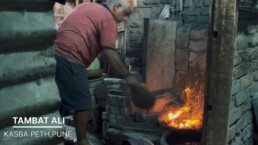
Preserving Tradition: The Resilience of Copper Pot Making in Pune's Tambat Aali
Nestled within the vibrant lanes of Pune's Tambat Aali, an ancient craft thrives, echoing the rhythm of tradition and the clang of artisanal mastery. Documented by students of the media, this captivating journey delves into the lives and craftsmanship of the Tambat community, renowned for their exquisite copper pots.
Tambat Ali breathes history, each street resonating with the legacy of generations devoted to the art of copper pot making. From the raw copper sheets to the meticulously crafted vessels, every step in the process is a testament to skill honed over centuries.
Directed by Tapasya Kamble, with Rahul Joshi as the Director of Photography (DOP), the documentary unveils the labor-intensive process behind each creation, highlighting the dedication and expertise required. Yet, amidst the beauty of tradition, a poignant narrative emerges – the struggle to entice the younger generation to carry forward this heritage. Economic realities cast a shadow, with modern careers promising greater financial stability.
However, this documentary is not merely a record; it's a rallying cry for preservation. Research conducted by Sacchit Mhalgi and Abhilashi Mattoo delves deeper into the challenges faced by the Tambat community. Edited by Raj Kalekar and Rahul Joshi, and guided by Prof. Vaibhav Thakare, it calls for initiatives to support these artisans, bridging the gap between tradition and contemporary demands.
Through the lens of Tapasya Kamble and the vision of Rahul Joshi, viewers are transported into a world where cultural treasures are both revered and endangered.
Produced by the Department of Journalism & Mass Communication, Vishwakarma University, Pune, the documentary serves as a poignant reminder of our responsibility to safeguard cultural heritage. In the hands that craft each copper pot lies not just tradition but a legacy worth preserving for generations to come.
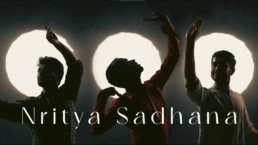
Shattering Stereotypes: The Men of Kathak Nritya
In the bustling heart of Pune, amidst the rhythmic honking of taxis and the cacophony of street vendors, a journey began to unveil the captivating world of Kathak Nritya. This wasn't your typical story of dancers with flowers in their hair, twirling in sequined lehengas. We sought the voices that challenged the stereotype, the men who dared to defy tradition and embrace the graceful world of Kathak.
Our first stop led us to Mayur Shitole, an engineer by day and a Kathak Nritya maestro by passion. His journey wasn't paved with rose petals. Family disapproval hung heavy in the air, a constant murmur against his artistic aspirations. Yet, Mayur persevered, his dedication a testament to the silent language of Kathak Nritya that resonated deep within his soul. Years of rigorous practice molded him into a master, a living example that shattered the myth of Kathak being solely a woman's domain.
Next, we met Pradeep Vidhate, a belly dancer with a twinkle in his eye and a fire in his heart for Kathak Nritya. He, like many others, had faced the misconception that this art form was a feminine preserve. But Pradeep, with his unorthodox background, defied expectations. The rhythmic footwork and expressive storytelling of Kathak Nritya spoke a universal language, one that transcended gender boundaries. He embraced it with unwavering passion, proving that the stage of Kathak Nritya welcomes all who seek to tell their stories through movement.
Namito Navale, our third encounter, was a stark contrast to Pradeep. Unlike Pradeep's initial battle against societal norms, Namito had his family's unwavering support. Yet, his journey mirrored the same dedication and perseverance. He poured his heart and soul into mastering the art form, each intricate mudra and rhythmic footfall becoming a testament to his passion. Now, alongside Mayur and Pradeep, Namito stands as a champion for the inclusivity of Kathak Nritya.
Through these encounters, a powerful message emerged. Kathak Nritya isn't just about graceful steps and enchanting costumes; it's a tapestry woven with devotion, discipline, and the power to shatter stereotypes. It's a language spoken not with words, but with the eloquence of movement, a language that transcends gender and welcomes all who seek to tell their stories on its grand stage.
This journey was brought to life through the collaborative efforts of a dedicated team of students of media. Directed and produced by Snehal Bhagwat & Team Harshal Waghmare, including Sakshi Shinde, Rutika Chougule, and Sacchit Mhalgi, Edited by Snehal Bhagwat under the guidance of Prof. Ravi Nikam and Prof. Vaibhav Thakare from the Department of Journalism & Mass Communication at Vishwakarma University. Their collective passion and expertise have illuminated the essence of Kathak Nritya, enriching our understanding and appreciation of this timeless art form.

Community or Casualty ?
Film By Divya Shaj
This film revolves around the lifestyle and mindset of the LGBTQIA+ community. The objective of this documentary is to make the audience understand the concept of ‘a person as opposed to categorizing everyone into genders they don’t belong to. A series of questions will be asked to the interviewees that depict parts of their lives. These stories are meant to be understood in a way that proves discrimination on the basis of gender must be eradicated.
The LGBTQIA+ community has always been sidelined and this documentary is a try at expressing why this is inappropriate. This talks about the hopes and visions the people of the community have when it comes to the future of the same. This is a small attempt to end the worldwide stigma around homosexuality.
Credits:
Directed By: Divya Shaj
Cinematography: Divya Shaj
Producer: Divya Shaj
Editor: Divya Shaj
Cast: Ritesh Singh, Aadil, KC
https://youtu.be/EK4lHOop2Yo?si=-BUPaIsb3tMbW2sX

Mochi: A Dying Profession
Film by Harnisha Desai
Mochi : The Mochi are a Hindu caste found mainly in North India, being Chamar caste. They are the traditional shoemakers of South Asia.
“The concept is to bring out the story of dying professions which where very important part once in the history but now due to the development and betterment of technologies and affordable replacements or capitalism is dying or is on the edge of becoming extinct.
it seems to be a real small change in the surrounding…. For some it could be just one man sitting on the footpath and now he’s not there ! But for the one that was his source of livelihood. Now he’s hardly able to sustain himself and his family with the business and somewhere it is because of easy replacements due to more affordable brands and new fashion trends changing maybe somewhere the Capitalism is equally responsible. I wish to bring out the story of an ordinary person whose business use to be a important service in the past but not anymore . This would bring out the rich past and the present scenario also the dying future of the profession and the professionals.
by Harnisha Desai (TYBAJMC, Vishwakarma University)
https://youtu.be/_sVjRh_HK3o?si=ReAAzDXrHCDw00sF
A Leap Towards Sustainable Cities and Climate Action
VUCCD Team
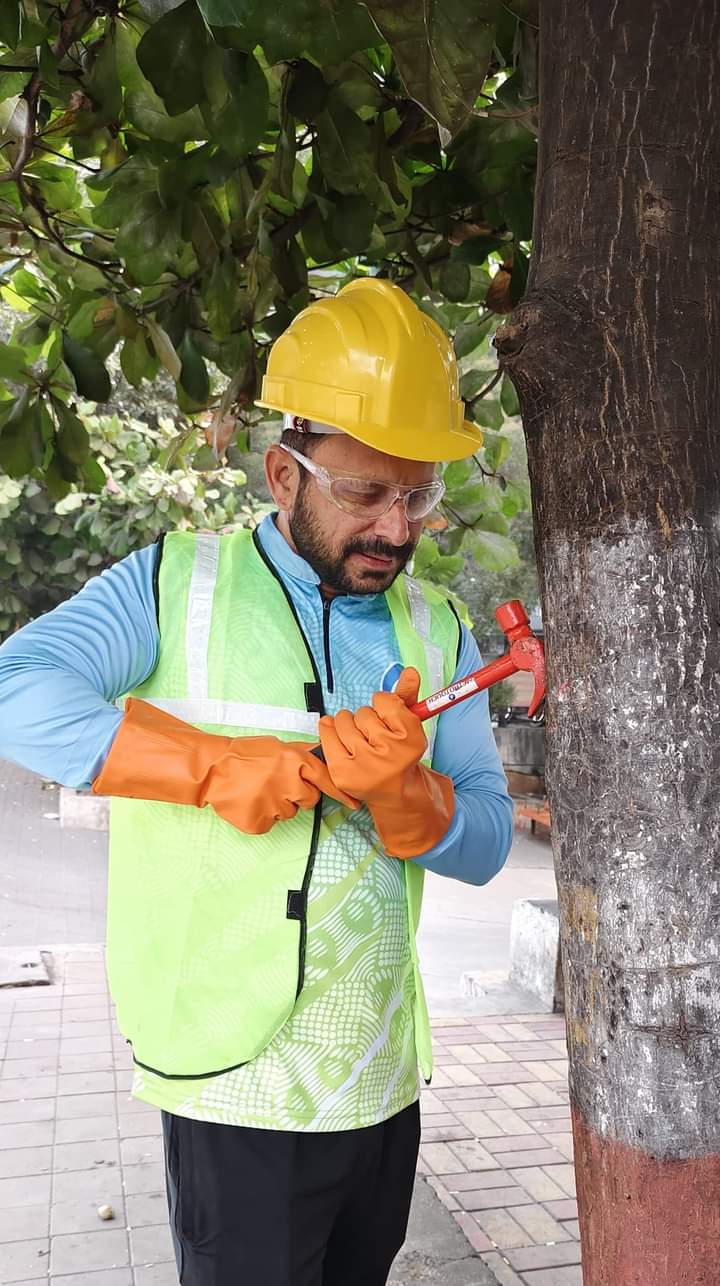
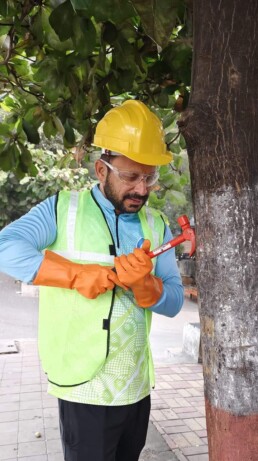
Madhav Patil, an engineer and social worker in his mid-forties, has dedicated the last five years to a unique mission: saving urban trees from defacement. Whenever he spots an advertisement nailed to a tree, he stops his car, uses a special tool to remove the nails, and dons a helmet for safety. "These tools have been my constant companions," he says.
Patil spearheads the 'Nail Free Trees' campaign, an initiative under the Angholichi Goli Non-Governmental Organisation (NGO). Over the past five years, the campaign has successfully removed one lakh nails from trees in cities such as Mumbai, Pune, Pimpri Chinchwad, Thane, and Vasai Virar. Their persistent advocacy has convinced ten municipal corporations to issue notifications under the Maharashtra (Urban Areas) Preservation of Trees Act 1975, aimed at protecting trees and beautifying urban spaces.
The inspiration for the campaign struck Patil during a family vacation in Kolkata. A sapling he had planted recently died due to a lack of water. His eight-year-old daughter's remark that they had "killed the tree" deeply affected him. The next day, he noticed many trees defaced by advertisements and lights, prompting him to take action. "Removing the first nail felt like saving a tree's life. Soon, the effort spread across the city," Patil recalls.
The 'Nail Free Trees' movement has garnered significant support in Maharashtra, with over 500 volunteers and partnerships with 100 NGOs in Pune and Pimpri Chinchwad. Patil's commitment is rooted in a belief in universal values such as sacrifice, community belonging, and sustainability. Since 2015, through Angholichi Goli, he has been raising awareness about climate change and promoting individual actions to combat its effects.
"Universal values unite us. In this globalized era, those who advocate for humanity and sustainability will leave a lasting legacy. The Nail Free Trees campaign is part of a broader effort towards sustainability. Trees are vital to urban life, and when defaced by hoardings and advertisements, their beauty and health suffer. Renowned scientist Jagdish Bose proved that trees are living beings. Damaging them with nails disrupts their life cycle," Patil explains.
The Pune Municipal Corporation (PMC) has responded positively to Patil's campaign. After continuous follow-ups, the corporation issued a notification for the removal of these advertisements and hoardings. Guruswami Tumbhale, a PMC official, states, "According to the Maharashtra (Urban Areas) Preservation of Trees Act 1975, any action harming a tree is a criminal offense. We, along with the Nail Free Trees campaign, have jointly removed nails from trees in the city. This participatory action has raised awareness among residents."
The campaign started modestly but quickly gained momentum, attracting volunteers from across the state. Avinash Patil, the first volunteer and campaign coordinator, notes that they never actively recruited volunteers; people joined on their own accord. "Responses poured in from various cities in Maharashtra. People saw it as their personal mission. This collective effort led to the removal of one lakh nails over five years. Last year, we organized an exhibition at the Balgandharva Gallery in Pune, showcasing these nails," he adds.
Initially, Patil funded the initiative himself until a donation from Cummins India in 2023 boosted their efforts. "Residents in Pune and Pimpri Chinchwad donated ladders, tools, and helmets. It's a low-capital initiative, and Cummins India's support has helped scale our work. We now aim to extend this initiative to small and medium cities across India," Patil concludes.
Through his dedicated efforts, Madhav Patil and the 'Nail Free Trees' campaign exemplify how individual actions can contribute significantly to climate action and the creation of sustainable cities. Their work not only protects trees but also fosters a sense of community and environmental responsibility among urban residents.