
Bringing Government Schemes to Rural Communities, Empowering Rural Citizens
An initiative guiding rural citizens on social welfare schemes of the government
Rutika Chaugule ( BAJMC Third Year)
Pune : Project-Jagruti, a communication extension project was implemented between September to December 2023. It was an initiative by Vishwakarma
University Centre of Communication for Development ( VUCCD), a centre for training students in development communication and reporting.
The project was aimed to inform and create awareness among villagers about various government welfare schemes through two minute videos. As many as 21 videos were shared with three Gampanchyats in the Pune district. Students got an opportunity to work on real real issues as part of their curriculum.
Access to information is the key in the process of development. Timely information has the potential to impact decision making and empower an individual for desired effect or results. It has been observed through various
studies that villagers are not aware of various programmes and schemes meant for their welfare and development. There are multifold reasons associated for information deficit running from lack of information and nexus of influential persons with government officials. Thus many schemes and facilities ramin far away from the village dellwers. Mobile has played a major role to bridge the digital divide in the past few years. Considering the need of villagers, The department had produced two minute videos for the villagers. These videos carry brief information about schemes and programmes. As a final output these videos have been shared with Gram Panchayat office bearers.
The set of these videos have been distributed to Whats app groups in three Gram Panchayats ( Rural local
body).The third students of Bachelor of Journalism and Mass Communication ( BAJMC)with faculty mentors and Gram Panchayat office bearers selected schemes and prepared scripts and shot the videos. This community engagement project created an opportunity for students to identify real issues, develop a communication plan for social change, organise a development campaign and its execution and networking.

VU- Saksham to resolute commitment towards rural financial literacy
Aarya Deshpande (BAJMC Second Year)
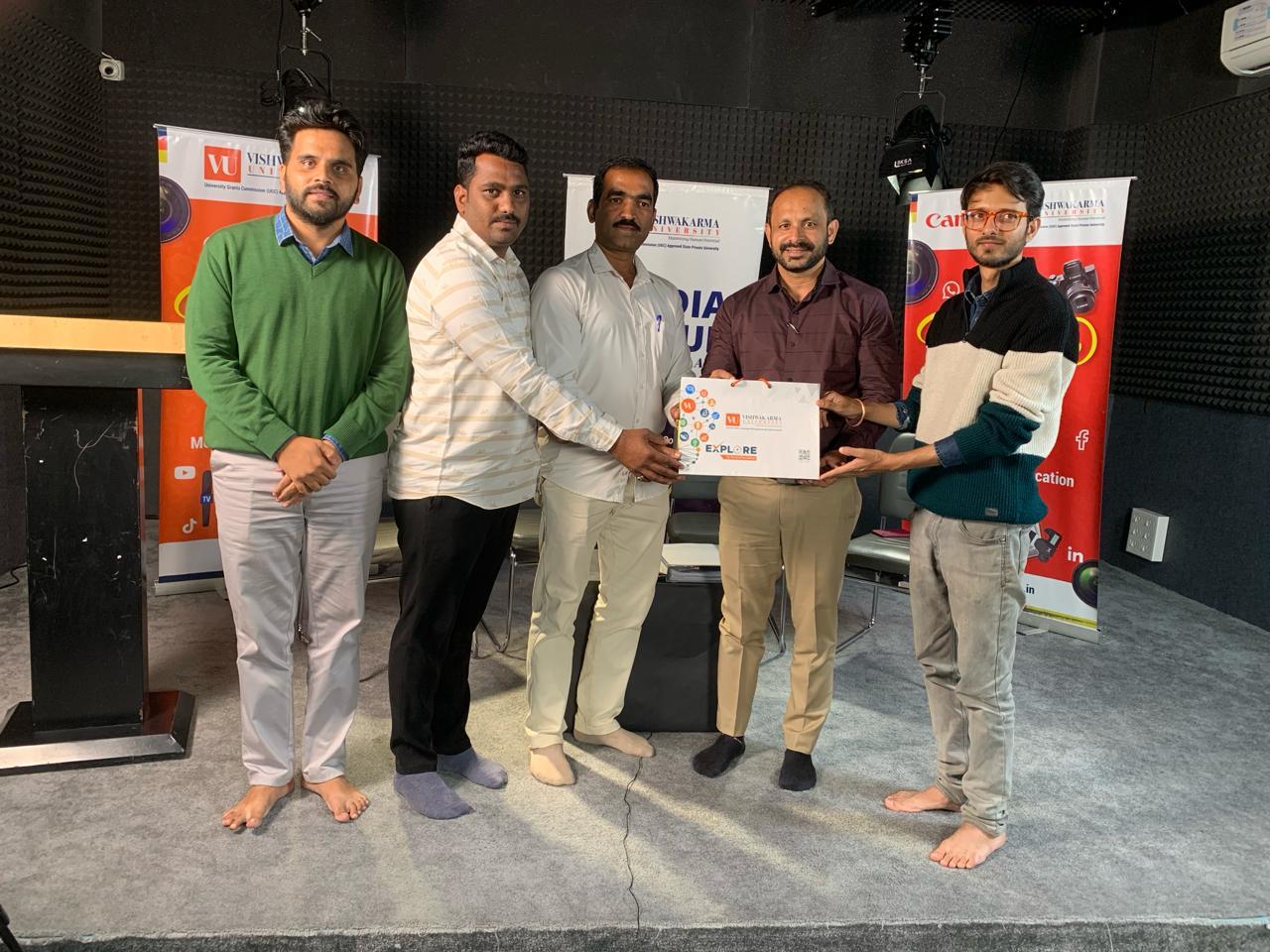
Pune : The women empowerment centre - VU Saksham, of Vishwakarma University organised a financial literacy campaign jointly with National Security and Exchange Board of India ( SEBI) to aware rural women in Donaje and Mordari regarding proliferation of ponzi schemes and investment in government driven various welfare schemes for better and healthy future on 18th January 2024
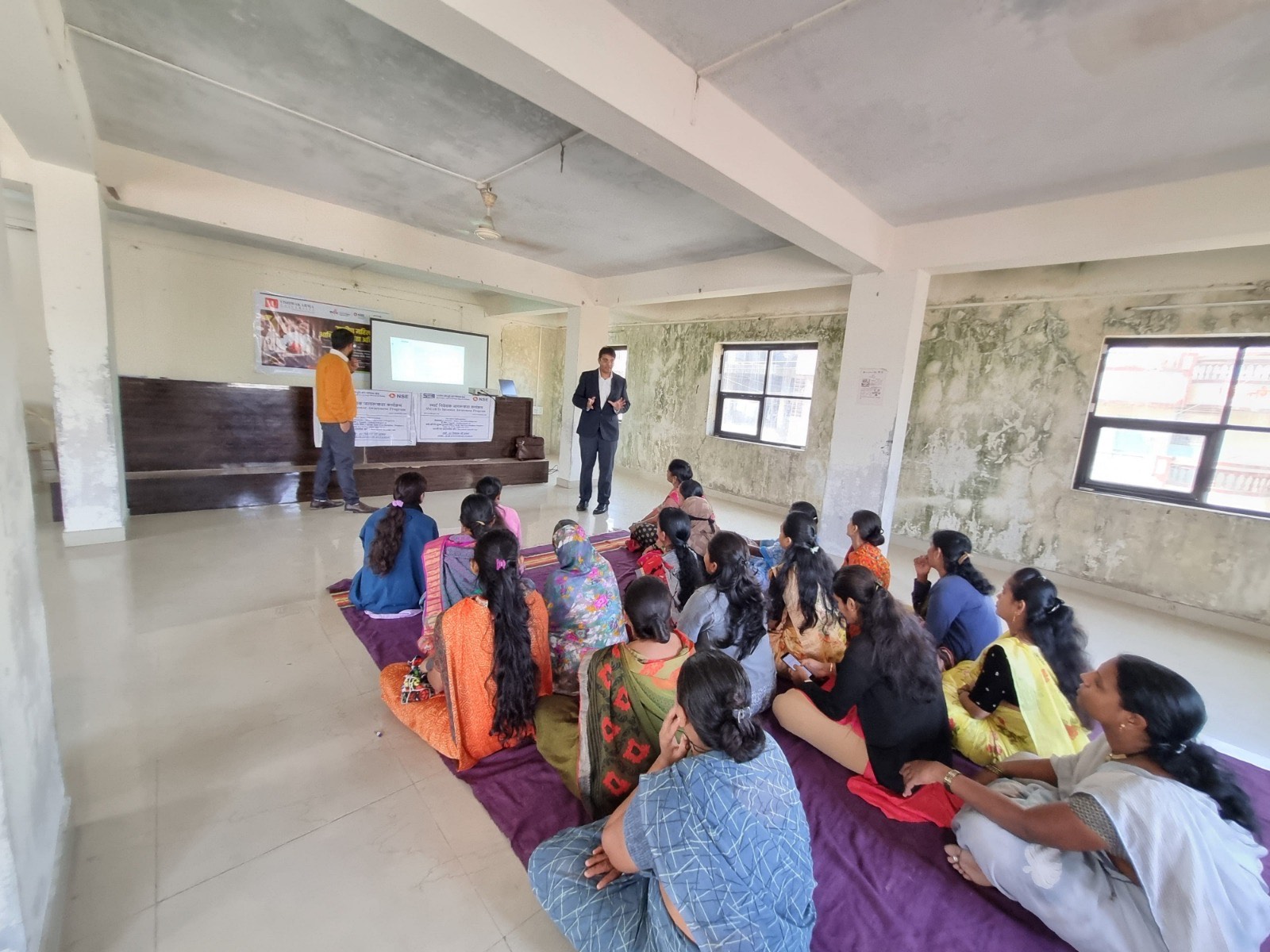
Rural India has always been vulnerable to ponzi schemes and many high promising financial schemes Many villagers have lost their life fortunes by investing in these kinds of schemes. However, women play a vital role in family savings, and awareness among women regarding these schemes and new avenues of investment may cultivate desired results. Considering these thoughts, the empowerment centre has taken several initiatives. It identified villages and implemented the first phase of literacy programmes in Donaje and Mordari. The identified villages were located in hilly ranges of Sinhagad Fort located in east of Pune. As many as 60 women from both villages participated in the programme.
One of the participants in the campaign, Poonam Chavan said, “We save and keep money at home despite the availability of banks. Presence of the banking system is not new to us. But an appropriate investment is necessary for a sustainable future. The financial literacy programme helped us in the form of different avenues of investment than traditional fixed deposits. Now, we can save money in specific government schemes.
The SEBI extension officer Rohit Warman said, “The prime objective of the organisation is financial literacy and to secure them from ponzi schemes. We have focused on women, college students for financial literacy. We got a good response from village women today.
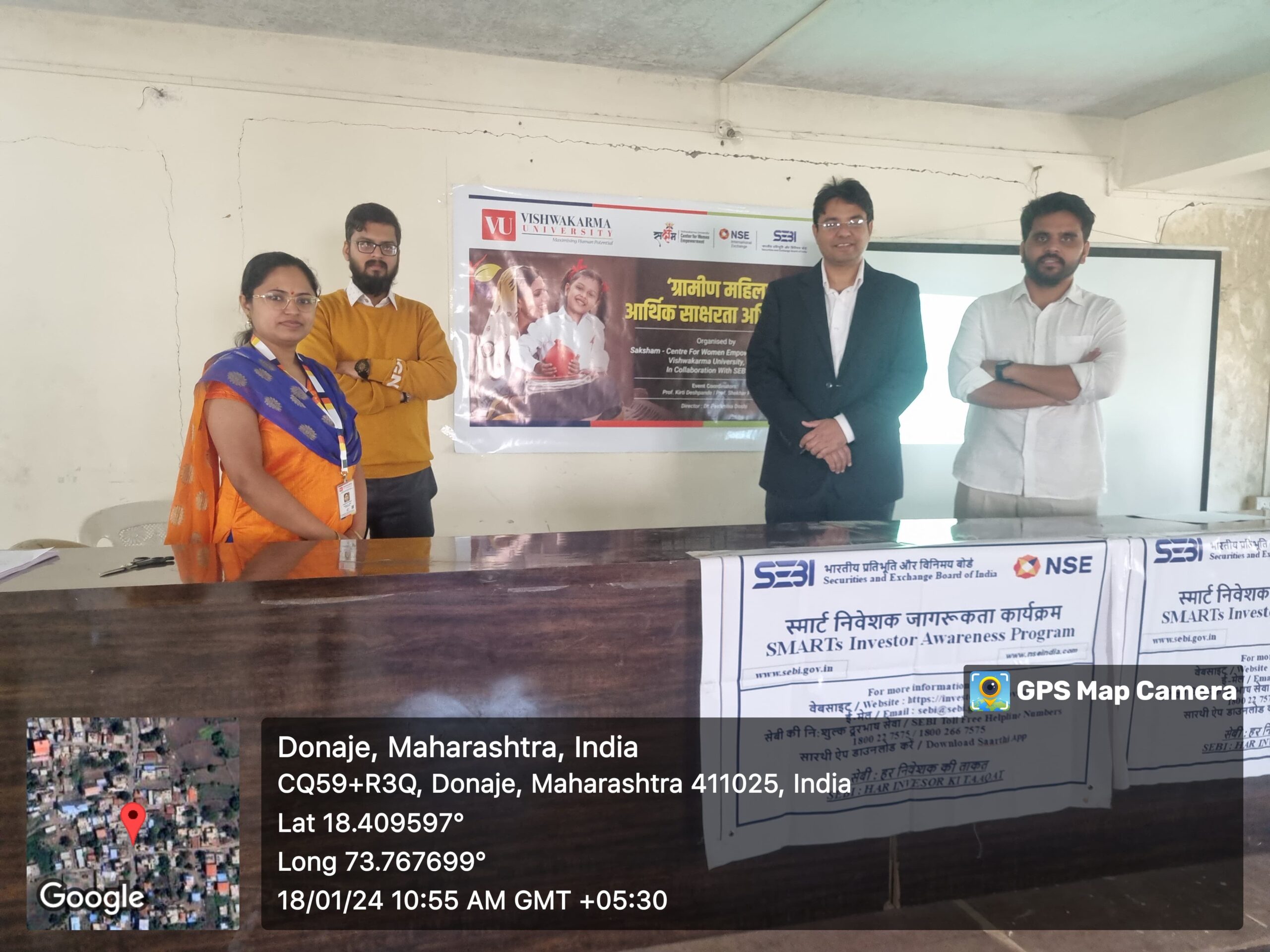
The programme coordinator Prof. Shekhar Paigude said, “ Financial literacy is a major concern in rural Maharashtra. Recent Ponzi schemes and high promises through equity markets have exploited the rural masses. Women play a vital role in the family. Thus empowering women leads towards family empowerment. We got a promising response in the first phase and we will have the same rigour for the next phase.”
By : Aarya Deshpande
(BAJMC Second Year)

What about half of the population?
Public discussion on women’s participation in the world’s biggest electoral
Kapish Shilimkar ( BAJMC Second Year)
Pune : Women in India, who constitute nearly half of the electorate, have emerged as a formidable force in shaping political outcomes. However, this force has always been ignored in the male dominant political space. On this background the BBC Marathi, a part of BBC world service has organised one day public discussion on ‘Her Manifesto’ to discuss the contemporary socio-cultural and political dynamics of women in India on 1st May 2024 here at Pune Patrakar Bhavan ( Office of Union of Pune Working Journalists Association).
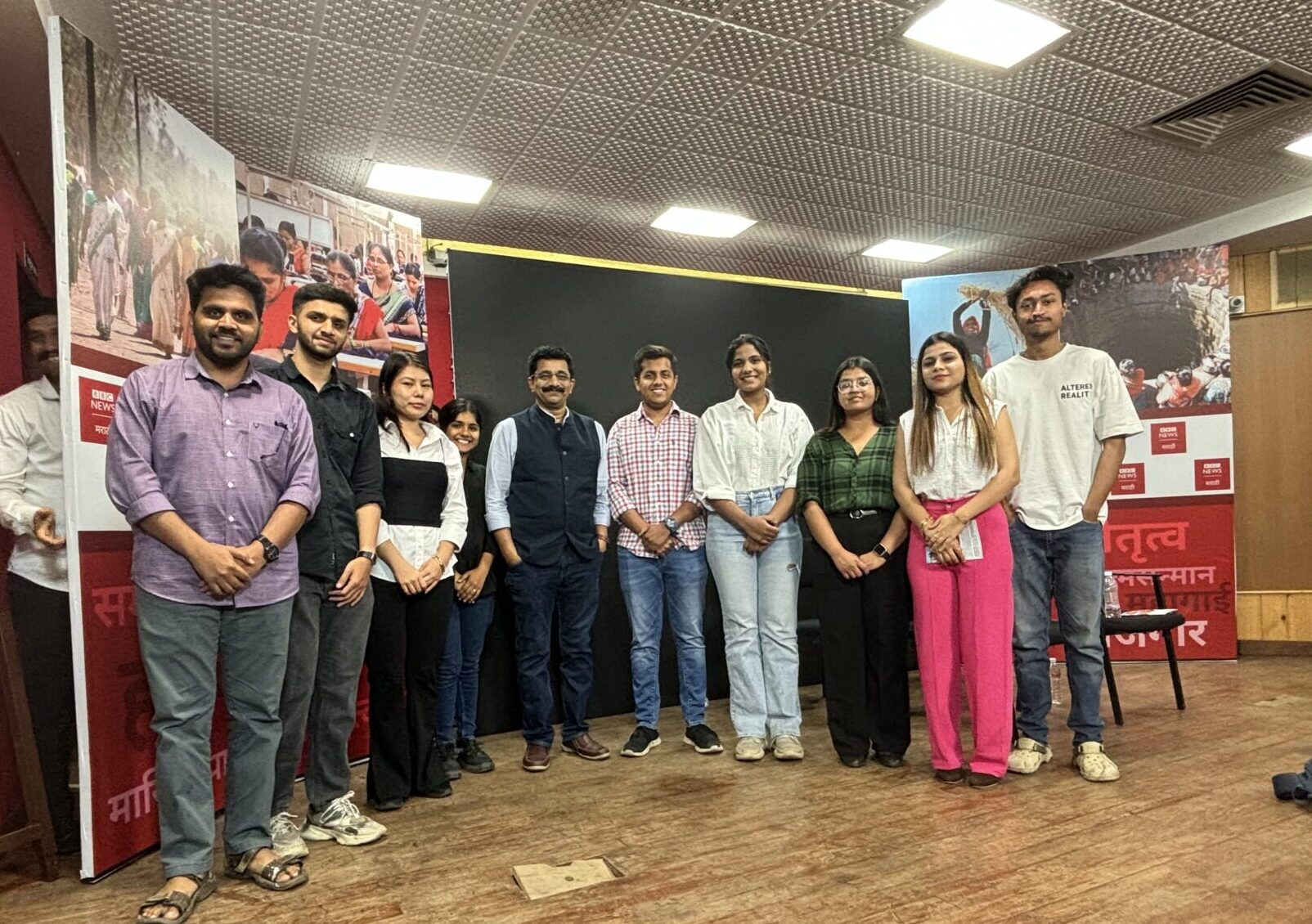
One of the significant topics covered is women's safety, a perennial issue in India, which remains a top priority for many voters. The programme sheds light on the implementation and efficacy of safety measures introduced by the current government and scrutinizes the promises made by the opposition. Personal stories of women from rural and urban areas who have been affected by safety concerns bring a human face to the statistics, emphasizing the urgency of the matter.
Health care is another critical area where women's needs are prominently discussed. The BBC Marathi programme explored how maternal health services, accessibility to quality healthcare, and reproductive rights are becoming important electoral issues.
Economic empowerment of women is also a major focus. However, it also critically analyzes the gender wage gap, the underrepresentation of women in formal sectors, and the challenges women face in balancing work and family responsibilities. The programme featured success stories of women entrepreneurs and self-help groups that have made significant strides, underscoring the potential of economic independence to transform women's lives.
Education for girls is another pivotal issue discussed in the programme. The BBC Marathi team traveled to various regions to report on the status of girl child education, the implementation of schemes like Beti Bachao Beti Padhao, and the barriers that still persist in ensuring every girl gets an education. The stories of girls who have overcome immense odds to pursue their studies are both inspiring and indicative of the progress that still needs to be made.
Political representation of women forms a crucial part of the discussion. Despite various efforts, women are still significantly underrepresented in Indian politics. The programme analyzed the impact of women's reservation in local bodies and the need for similar measures in the state and national legislatures. Interviews with female politicians, activists, and voters provide a comprehensive view of the challenges and opportunities in enhancing women's political participation.
The BBC Marathi programme also emphasizes the importance of intersectionality, recognizing that women from different backgrounds—whether based on caste, class, or region—face unique challenges. This nuanced approach ensures that the discussions are inclusive and reflect the diverse experiences of women across India.
Kapish Shilimkar ( BAJMC Second Year)
Capture the Beauty of Nature through Photography
Many years ago, I worked for my parents who own a video production company. Because it is a family business, you inevitably end up wearing many hats and being the czar of many different jobs. I mainly managed projects and worked as a video editor. On production, there were times that I was called on to work as an audio tech and was made to wear headphones on long production days. In those days, having a really good set of headphones that picked up every nuance of sound was essential to making sure the client got what they needed. Naturally, my first impression of these headphones is based off of the look of them. They have a classic over-the-ear style that is highlighted by a blue light that indicates the power for the noise canceling. The padding on the ear pieces seems adequate for extended usage periods.
They are wired headphones, but the stereo mini-plug cable is detachable. Something else I noticed right of the bat was the very nice carrying case that comes with them. It has a hard plastic exterior with a soft cloth interior that helps to protect the surface of the headphones from scratches. I never truly appreciated cases for headphones until I started carrying them from place-to-place. Now I can’t imagine not having a case. Once I gave the headphones a thorough once-over exam, I tried them on. As I mentioned, they have a classic over-the-ear style and just looking at them, the padding on the ear pieces seem adequate and the peak of the headband seemed to be a bit lacking, but you don’t really know comfort unless you try on the product. So, I slipped the headphones on and found them to be exquisitely comfortable.
If you look at what you have in life, you'll always have more. If you look at what you don't have in life, you'll never have enough.
Oprah Winfrey
Now that I had the headphones on my head, I was finally ready to plug and play some music. I plugged the provided cable into the jack on the headphones and then the one on my iPhone. Then I called up Pandora. I tend to have a very eclectic music purview and have many stations set up for different moods. the sound quality of these headphones was remarkable. There is an amazing depth of sound and incredible highs and lows that make listening to music a truly breathtaking experience. In order to test how voices sounded, and the overall art of mixing, I pulled up Netflix on my iPad Air and watched a few minutes of a movie to hear all the nuances of the film.
None of them were lost. In fact, I ended up hearing sounds that I hadn’t heard before. Echoes…birds chirping…wind blowing through trees…breathing of the characters…it was very impressive what the headphones ended up bringing out for me.

How to Be in the Flow and Create Something Beautiful
Just the other day I happened to wake up early. That is unusual for an engineering student. After a long time I could witness the sunrise. I could feel the sun rays falling on my body. Usual morning is followed by hustle to make it to college on time. This morning was just another morning yet seemed different.
Witnessing calm and quiet atmosphere, clear and fresh air seemed like a miracle to me. I wanted this time to last longer since I was not sure if I would be able to witness it again, knowing my habit of succumbing to schedule. There was this unusual serenity that comforted my mind. It dawned on me, how distant I had been from nature. Standing near the compound’s gate, feeling the moistness that the air carried, I thought about my life so far.
Your time is limited, so don't waste it living someone else's life. Don't be trapped by dogma – which is living with the results of other people's thinking.
Steve Jobs
I was good at academics, so decisions of my life had been pretty simple and straight. Being pretty confident I would make it to the best junior college of my town in the first round itself, never made me consider any other option. I loved psychology since childhood, but engineering was the safest option. Being born in a middle class family, thinking of risking your career to make it to medical field was not sane. I grew up hearing ‘Only doctor’s children can afford that field’ and finally ended up believing it. No one around me believed in taking risks. Everyone worshiped security. I grew up doing the same.
‘Being in the top will only grant you a good life’ has been the mantra of my life. But at times, I wish I was an average student. I wish decisions would have not been so straightforward. Maybe I would have played cricket- the only thing I feel passionate about. Or maybe I would have studied literature (literature drives me crazy). Isn’t that disappointing- me wishing to be bad at academics. It’s like at times I hate myself for the stuff I am good at.
When you step out of these four walls on a peaceful morning, you realize how much nature has to offer to you. Its boundless. Your thoughts, worries, deadlines won’t resonate here. Everything will flow away along with the wind. And you will realize every answer you had been looking for, was always known to you. It would mean a lot to me if you recommend this article and help me improve.

I Like Keep Things Simple to Appreciate the Details
Just the other day I happened to wake up early. That is unusual for an engineering student. After a long time I could witness the sunrise. I could feel the sun rays falling on my body. Usual morning is followed by hustle to make it to college on time. This morning was just another morning yet seemed different.
Witnessing calm and quiet atmosphere, clear and fresh air seemed like a miracle to me. I wanted this time to last longer since I was not sure if I would be able to witness it again, knowing my habit of succumbing to schedule. There was this unusual serenity that comforted my mind. It dawned on me, how distant I had been from nature. Standing near the compound’s gate, feeling the moistness that the air carried, I thought about my life so far.
Your time is limited, so don't waste it living someone else's life. Don't be trapped by dogma – which is living with the results of other people's thinking.
Steve Jobs
I was good at academics, so decisions of my life had been pretty simple and straight. Being pretty confident I would make it to the best junior college of my town in the first round itself, never made me consider any other option. I loved psychology since childhood, but engineering was the safest option. Being born in a middle class family, thinking of risking your career to make it to medical field was not sane. I grew up hearing ‘Only doctor’s children can afford that field’ and finally ended up believing it. No one around me believed in taking risks. Everyone worshiped security. I grew up doing the same.
‘Being in the top will only grant you a good life’ has been the mantra of my life. But at times, I wish I was an average student. I wish decisions would have not been so straightforward. Maybe I would have played cricket- the only thing I feel passionate about. Or maybe I would have studied literature (literature drives me crazy). Isn’t that disappointing- me wishing to be bad at academics. It’s like at times I hate myself for the stuff I am good at.
When you step out of these four walls on a peaceful morning, you realize how much nature has to offer to you. Its boundless. Your thoughts, worries, deadlines won’t resonate here. Everything will flow away along with the wind. And you will realize every answer you had been looking for, was always known to you. It would mean a lot to me if you recommend this article and help me improve.

Thriving for Simplicity and Ease of Use Sharing Knowledge
Just the other day I happened to wake up early. That is unusual for an engineering student. After a long time I could witness the sunrise. I could feel the sun rays falling on my body. Usual morning is followed by hustle to make it to college on time. This morning was just another morning yet seemed different.
Witnessing calm and quiet atmosphere, clear and fresh air seemed like a miracle to me. I wanted this time to last longer since I was not sure if I would be able to witness it again, knowing my habit of succumbing to schedule. There was this unusual serenity that comforted my mind. It dawned on me, how distant I had been from nature. Standing near the compound’s gate, feeling the moistness that the air carried, I thought about my life so far.
import styles from './MyComponent.css';
import React, { Component } from 'react';
export default class MyComponent extends Component {
 render() {
    return (
      <div>
        <div className={styles.foo}>Foo</div>
        <div className={styles.bar}>Bar</div>
      </div>
    );
  }
I was good at academics, so decisions of my life had been pretty simple and straight. Being pretty confident I would make it to the best junior college of my town in the first round itself, never made me consider any other option. I loved psychology since childhood, but engineering was the safest option. Being born in a middle class family, thinking of risking your career to make it to medical field was not sane. I grew up hearing ‘Only doctor’s children can afford that field’ and finally ended up believing it. No one around me believed in taking risks. Everyone worshiped security. I grew up doing the same.
process.env.NODE_ENV === 'development' ?
    '[name]__[local]___[hash:base64:5]' :
    '[hash:base64:5]'
)
When you step out of these four walls on a peaceful morning, you realize how much nature has to offer to you. Its boundless. Your thoughts, worries, deadlines won’t resonate here. Everything will flow away along with the wind. And you will realize every answer you had been looking for, was always known to you. It would mean a lot to me if you recommend this article and help me improve.
Savitri in Search of Jotiba...
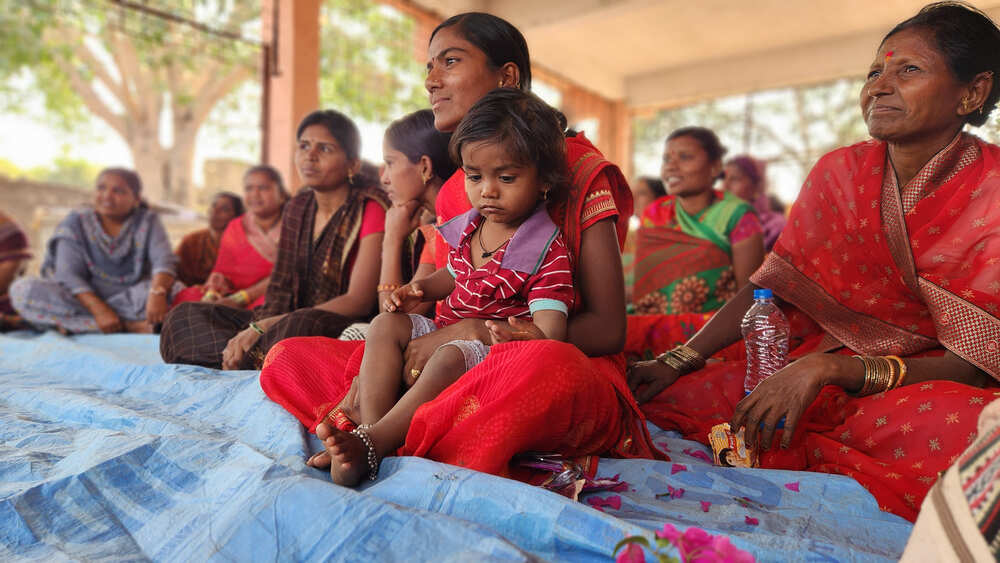
In the drought-stricken district of Dharashiv, a group of determined women farmers is challenging traditional gender roles to combat the harsh realities of agricultural distress. Rajshri Mane, Rohini Ghodke, Komal Shinde, Sujata Patil and many other are breaking barriers and reshaping their communities' perceptions of women's roles in agriculture.
When these women first proposed stepping out of their homes to seek solutions for their struggling families, they encountered resistance from their husbands and the community. "Do whatever you want by staying at home and working in the field. You don’t have to change the route from home to farm and farm to home and go anywhere else. You are a woman and do what has been assigned to you. We will take care of the situation," was the common response they received.
In many villages, the idea of women leaving their homes to pursue endeavors beyond their traditional roles is considered taboo. However, the severity of drought and unseasonal rains devastating crops have pushed these women to take action.
Empowering Women in Agriculture
Despite facing societal pressures, these women are determined to improve their families' lives. They recognize that agriculture is not just a man's domain; it is a vital source of livelihood for many women as well.
Interestingly the agricultural sector in India serves as the primary employer for 80 percent of economically active women in the country. Among these women, 33 percent constitute the agricultural labor force, and 48 percent are engaged as self-employed farmers.
Research conducted by the Indian Council of Agricultural Research (ICAR) indicates that women's participation is substantial across various aspects of agricultural activities, with a rate of 75 percent in the production of major crops, 79 percent in horticulture, 51 percent in post-harvest work, and 95 percent in animal husbandry and fisheries.
To address the challenges posed by drought and other adversities, these women have decided to step out of their homes. They are seeking training from local NGOs and government institutions in agri-allied businesses and other skills like sewing.
Drawing Inspiration from Savitribai Phule
However, stepping out of their homes was not easy. The women faced criticism and gossip from their communities. Some villagers questioned their motives and spread rumors, but these women remained steadfast in their resolve. They are determined to secure a better future for their families, ensuring that their children have enough food to eat and can go to school.
These women draw inspiration from Savitribai Phule, a pioneering figure in the field of women's education in India. Despite facing immense opposition and adversity, Savitribai continued her mission to educate girls. These women see themselves as modern-day Savitribais, fighting against entrenched gender norms and societal expectations.
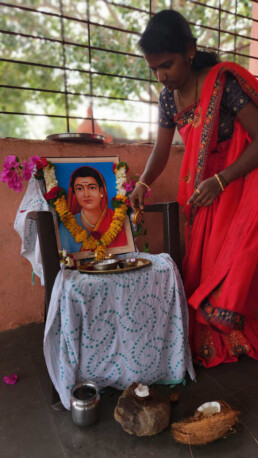
As they prepare for an NGO meeting in the village temple, these women place a picture of Savitribai Phule on a chair and perform a puja. "There are Savitribais in all these villages; the search for Jotiba seems unending," says Rajshri, referring to Jotiba Phule, Savitribai's husband and a social revolutionary.

Poetry: The Expression that Empowers!
Poetry is a timeless form of artistic expression that empowers individuals to convey their deepest emotions, thoughts, and experiences in a unique and profound way.
When students recited their own poetries recently in the special session organized by the Department of Journalism and Communication at Vishwakarma University, they created rich and evocative world that resonated with everyone on a deep and personal level.
Why poetry? Because one of the key ways in which poetry empowers individuals is by providing them with a voice to express their innermost thoughts and emotions. For many people, writing poetry is a cathartic and therapeutic process that allows them to explore their own feelings and experiences in a safe and creative way. By putting their thoughts into words, poets are able to gain a deeper understanding of themselves and the world around them, which can be incredibly empowering.
Poetry has the power to inspire and uplift others, serving as a source of strength and comfort in difficult times. Poets often use their words to shine a light on important social issues, such as injustice, inequality, and discrimination, and to advocate for change. Through their poetry, they are able to give a voice to the voiceless and to challenge the status quo, empowering others to do the same.
Poems presented by students evoked a sense of wonder and awe in those who were present in the audience, transporting them to a different time or place. This aesthetic appeal is empowering in its own right, as it allows individuals to appreciate the beauty of language and the power of human creativity.
Ten years of PoSH : A decade of Accountability
Interview by Tapasya K.
The Government has enacted “The Sexual Harassment of Women at Workplace (Prevention, Prohibition and Redressal) Act, 2013” (PoSH Act) which aims to provide protection to women against sexual harassment at workplace and for the prevention and redressal of complaints related to it. The Act covers all women, irrespective of their age, employment status or nature of work whether working in public or private, organised or unorganised sector.
The Act casts an obligation upon employers of all workplaces, public or private, to provide a safe and secure working environment free from sexual harassment, whereby every employer is mandated to constitute an Internal Committee (IC) where the number of employees/ workers is more than 10. Similarly, the Appropriate Government is authorized to constitute Local Committee (LC) in every district to receive complaints from organizations having less than ten workers or if the complaint is against the employer himself.
On the tenth anniversary year of the POSH act, Tapasya Kamble interviewed eminent activist Kiran Moghe, Vice President and member of the All India Democratic Women’s Association, Maharashtra

Can you explain the background of the PoSH Act 2013.
In 1992, Bhanwari Devi, a Rajasthan government social worker, was tragically gang-raped while attempting to prevent the child marriage. In response to this incident, the Supreme Court identified the lack of legislation for upholding fundamental human rights related to gender equality and workplace sexual harassment. In 1996, the court established guidelines known as the 'Vishakha guidelines.' After extensive work on the bill, it was enacted into law in 2013."
What is the mechanism to handle sexual harassment at institutional level?
The legislation mandates that employers with a workforce exceeding 10 employees must establish an internal complaints committee. This committee should be led by a female member and consist of at least two women, another staff member, and an NGO representative with expertise in addressing issues related to sexual harassment. Additionally, the law requires every district across the nation to establish a local committee to provide support to women employed in informal sectors.
What would you like to say about the inclusivity of other genders and sectors in the act?
The act is exclusively for women but there are still discussions going on whether the it is gender-neutral or not. In terms of sectors the Act is applicable to all public and private sectors and organisations.
As vice president of AIDWA what role did you and your organisation play in the women wrestlers protests that took place earlier this year?
All India Democratic Women’s Association (AIDWA) was actively a part of organising the protests and providing aid to the wrestlers and even issued demands regarding taking necessary actions and providing justice to the women wrestlers.
What is the procedure to file a complaint under PoSH ?
"The Internal Complaints Committee (ICC) or Local Complaints Committee conducts an initial investigation, beginning with the complainant's testimony, followed by the accused. After gathering witness statements, a case file is compiled, and the committee proceeds to make a determination on the validity of the complaint. The severity of punishment is determined based on the institution's code of conduct. However, concerns have arisen regarding the actual efficacy of the ICC, with complaints emerging that some committees may show bias in favor of management."