
Virginity test? Does it happen even today?
Harnisha Desai
Gujarat
Yes, absolutely this exists! A few castes practice virginity tests in various forms. Some test a girl's virginity or even to punish a girl whose virginity is questionable! This is the story of a Malu (name changed) who belongs to a caste that follows this tradition and resides in Gujarat and is spread across the state.
Malu was born into the traditional family of this caste and her family was conservative. The nightmare started during her school days. She was one of the brilliant students in science and also the state topper. During her 12th exams, she was leaving the campus and it started raining heavily. As there was no other transport available she accepted the help offered by one of her classmates to drop her home.
A few days later some people reached out to her father complaining about her “affair” with the classmate. Malu was shocked and denied these allegations. Her father thrashed her badly and her community member attacked the boy. He was severely injured. But this was just the beginning of the nightmare.
Again, village people started gossiping that Malu had lost her virginity. “She is whore who lost her virginity before marriage with some stranger and that too at a very young age,” people said and the gossip spread like a wildfire. One day her community members came to her father and demanded a death punishment for Malu. “She is was a black spot on the family and doesn’t deserve to live anymore,” said villagers who insisted to follow the “caste rule”.
The Horror
As per the caste rules, the woman who loses her virginity to a stranger or has intercourse without marriage is tied by spreading her legs wide apart with her hands also tied and her mouth stuffed with cloth balls thereafter. Then a wood log is inserted into her private parts. She is left in the room to die slow death as inserting that wood-log into her vagina leads to internal bleeding and multiple organ failure. A person dies a slow and very painful death.
After villagers pressurized him, Malu’s father got furious with his daughter who he said had brought “disrepute” to the caste and family. He decided to punish her. He tied his daughter with rope and inserted a wood log into her private part and left her to die. Malu cried for help and kept bleeding after being there in a helpless state. She was left all alone and was trying hard to set herself free.
She somehow freed herself though she was somewhat unconscious and escaped through the window which led to staircases towards the neighbour’s terrace. She managed to jump and run away. She cleaned and treated herself with basic first aid with the help of some sympathizers and immediately left the native place. After travelling for two days she reached a city and approached an NGO working for women and got her treatment.
Her Path
Malu decided to work with the same NGO and help other women. Today she is unwilling to speak about the past but she has not forgotten the pain and the trauma. The fear and nightmare still haunt her. She can’t even think of going back to the family. She still needs treatment for the injury caused because of the inhuman punishment she got from her father. There are a lot of internal problems and infections she suffers even after eight years of punishment.
Malu will never be able to give birth nor will she enjoy physical intercourse. She will not marry. But she has her goals very clear. She wants to fight for other girls who are suffering because of such heinous traditions. She wants to save them from suffering and humiliation. She wants to be their pillar to regain faith in life.
World Scenario
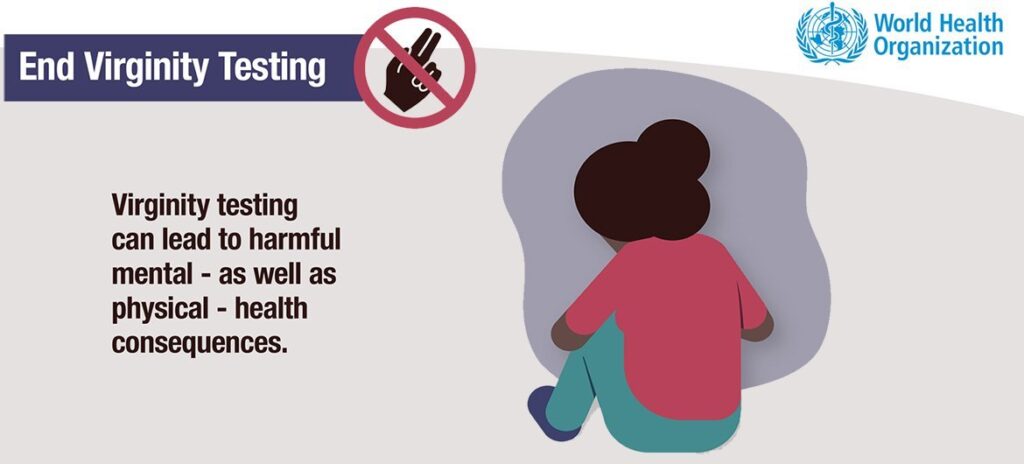
In 2018 UN Human Rights, UN Women and the World Health Organization (WHO) in a statement asked for ending virginity test practices.
“Virginity testing — a gynecological examination conducted under the belief that it determines whether a woman or girl has had vaginal intercourse — must end” said these organizations in a global call to eliminate violence against women and girls.
Virginity testing is a long-standing tradition that has been documented in at least 20 countries spanning all regions of the world. Women and girls are subjected, and often forced, to undergo virginity testing for various reasons. These include requests from parents or potential partners to establish marriage eligibility or from employers for employment eligibility. It is mostly performed by doctors, police officers, or community leaders on women and girls in order to assess their virtue, honour or social value. In some regions, it is common practice for health professionals to perform virginity testing on victims of rape, supposedly to ascertain whether or not rape occurred, the statement added.
Virginity testing is often performed by inspecting the hymen for tears or its size of opening, and/or inserting fingers into the vagina (the “two-finger” test). Both techniques are practiced under the belief that the appearance of the female genitalia can indicate a girl’s or woman’s history of sexual activity. WHO states that there is no evidence that either method can prove whether a woman or girl has had vaginal intercourse or not.
Gender Discrimination
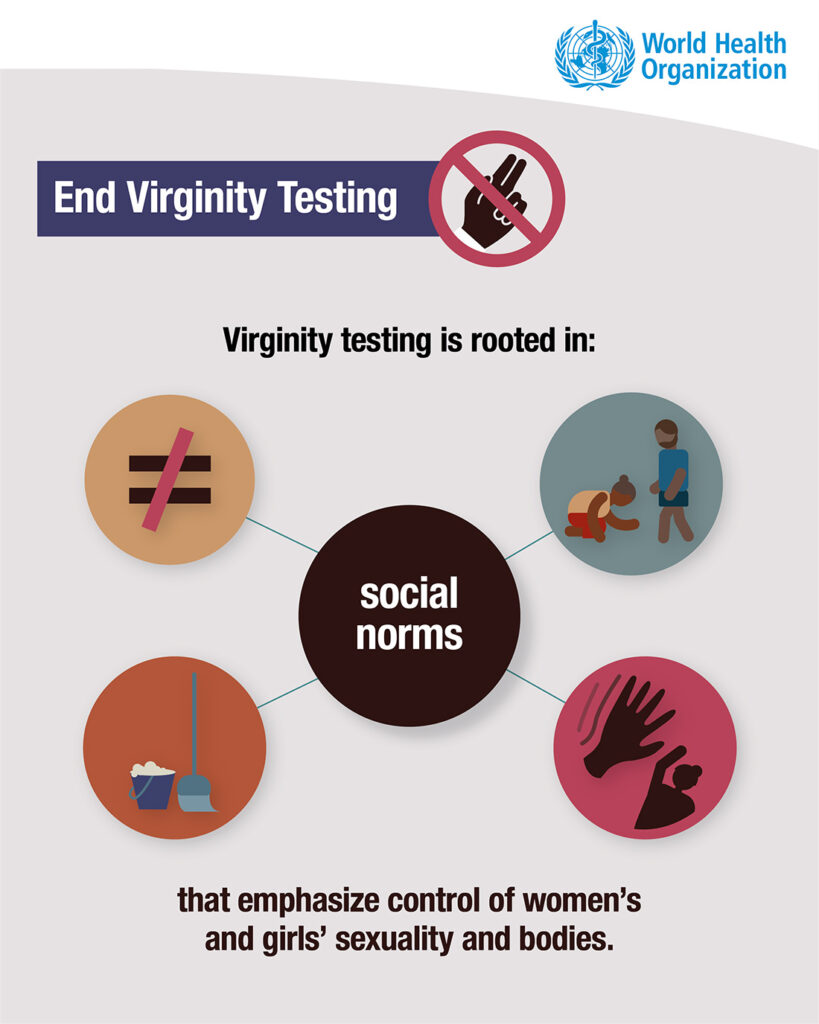
The term “virginity” is not a medical or scientific term. Rather, the concept of “virginity” is a social, cultural and religious construct – one that reflects gender discrimination against women and girls, the world organizations added.
The social expectation that girls and women should remain “virgins” (i.e. without having sexual intercourse) is based on stereotyped notions that female sexuality should be curtailed within marriage. This notion is harmful to women and girls globally.
Because of virginity tests many women suffer from adverse short- and long-term physical, psychological and social consequences including anxiety, depression and post-traumatic stress. In extreme cases, women or girls may attempt suicide or be killed in the name of “honour”.
( Harnisha Desai is a student of TYBAJMC at Vishwakarma University)
Pic curtesy: WHO (World Health Organisation)

The Rida and Reform
Sakina Motiwala
Pune
The tradition of women covering themselves up entirely when stepping out of the house exists for ages in many communities across the world.
In some communities when stepping out in public places, women need to wear outfits that wouldn’t highlight their physique and cover everything except their hands from the wrist down. Black is a colour that doesn’t reflect and hence, can’t highlight the body shape, even in the desert sun. And hence, it was set to tradition, that women would wear black when going out of their house.
The textile industry developed other coloured clothes and materials which work similarly to the black outfit. But the burkha tradition remained intact.
For decades women from the Bohra community followed this tradition too. This community is a minority in the Islamic religion and has estimated less than 2 lakh members in India. Today, however, this community is widely recognized for their colourful attires and the different style of burkha that they call a Rida.
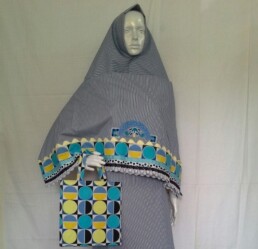
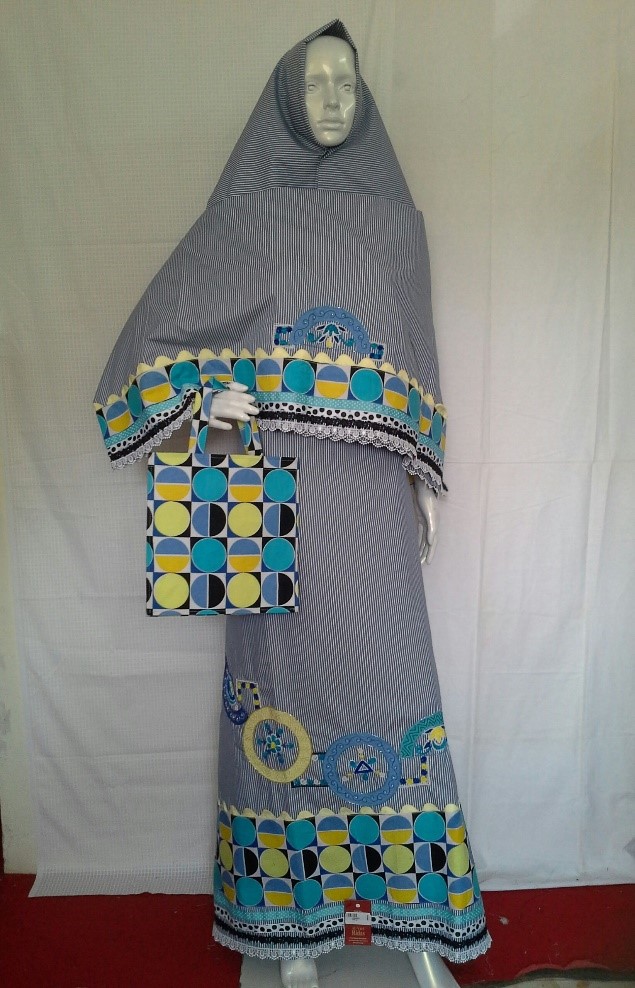
The difference between a traditional burkha and a Rida is that the Rida is a two-piece set that consists of a skirt called the Ghaghra and the top half is called the Pardi. This Rida doesn’t cover their faces and comes in a variety of colours and designs, from daily wear to festive wear.
The senior women in the community say that this isn’t the only reform the community has witnessed. There are very small but significant steps when it comes to the rights of women.
The step forward
Women are not allowed into the mosques, whether it be for praying namaz, listening to sermons, or for any other reasons. The Bohra community, however, doesn’t follow this and the women of this community are free to come into the masjid, even if they are on their periods.
The architecture of these masjids is done in a way that they are built in several storeys. The bottommost storey is reserved only for men. Above that, all the storeys are built for women. Except for the bottommost floor, all floors above have a hole in the centre through which they can look at what is happening below. The reason for this is so that the women sitting above can see what is happening below and the person who is giving sermons can look above and address everyone.
Today, if a couple were to have a daughter who wished to sit with her father on the bottom-most floor with her father, the father could actually take the daughter with him.
The colour of life
Sakshi Shinde
Pune
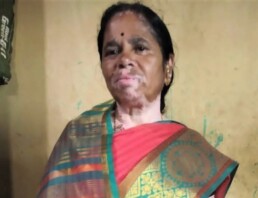
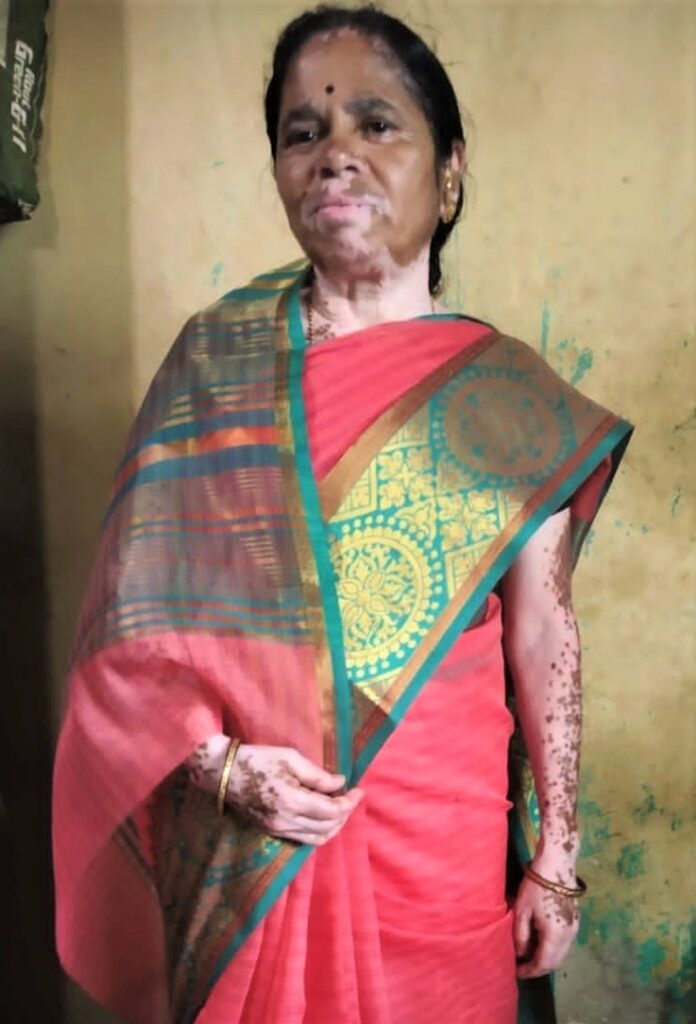
When Rekha was yet to be born, her mother wanted to abort her. Rekha’s father was bedridden and her mother was unwilling to give birth to her owing to the financial conditions of the family. But her father insisted that the baby should step into this world. “ This is why I can talk to you today. It is because of my father who thought that I should not die in my mother's womb” she says.
But that’s not the end of the story. It was the beginning of the long testing trail for Rekha. When she was just 13, she saw some white spots on her skin. She was detected with Vitiligo.
Understanding Vitiligo
In Vitiligo a person develops white patches of skin caused by the loss of melanin - the pigment that is a major contributor to skin. Experts say that it is a harmless disease and one can live a normal life with Vitiligo. But life was not easy for Rekha as society considers it as an abnormal disease and many also call such a person ominous.
According to V R Foundation working with people living with Vitiligo, it is a generally unpredictable skin disease that causes a gradual loss of skin colour and overlying hair on different parts of the body. Vitiligo is a life-long condition and it’s unlikely that one will ever be completely free of it.
“ An error within the immune system causes it to attack and destroy melanocytes, — the pigment producing cells responsible for the colour of the skin. This results in uneven white patches throughout the body” the Foundation states. It adds that the good news is that Vitiligo is neither life-threatening nor contagious.
Living with Vitiligo
Somehow Rekha continued her education and completed her nursing course. As she didn’t get a job she was married to a person who was already married and his first wife had died.
Her in-laws tortured her and once they dragged her to the river to drown her. Villagers saved her life and she escaped from the clutches of her in-laws. She came to her sister.
The life of a person who has to live with white patches on the parts of the body or the entire body turning white is not easy.
“ Ask me how I have lived. All my life I had to live all alone as nobody wanted to marry me. My relatives never invited me to functions and ceremonies. In fact, people used to fear their children with my name. I have been treated like a ghost” says Babytai a 70-year-old woman from Belgaum in Karnataka.
The new turn
Rekha’s life was not different. Adding to her problems she suffered because of tuberculosis. She admitted herself to a hospital and requested a doctor to treat her. She had no money for the treatment but she promised the doctor that she would work as a nurse in the hospital to pay the treatment expenses.
Her in-laws and husband continued to torture her. Her husband had not divorced her but he got married to another woman.
She decided to shift to Kolhapur to work in a government hospital. She decided to marry once again as living alone in society was becoming challenging. Also, her family members insisted that she should get married. She married to a person whose wife had died and he had children.
Her husband was a drunkard and already had two children from his earlier wife. Every day he thrashed Rekha. Life become intolerable, but she continued to work and live. Meanwhile, she was looking after the children as she had no kids. Her husband died after a brief illness and Rekha was not responsible for raising his kids.
She stood firm
Despite all the discrimination and hatred, she received all her life, Rekha is not bitter. She remained firm and tolerated all the humiliation. Even after her husband’s death, she didn’t desert his kids. She fulfilled the responsibilities. She educated kids and made them stand on their own. She settled them in life and returned to her sister.
“ This life,” she says with teary eyes. When she looks back and introspects, she says that destiny was cruel and unjust towards her. “ Why me?” she asked each and every time she had to suffer. But then there was no one to answer her question. She had to find her own answers.
Vitiligo changed her skin colour and also the direction of her life, but it couldn’t change her spirit to face life as it is.
(Sakshi Shinde is a student of SYBAJMC at Vishwakarma University )
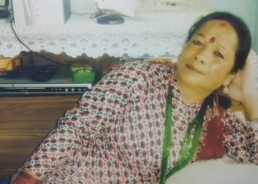
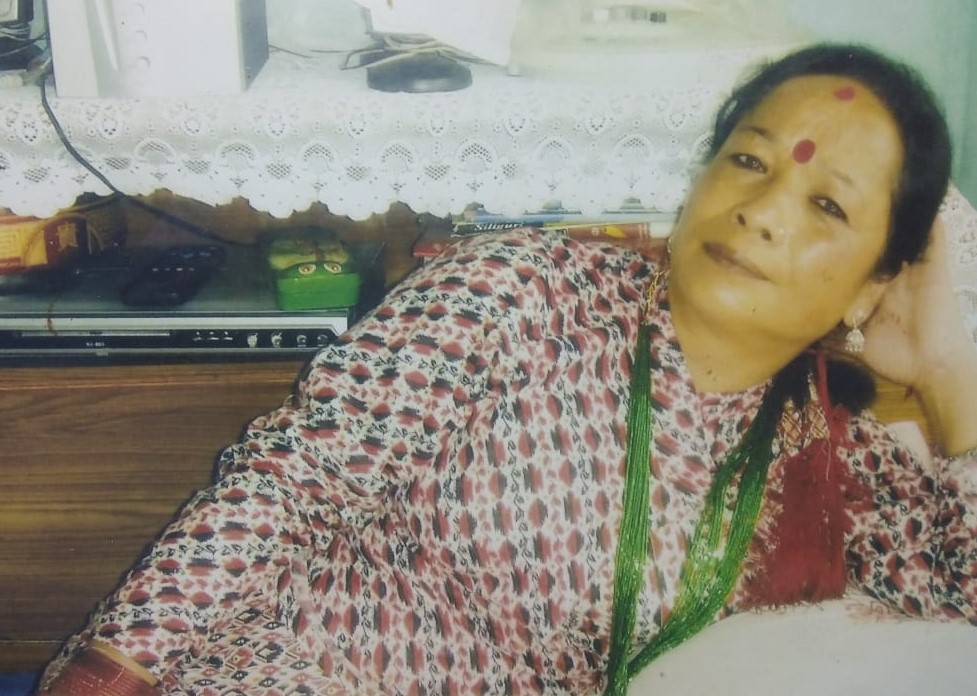
Life of Bina
Sudharsana Jain
Pune
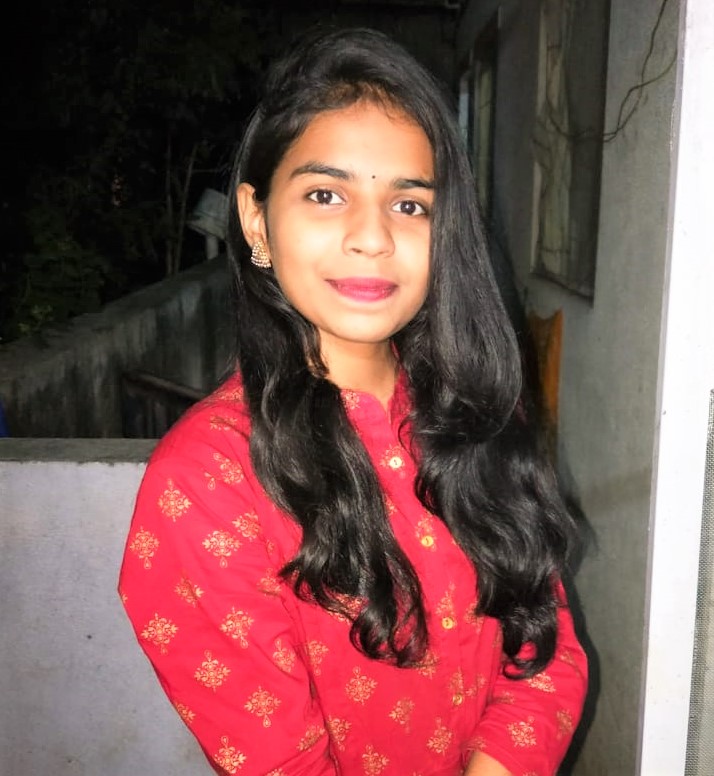
Bina Chhetri always greets everyone with a smile on her face. She never let anyone see through her pain. Born in a small village in Darjeeling, Bina Chhetri is calm when she narrates her tumultuous past. She currently lives with her son Jyoti Chhetri while her two daughters Babita and Suchita are married.
As a child, Bina’s parents restricted her from going to school and asked her to stay at home and help with all the house chores. But one day there was a ray of hope. Her parents allowed her to attend school and she was admitted to 2nd standard when her younger sister was in 4th standard. Children made fun of her. The school was suffocating and she stopped attending school after a month of her admission.
She never felt happy living with her parents as they always treated her as a maid, she says. Her relationship with her parents was strained for some reasons. “They never let me wear nice clothes when my sister got to wear pretty dresses. At the age of 14, I was married off to a rich man. I thought that there will be some peace and happiness. My husband treated me well and we were blessed with three children” she says. Bina was 30 and by the time her husband died if ailment. Then started series of challenges.
The aftermath
At this point in life, she and her children were struggling even to arrange meals. She was always under constant stress on how to manage the next day's food. She started working as a coolie in a railway station. She never missed the day even in harsh weather to earn a little extra money for her children. Sometimes she also went to work as a labourer to break stones.
With hard work, life started getting a little better. She admitted her children into the school. She also worked as a housemaid to support the family.
But despite all the hard work, she earned Rs 30 per month (it was in the year 1982). But then came another major challenge. Her son got infected with polio. With no support and proper income, she was struggling to treat him. It was disheartening for her to see a crippled son. Even after those hardships, she took him to a private hospital for better treatment. Doctors said he would be able to walk again but the treatment and the medicines would cost heavy. She sold utensils in-house to support the treatment.
After a few months, her son started getting better and could walk and was no longer dependent. Meanwhile she got a job as a nurse in a local hospital at a salary of Rs 525 per month. But she was transferred to Takdah and had to leave her children behind. She visited them once a week as they continued their education.
Today her son and elder daughter were married and her friends convinced her that she should remarry. She agreed and married a man who was jobless. He was a violent person and always doubted her. He beat her mercilessly, followed her to her job and used to keep an eye on her. He created a lot of problems for her and made life horrible. He died of a disease.
“All those years were indeed difficult but one thing I learned is that you should never lose hope. Just keep on working hard and one day God will hear your prayers. Today I am living a happy life with my son and daughter-in-law and my grandchildren. My daughters are earning well and feeding their families. After a long journey filled with difficulties it’s finally time for me to retire from all the hardships and stress of life and just enjoy my old age” she says with a smile on her face.
(Sudharsana Jain is a student of SYBAJMC at Vishwakarma University )
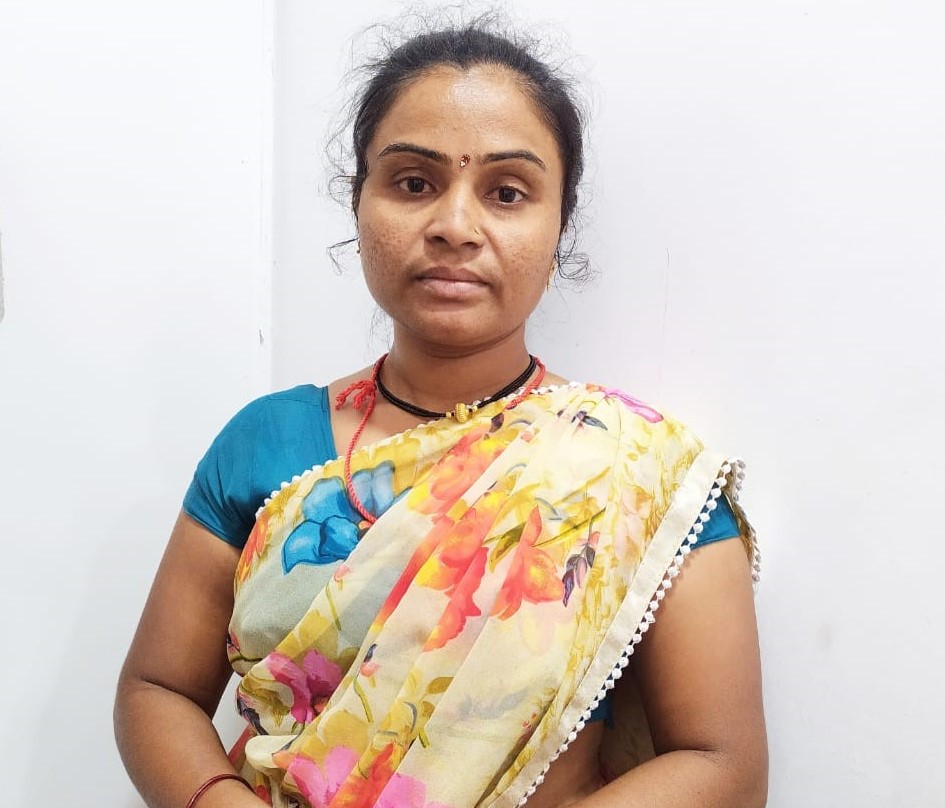
Ashwini has decided to fight
Sanika Jain
Pune
Ashwini was rattled and shocked when her husband committed suicide. It was the auspicious Ganesh festival and the family was happily celebrating. Sunil performed the rituals devotedly. Nobody in the family was aware of what was going on in his mind. The next day he was found hanging from the fan with a saree tangled around his neck. Ashwini and her three kids were in complete shock. Ashwini was in a traumatic condition.
Ashwini Chavan (32) who resides in Pimpri-Chinchwad studied till 7th standard. She was married to Sunil in 2007. They used to live in a village but later shifted to the city in search of livelihood. Ashwini gave birth to a daughter a year after her marriage and in later years she also delivered a boy and a girl.
Sunil worked as a driver and meanwhile started drinking heavily. He lost his job because of his drinking habit. Ashwini was left with no choice but to work. She prepares tiffin and serves as a cook in 4-5 houses per day. But despite all these efforts, she had to suffer at Sunil’s hands. He drank and beat her brutally and ruthlessly.
“I was fed up with everything,” says Ashwini. Every evening when Ashwini got back from work, Sunil fought with her. He beat her and forced her to give money to buy alcohol. Moreover, Sunil also had to pay off debts taken by many people. “The stress of repaying the debts might have led him to give up on his life”, said Ashwini.
But she never thought of ending her life. Unlike her husband who decided to commit suicide, Ashwini vouched to fight all the odds and raise her children. Family problems and illness were the major causes of suicides, accounting for 33.2 per cent and 18.6 per cent, respectively, in 2021. Drug abuse and/or alcoholic addiction (6.4 per cent) and marriage-related issues (4.8 per cent) are some other reasons why people commit suicide according to the National Family Health Survey ( NFHS-5).
The motivation
After her husband’s death, the only motivation Ashwini had, were her children. Relatives didn’t support her in any way. She received no help from them. She said, “All alone, I gathered the strength for my children. I decided to get back to work rather than sitting disheartened at home.”
“My kids are my responsibility; I gave birth to them and I have to look after them and their future”, she added.
With the determination of giving her children and herself a better life, she moved forward.
It is difficult for her to manage the rent of her house, pay light bills, etc. There are no savings for her family at the end of the month after making all the necessary payments. Ashwini’s children are studying well at government schools, she intends to educate them diligently.
The Covid-19 pandemic period was one more adversity for Ashwini and her family. They had to cut on meals due to the unavailability of food and financial condition. She sought help from people she works for and passed this hardship too.
The survival
She says that it is very difficult for a woman to survive alone in society. There is always insecurity at the back of her mind. People behave weirdly, she says. It is an arduous journey to overcome and stand all by herself. She said, “Never be dependent on anyone. Come what may, even if you fall or fail, always learn to get up and continue walking by yourself.”
Ashwini is an example of a strong and independent woman who aims for a better future for herself and her family. It is certainly not easy for a single woman to survive in a male-dominated society. But Ashwini and many like her are putting up a tough fight against all the challenges. She has decided to fight and not run away from the battle filed.
( Sanika Jain is an SYBAJMC student at Vishwakarma University.
Pic courtesy: Labdhi Jain
Reshma’s ‘grand’ battle
Harnisha Desai
Pune
She was on the verge to end her life. Unlike the traumatic life she had lived, Reshma wanted silent death. She thought of ending everything by jumping into the well. “ My body should not flow here and there. I should die in peace” she told herself. She remembered her departed husband and urged him in prayers that he must call her to his world. But then, two innocent faces flashed into her mind and Reshma returned back to continue the battle of life. Reshma’s story is the story of her challenge to challenges.
Reshma ( name changed to protect identity) was too young when her father passed away. All her life she could never forget the trauma of living without the shadow of her father. At the age of 16 when she was married to a city man, she was completely unaware of this new world. Her husband was in cattle farming and his financial condition was not that good.
She was illiterate as she never went to school. Her family became her life. She gave birth to two sons and then her life revolved around them. With her two kids and husband, Reshma was completely immersed in daily chores. All her youth she worked along with her husband shouldering the responsibility of a cattle farm.
Both her sons completed the tenth standard and because of financial conditions they left schooling and started working. They worked to earn for the family. A few years later one of the sons was married to a girl who was a sportswoman and a state level player. She wanted to pursue her career but her parents resisted and after her marriage husband convinced her against entering the sports arena. The couple had two children – a son and a daughter. After ten years of marriage, the couple decided to separate because of differences between them.
The grand challenge
Reshma and her husband decided to look after their grandchildren as they were unsure of their son and daughter-in-law’s intent and capacity to look after the kids.
But then, Reshma’s tryst with challenges had not ended. Her husband was detected with blood cancer and Reshma was devastated. All her life she was dependent on him and he was the pivot of her life. This was one of the toughest phases of her life.
She was looking after her ailing husband and also after grandchildren who were going to school.
One day Reshma’s husband breathed last and she was left all alone in the battle of her life with her grandchildren. Her son meanwhile was remarried and he took kids to his place, even as Reshma opposed it. As a part of a religious ritual after losing her husband, Reshma went to her brother’s place. Brother said that she must not go back as her son would not look after her.
But Reshma was unhappy and wanted to return to her household. Her brother said that once she cross the threshold, she must not return home. She was abused, threatened and pressurized to stay in the village and under her brother’s care. But Reshma was worried about her grandchildren. She escaped from her brother’s house and came back to the city.
There was a phase in her life when she was all alone. Though deaths lingered in her mind. She was shocked to know that her beloved granddaughter was severely injured and had to be hospitalized after her stepmother thrashed her. Reshma decided against ending her life. She got back to her grandchildren to build their future.
The Life Struggle
She had some savings and also sold her jewellery. She paid for the education of her grandchildren and ensured that they don’t leave their education incomplete. Life was not easy for her. At a time her grandchildren would fight with her for not allowing them to meet their father.
She suffered mentally, physically and emotionally as a widow in an orthodox community. She was fighting a lonely battle only to secure the future of her grandchildren. That was the only mission in her life. Her son sometimes chipped in with help, but Reshma never allowed him to take away the kids.
Today Reshma’s grandchildren are studying for their graduation and her granddaughter wants to pursue higher education abroad.
“ Don’t worry I am with you. And also I will accompany you when you go abroad” she tells her granddaughter oozing with confidence. Her grandchildren are mesmerized by her confidence and determination.
“ I’d salute her guts. She has made many sacrifices so that we could survive and reach this level in our lives. We are because of her. She is the reason, the core backbone for our survival, success and well-being” says the granddaughter.
For Reshma, life has come full circle. She lived for her grandchildren and hopes to see they excel in life. Ending life was the easy way available for her, but she chose a difficult path of living. She fought the life battle and fought it with courage. At the age of 70 Reshma is still the source of inspiration for her grandchildren.
( Harnisha Desai is a student of TYBAJMC at Vishwakarma University)
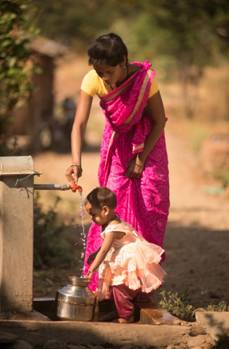
Pic curtesy: Press Information Bureau. Representative picture.
Pic taken from - https://www.pib.gov.in/PressReleseDetailm.aspx?PRID=1725976
VUCCD Lecture Series: Journalism is a challenging responsibility in today's world: Veengas
VUCCD Correspondent
Pune
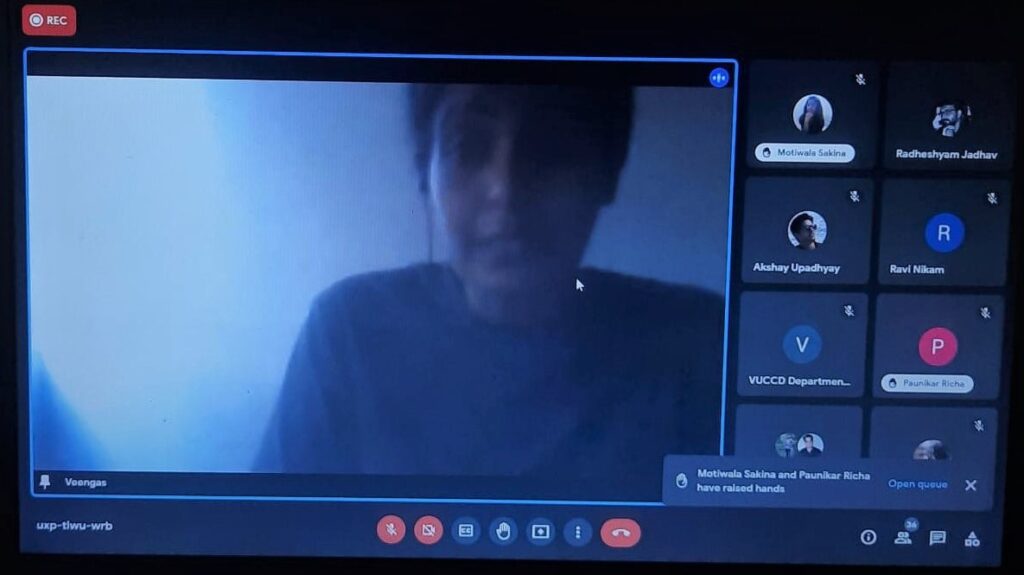
Journalism is a challenging responsibility in today's world but raising a voice for the voiceless must not be compromised said Karachi based Veengas, founder and editor of The Rise News web portal in Pakistan.
Explaining the challenges while working in Pakistan she said that Islamabad does not like English language journalism from Balochistan and Sindh as these stories communicate the local issues to the world. Veengas had a virtual interaction with journalism and mass communication students of the Vishwakarma University as a part of a lecture series by Vishwakarma University Centre for Communication for Development (VUCCD) on September 10, 2022.
Veengas emphasized the importance of regional languages along with English language journalism. She said that Islamabad doesn't like when local journalists write in English. She further stated that the mainstream media in Pakistan started following and publishing their local stories.
While answering questions raised by students Veengas said that aspiring journalists must find the new path if traditional media is not providing them the space and freedom for their stories.
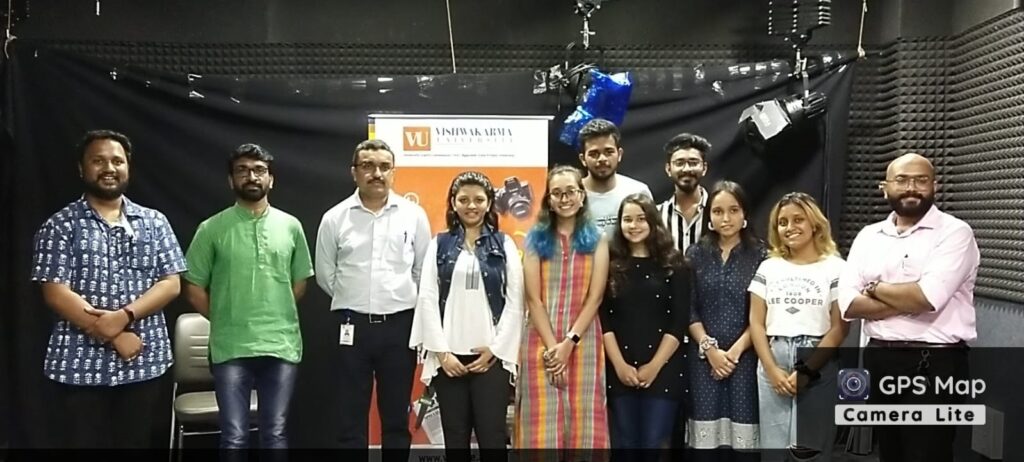
VUCCD Story Awards: Students should play an active role: Prof. (Dr.) Chetan Kapadnis
VUCCD Correspondent
Pune
Students should play an active role in the department activities and gain practical knowledge said Prof. (Dr.) Chetan Kapadnis, Dean, Faculty of Media and Communication while addressing the students during the VUCCD award ceremony held last week.
He said that students are enthusiastically contributing to the VUCCD website and writing some exceptional stories from real life.
He handed over awards to students for the best stories. VUCCD awards three best stories and consolation prizes every two months for the stories published on its website https://www.vuccd.com/
Madhura Janorkar won the first award for July –August 2022 for her story titled ‘When life posed challenges, Sonal had befitting answers’. Sanika Jain received the second award for her story ‘ A woman who dares to dream. The third award was given to Richa Paunkiar for her story ‘ Knocking at the doors of the school’. Swamidas Nair and Sanket Loya won consolation prizes for their stories ‘No shortcut to achieving dreams’ and ‘The ‘Iron Man respectively.
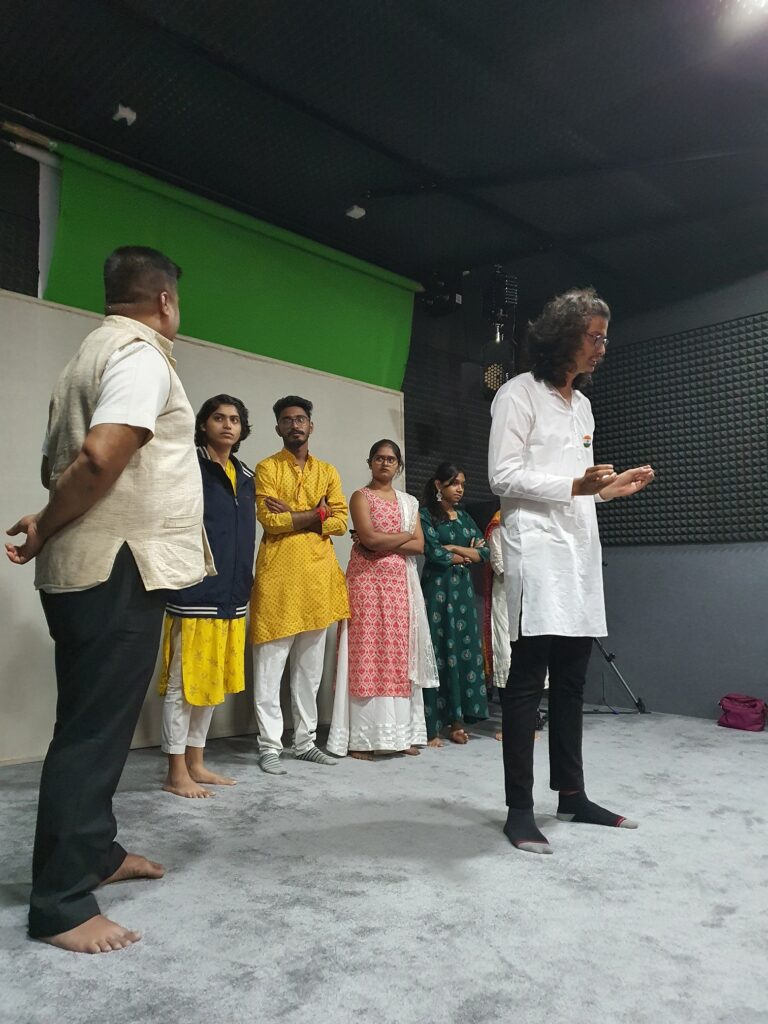
VUCCD Debate: Students debate on education, gender and other topics
VUCCD Correspondent
Pune
Students of Vishwakarma University’s Journalism and Communication (JMC) department recently participated in the debate competition.
Vishwakarma University’s Centre of Communication for Development (VUCCD) organized the debate competition as part of its second anniversary celebrations. Students debated on the education system, gender and other topics.
VUCCD Study Tour: Students visit Kranti Van project
VUCCD Correspondent
Pune
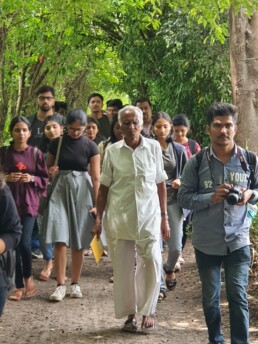
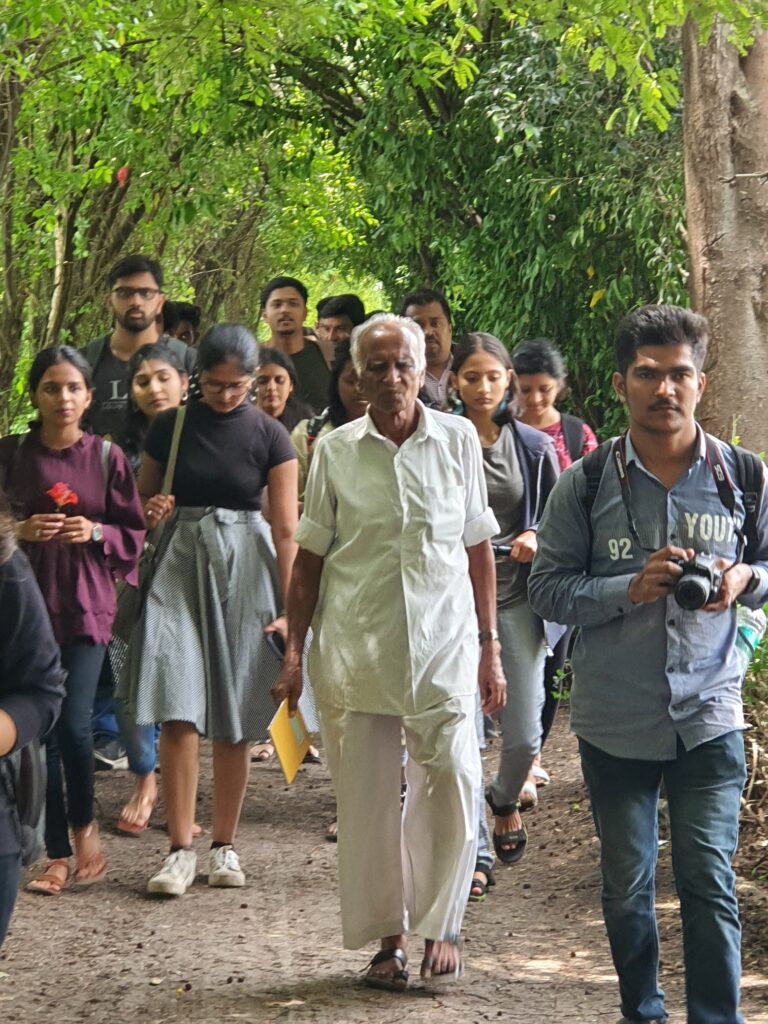
Students of Journalism and Mass Communication and Internal Quality Assurance Cell (IQAC) recently visited the Kranti Van project in Balawadi village in Sangli district.
Sampatrao, a farmer thought about the idea of Kranti Van in 1992 when India celebrated the golden jubilee of the Quit India movement. He planted trees in the names of freedom fighters and martyrs.
Speaking to students he said that India and the world is fighting many battles including diminishing ethics and climate change. “ Kranti Van is a project where school and college students come and learn about the glorious history of Indian struggle. I am sure that the new generation will get inspiration from our past” he said.
Vishwakarma University’s Centre of Communication for Development (VUCCD) students will run the social media campaign for Kranti Van so that the project information reaches the maximum number of people.