

The ‘Iron Man’
Sanket Rajesh Loya
Aurangabad
Nitin was living in an intoxicated world as he started drinking 24x7. His family thought that marrying him would bring him back on track, but in futile. He continued immersing himself in drinking and doubting his wife. The situation in life worsened. Nitin developed multiple personality disorder, mental illness, and memory loss. His weight was reduced to 42 kg. In 2009-2010 Nitin was admitted to a hospital where doctors said that he would not survive more than two months.
As he shares his story Nitin Ghorpade from Aurangabad in the Marathwada region of Maharashtra shudders for a moment but then he controls himself and narrates his life. Nitin was born in Pune on December 15, 1979, and due to poor financial conditions, his family moved to Aurangabad when he was just six-year-old. Nitin along with his brother and mother sold popcorn at the city bus stand. Additionally, he also washed cars to earn money for the family. When in ninth standard he started working as a paperboy. Life was harsh and so was destiny, he says. With no hope in the present and unpredictable future, he turned to liquor.
“I was in the eighth standard when I first consumed liquor. It was a Holi day and I drank with my friends. Liquor was not new to me. It was always there around in the family and neighborhood” he says. But this was the first time he embraced liquor which tightened its noose around him.
Intoxicated Life
Even though he was drinking continuously, he was a hard worker. Sometimes he attended classes in his school and one of his teachers was aware of his background and hard work. The teacher asked Nitin if he would do a job in the transportation business. The company was owned by the teacher’s relatives. Nitin agreed as he was in the need of more money for his family. Also working in a transport company gave him some dignity for which he was yearning while working as a paper boy.
He joined the transportation business, as an employee. As his salary increased, his drinking habit doubled. He was so deep into the liquor that he could not stand or walk on his own.
Nitin admits that money made him arrogant and he started abusing his family members who would try to stop him from drinking. He suspected his wife and remained agitated with the family members. His wife was at the receiving end. The National Family Health Survey - 5 (NFHS-5) states that experience of spousal physical or sexual violence varies greatly with the level of the husband’s alcohol consumption. Seventy percent of women whose husbands often get drunk have experienced spousal physical or sexual violence, compared with 23 percent of women whose husbands do not drink alcohol The NFHS also highlights that only 1 percent of women (among surveyed) drink alcohol, compared with 22 percent of men. Among men who drink alcohol, 15 percent drink alcohol almost every day, 43 percent drink alcohol about once a week, and 42 percent drink less than once a week.
Way to Rehabilitation
Nitin was among those 15 percent who survived on alcohol. His family and friends were trying to help him to get rid of alcohol, but Nitin was unwilling to listen to anyone. “My family tried everything, but I was still drinking. But Supreme Power (God) sent my friend Raju and he told my family about Alcoholic Ananimers (AA)” he says. AA is an organization working for de-addiction.
Nitin’s family convinced him and immediately took him to AA. Nitin unwillingly went there. Habitual drunkards who were admitted for treatment at AA regularly met and shared their experiences. When Nitin started hearing stories from other alcoholic patients, he was shocked. He could relate to what they were saying. He knew how he behaved when he was drunk. But now he was listening to the same stories and suffering of their family members. Nitin lamented remembering his behavior. It was like looking into the mirror.
“After six months at AA, guilt and self-realization made me conscious. It was the moment I decided to change” says Nitin. It was not easy living without liquor, but Nitin was ready to fight the battle with himself. He would see how his wife and family members suffered because of his liquor addiction. It took over a year for Nitin to come back to a regular lifestyle, he was successfully able to defeat his addiction to alcohol consumption. This was probably the toughest battle of his life where he was his own oppressor and enemy. But finally, he succeeded and quit liquor.

The New Beginning
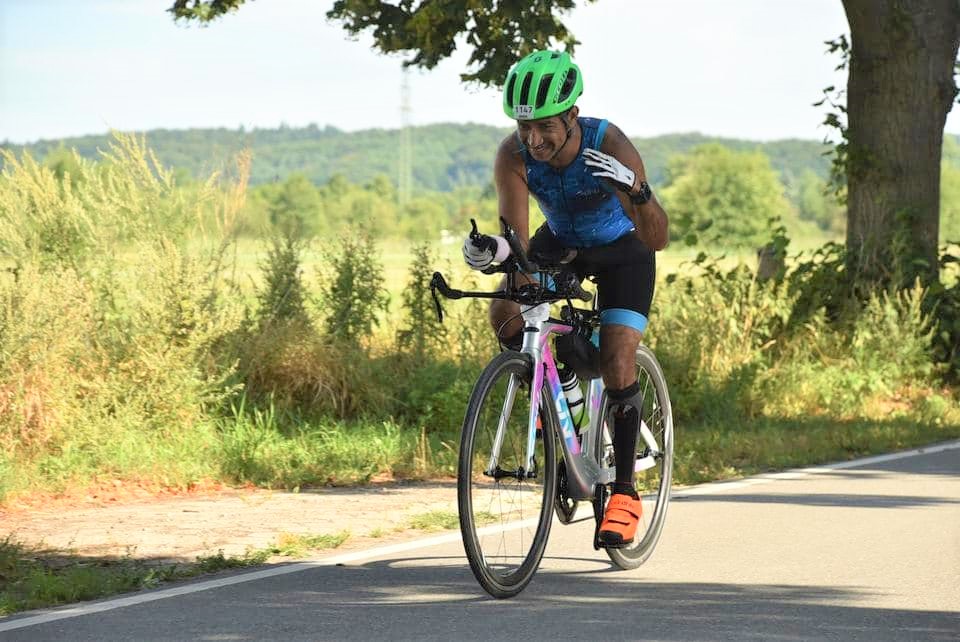
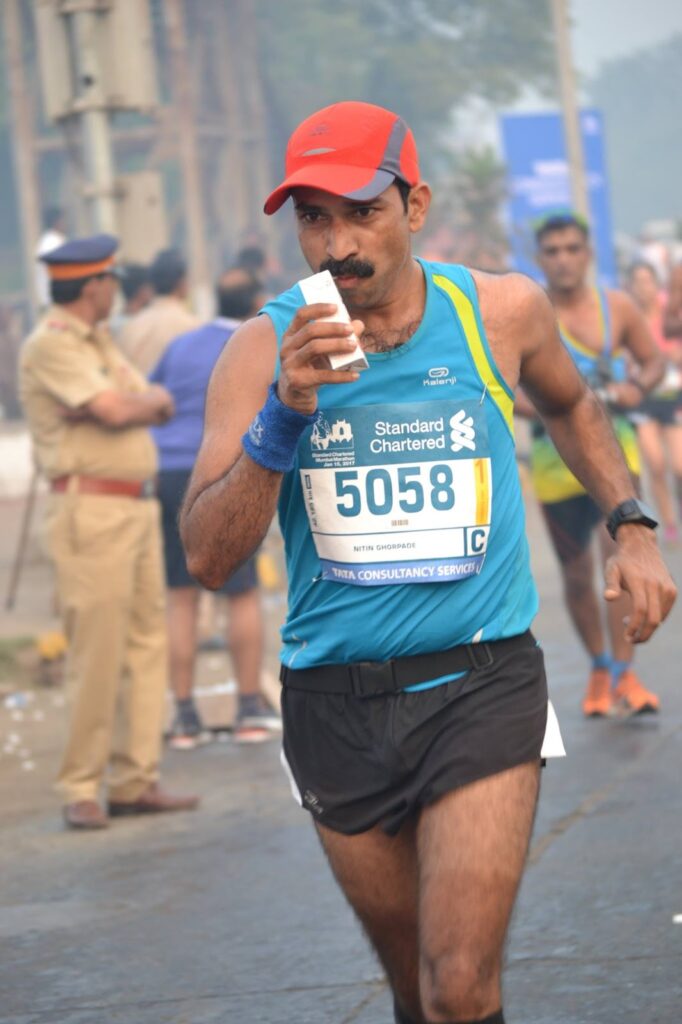
After leaving alcohol he realized that he was getting fat and unhealthy so started running, swimming with friends, and cycling. Also, he worked on his diet. One day when Nitin’s friends suggested that he should try TRIATHLON and explained to him about the sport. A sport includes 3.8 km of swimming, 180 km of cycling and 42 km of running which a participant has to complete within a given time to win the title of IRON MAN. Now, Nitin had a new target in his life. After the tragic past, he was determined to do something that would satisfy him and his family. Nitin started preparation for TRIATHLON. He participated in different fitness, cycling, running, and swimming competitions. “I used to bath with ice water for 15 months to get used to cold conditions abroad where competition was to be held,” he says. Preparing for the competition was the best part because it was just like preparing for school exams and Nitin enjoyed working hard daily.
Nitin was able to win his first IRON MAN title in 2018 in Hamburg Germany where he completed all three events in a total of 12 hours and 49 minutes. Next year Nitin again clinched the title in Denmark.
As he pursued his passion for exercise, Nitin also built his own transportation business. “ Now, I want to live a normal life with my family and forget the dark past,” he says. Life has taught him many tough lessons and Nitin knows how difficult is to fight the battle to self.
He strongly believes that nobody can gift you willpower, it is you yourself who has to earn it. The will to change is the basic premise of life, says Nitin. Good Samaritans hanging around are there to facilitate your journey. Once addicted to liquor, Nitin today is addicted to achieving new heights and testing his own capacities as a human being.
(Sanket Rajesh Loya is a TYBAJMC student at Vishwakarma University)
Note: Pics for the story are taken from https://nitinharishghorpade.blogspot.com/2018/09/ironman-journey.html

Taare Zameen Par: On the streets of Pune
Tapasya Kamble & Snehal Bhagwat
Pune
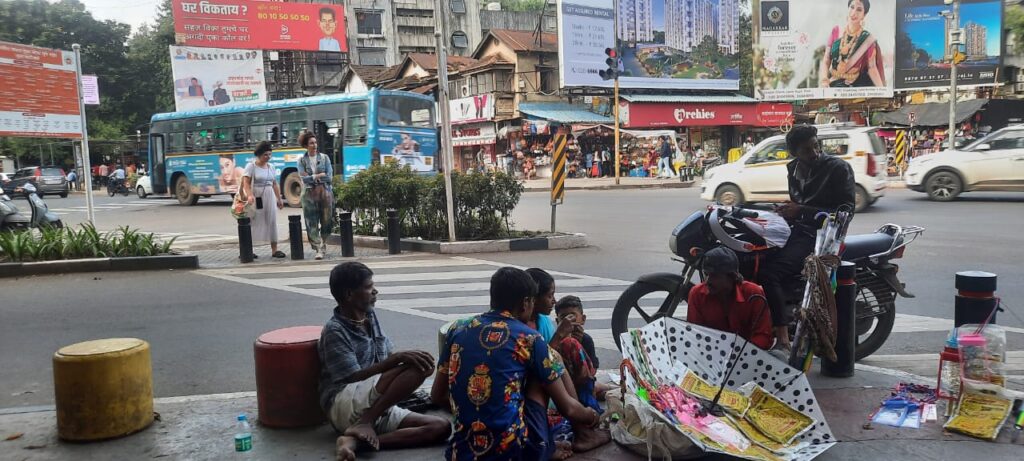
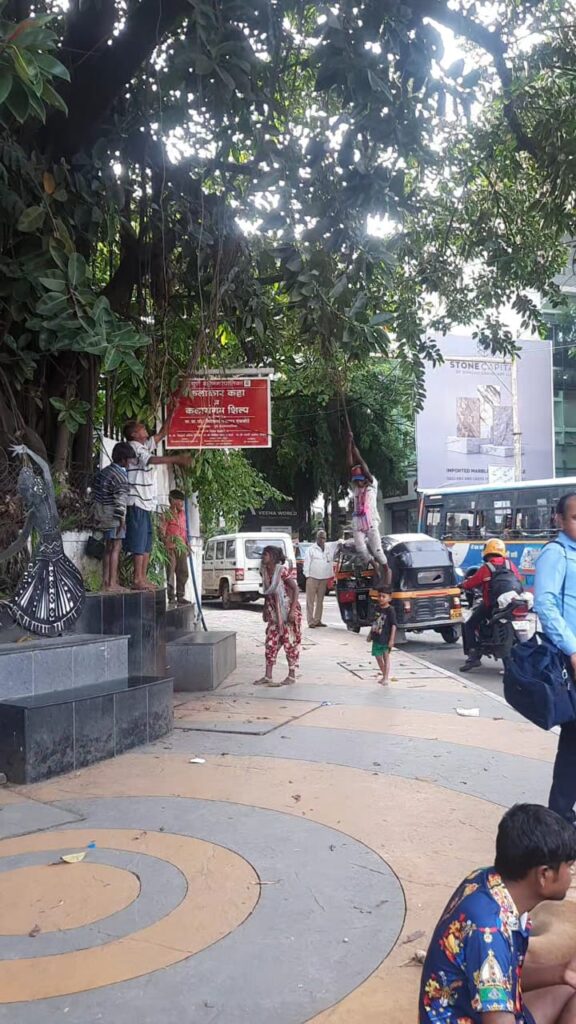
The busy Gopal Krishna Gokhale road popularly known as FC College road is one of the busiest roads in Pune city. As traffic is teeming on the road during busy hours couple of kids are reveling near the Goodluck chowk.
They are swinging with swag holding tight to the aerial roots of the banyan tree. But this merriment is just for a few moments. As soon as the red traffic signal turns on, they pick up their stuff including plastic dustbin bags and a bunch of key chains, and rush to the commuters and try to sell their products. As the green signal glows, they are back to the banyan roots to breathe the fresh air.
Life is not merriment for these innocent kids who must be in school classrooms but are earning livelihood by selling some products, begging, and cleaning vehicles stopping at signals. Education is their right but life has brought them to the streets. UNICEF defines a street child as “anyone under the age of 18 years either lives or works on the street for most of the time”.
Nine-year-old Dashrath and his eight-year-old brother Parbal sell key chains which are not as flashy as the ones in the shops. Not surprisingly, there were hardly any buyers who bought key chains from them.
Ask him “ Do you go to school?” and he answers, “ No. I don’t have a birth certificate to get admission to the school”. Dashrath along with others came to Pune from Madhya Pradesh in search of livelihood. His parents are back home and live in abject poverty with no resources to feed and educate their kids.
While Dashrath is busy talking, his younger brother is bothered about selling keychains. When asked “ What do you want to do when you grow up?”, Prabal has a quick answer, “ I will buy a full bus ticket when I grow up”. His eyes twinkle while he answers.
Living in abject poverty even a dream of development is a distant dream for these kids who continue to grope in dark. As of now mitigating hunger and survival is the only motivation they have.
The road is full of eateries, restaurants, cafes, branded clothing stores, and digital brand showrooms. But these are not part of Dashrath, Prabal, and hundreds of street children’s lives.
Life on Streets
The Pune Municipal Corporation’s survey on street children titled ‘Children in street situations – Life on Pune streets’ reveals that a total of 10,427 children were enumerated across the city. Among surveyed children 58.1 percent are boys, 41.7 percent are girls and 0.3 percent are transgender. About 83 percent (8,550) of the children belonged to street-living families.
Among the street children covered in the survey, about 50 percent (5,207) of children were in the 6 to 14 years age group. As many as 60 percent of surveyed children were not studying.
“The poorest children of different parts of the State of Maharashtra migrated to Pune city in search of job and livelihood. It was surveyed that about 48 percent of children or their families migrated from the districts such as Usmanabad, Latur, Beed, Parbhani, and Solapur in Maharashtra. Almost 82 percent of children or their families migrated in search of job and income” states the published survey.
According to the survey, 33 percent of children were involved in hawking/vending on the streets, 17 percent in begging/used for begging, and 12 percent in construction work.
Hardly seven percent of the children were aware of any NGO or government programs that provide some assistance to street children. Most of the street children hawking or begging could be seen on busy roads.
It is not just from Maharashtra, but from many other States, children come to cities like Pune and Mumbai to work on the streets.
Mitigating Hunger
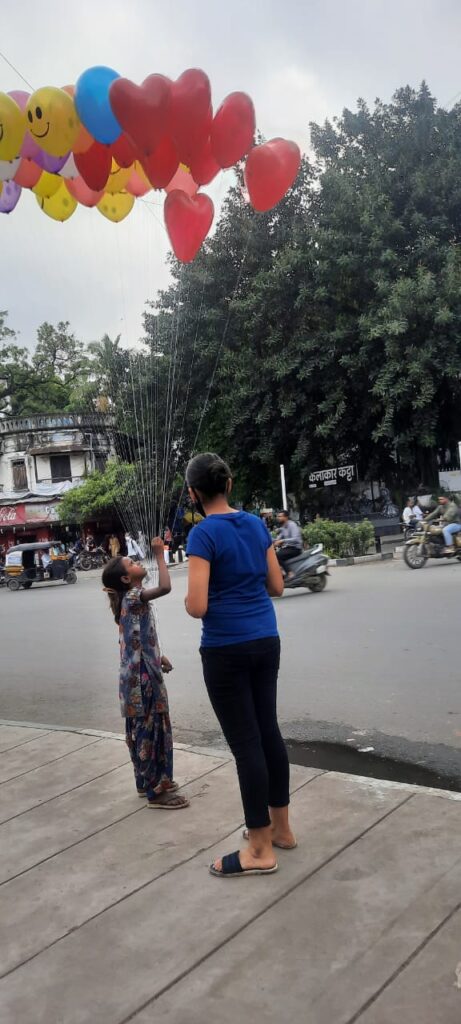
Just on the other side of the FC road is JM road. It's 8 pm and there is a queue near Pataleshwar rock-cut caves. Everyone in the queue is looking at the tempo standing on the roadside. The tempo driver then starts distributing silver packets of food wrapped in food-grade plastic. Then in a systematic way people, one by one come and collect their food packets and sit on the footpath there and have their meal.
These people are beggars, cleaners, and ragpickers including children like Dashrath and Prabal. They don’t earn sufficient money to buy their meal for the day and these food packages provided by Venkys are the only option.
When the tempo driver distributes the packets, an employee from Venkys stands there with his tablet recording and keeping a check that the food is reaching the right hands.
Also, keeping the environment in mind, they also kept a dustbin bag near the tempo so that the leftovers and packets are properly disposed without harming the environment.
Darkness hovers all around and neon signboards and street lights start illuminating the streets in the locality. Another day has passed but for street kids sunrise is not in sight.
Protection of Street Children
According to the union Ministry of Women and Child Development as per Section 2 (14) (ii) of Juvenile Justice (Care and Protection of Children) Act, 2015 (JJ Act), a child who is found working in contravention of labour laws for the time being in force or is found begging, or living on the street is included as a “child in need of care and protection”, among others.
The Ministry implements a centrally sponsored scheme, named Child Protection Services (CPS) scheme, under Umbrella Integrated Child Development Services (ICDS) Schemes for supporting children in difficult circumstances including street children, as envisaged under JJ Act.
“ Under the scheme institutional care is provided through Child Care Institutions (CCIs), as a rehabilitative measure. The programmes and activities in CCIs inter-alia include age-appropriate education, access to vocational training, recreation, health care, counseling etc. The primary responsibility of execution of the Act and implementation of Scheme rests with the State/UTs” the Ministry stated in 2021 in Rajya Sabha.
(Tapasya Kamble & Snehal Bhagwat are SYBAJMC students at Vishwakarma University. Pictures by Tapasya Kamble)
A woman who dares to dream
Sanika Jain
Pune
The doctors declared that Prajakta won’t survive. She was just a newborn baby. Sangita and her family lost hope when they could not find an incubator for Prajakta. They asked for help from everyone and tried to knock on the doors of hospitals around. But there was no incubator available.
For poor people like Sangita, getting an incubator for kids or a hospital bed is a daunting task. The bed density (number of hospital beds per 1000 population) in India is 1.0 while in low-income countries it is 1.2, in middle-income countries it is 2.4 while in the world it is 2.7. Overall, 72 percent of hospital beds in India are available in urban areas, while 28 percent are in rural areas.
Sangita and her family were helpless and couldn't do anything for the baby which was suffering from low birth weight, irregular temperature, and unstable vital signs. They had 4 hours to save her, but as these horrifying 240 minutes passed, fortunately, nothing happened to her and she survived. Sangita says it was a “miracle” but not many miracles have happened in her life.
Her Story
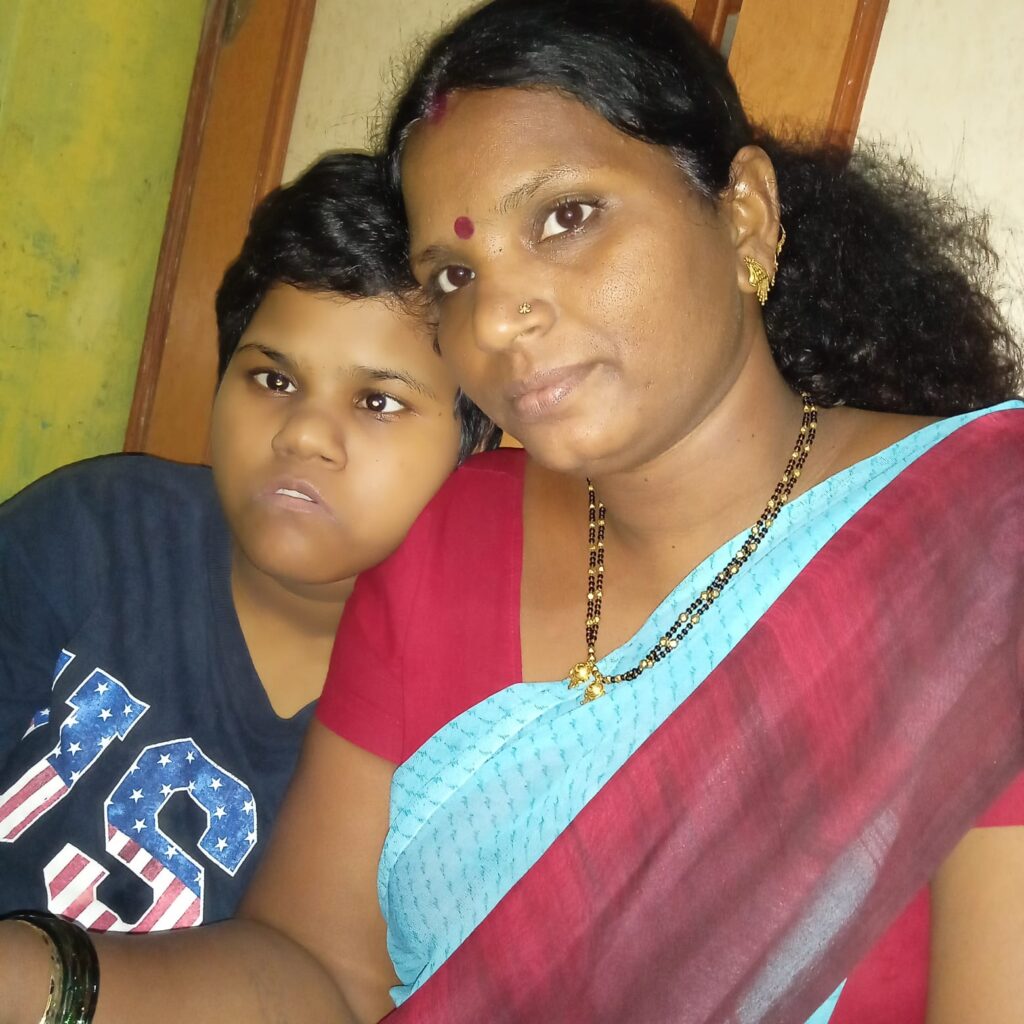
Sangita Dattatrya Sabale living is a mother to four daughters. She is 38-year-old and has been working as a maid since she was just 10 years old. She was married off at the age of 12 and delivered her first daughter when she was just 16. Though child marriages are banned, hundreds of Sangitas are married at a young age and forced to produce children when they themselves are still children.
“Getting married at such a young age was not easy for me. I was unaware of the meaning of marriage”, Sangita laments. All her dreams to get educated and be on her own crashed with marriage. Her family members insisted that the bridegroom was educated and she would not get any such marriage proposal. Her husband, Dattatrya Sabale says that he is a civil engineer. Sangita agreed and married to Dattatrya. She delivered twin girls Prajakta and Prerna when she was 18.
Like many other families in India, the Sabale family also wanted sons to take the family tree forward and also take care of their dotage. But Sangita continued to give birth to girl children.
Life Challenge
As Prajakta was growing she was not able to utter words or even take baby steps. Her twin sister Prerna was a normal child but Prajakta didn’t show any growth.
About 2-3 months later, Sangita and her husband realized that their daughter is differently abled. They took her to the local hospital. Three surgeries were conducted on Prajakta following which she was able to talk, laugh and recognize people around her. But she is not able to walk and had to stick to a wheelchair.
Prajakta is now 19 years old and studies at a school for differently able children in Shukrawar Peth. Sangita endured years of struggle. Her in-laws did not accept Prajakta because of her condition but Sangita and her husband always stood head-strong and never gave up.
However, the struggle hasn’t come to an end. Sangita said, “This struggle will continue to exist for the rest of our lives. For me, for Prajakta and my family”.
They faced many financial issues and still do. Due to these circumstances, they had to take loans from people in order to meet the financial needs for Prajakta’s surgeries. After a few years, the doctors said that more surgeries would have to be performed but these surgeries involved several risks. Also, doctors didn’t offer any guarantee that surgeries would be completely successful. Finally, the family decided that they would not go for any further surgeries on Prajakta.
Presently, Sangita serves ten houses as a maid and yet manages to take care of her home and her daughter. Her other three daughters also take care of Prajakta and help with household chores whilst the mother is working outside.
Sangita loves her four daughters equally. She says her husband has been supportive in managing everything with her. She adds “My mother has always been there through our thick and thin, without her, the situation would’ve worsened,” said Sangita.
“There were times I felt completely disheartened during the time of handling adversities. But I wanted to see Prajakta in a good condition and the belief that she will get better kept me going,” Sangita added.
Making it Possible
Sangita’s story is the story of thousands of girls who are deprived of education and better opportunities in life. In families struggling for survival, girls become burdens, and marrying them off is the only answer.
The family, society, and destiny have left very few options before Sangita in the battle of life.
The only weapon she has to fight all the odds is her love for her daughters and her dreams. She is not allowing her hope and her dreams to die. She dreams for better lives for her daughters and trusts that someday there will be a ray of hope in the darkness all around.
Sangita says, “I live for my children. Everything I did or do in my life is for them. Never thought of myself in this battle. I want to educate my daughters and provide them with a good life. Even though everyone lost hope, I was persistent. The struggle is endless; nevertheless, I never intend to give up”.
And she is aware that there will be no miracle that will change her and her family’s life. She has to rely on her hard work and challenge the situation. This gritty woman continues to dare to dream despite all odds.
No permanent employment, no good wages, and no dignity. Society, family, and destiny are testing her grit to live, but Sangita says that she is not the only one who is facing these challenges. At a time when happiness is like a mirage, Sangita hopes to convert the mirage into reality. “ It’s possible. I shall try my best to make it possible” she says holding back her tears.
She is not ready to give up!
( Sanika Jain is an SYBAJMC student at Vishwakarma University: Pictures by Sanika Jain)
============================
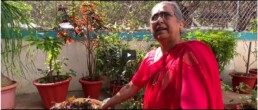

Kadhi Khichadi: The Unique Speciality Of Parbhani
Siddhi Dharmadhikari, Third Year, BA.JMC, Journalism Specialization
March 14, 2022
The diversity of India is reflected in its food. Equivalent to its culture, the food is also considerably diverse. One of the main reasons is that it has been infested by many foreign rulers such as Mughal, Afghans, Persians, Turks, Portuguese, English, etc. It is said that the regional cuisine in India evolved more in the Mughals era.
Indian spices were world-famous and they impacted International Trade. Especially in Greece, the cuisine was pretty widespread in European Countries in the 15th century. Scholars of that time named it “Yavan Priye” (Greek’s love). Indian cuisine reflects a 5,000-year history of diverse groups and cultures interacting with the subcontinent, directing to the diversity of flavors and regional cuisines found in modern-day India.
In Maharashtra, the different cities are famous for their specialty of food. For example, Nagpur is famous for its oranges, Kolhapur is famous for its Misal, Nashik is famous for Grapes, Mumbai is famous for Vada Pav, etc. But can Kadhi Khichadi be a specialty of a city? Parbhani, a part of the Marathwada region, is famous for Kadhi Khichadi and Pakoda.
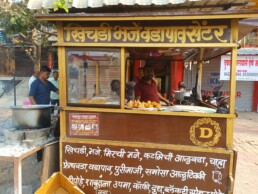
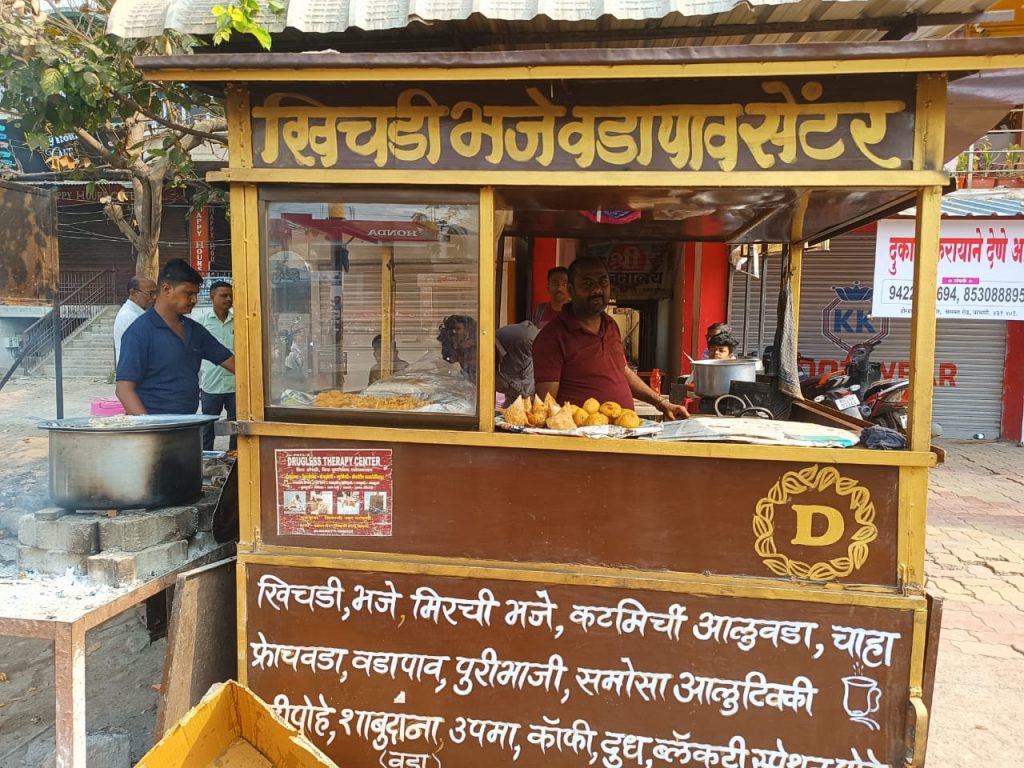
There are lots of stalls and Dhabas one can find in Parbhani which are apparently famous for Kadhi Khichadi. Even restaurants sell Kadhi Khichadi as their prominent menu. But yet Rajabhau Deshmukh's Khichadi Pakoda's stall is very popular amongst the citizens of Parbhani. The stall is located at a roadside 1.5 kilometers from Parbhani Railway Station.
Just one year ago, Rajabhau started his own Khichadi stall because he lost his job in the second lockdown spread due to the coronavirus. Rajabhau used to work in hotels for 25 years.
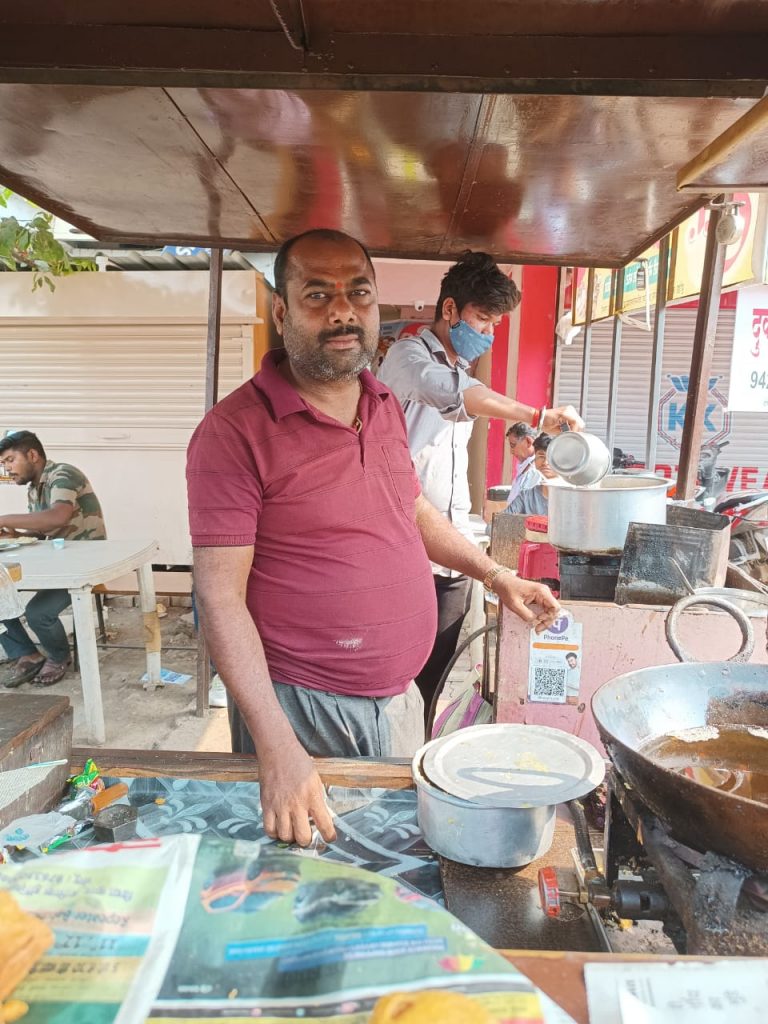
He said that in one of those hotels, the manager asked everyone to add something to a menu list and also present the dish for testing. Rajabhau presented his dish; Kadhi Khichadi and Pakoda. From that day, Rajabhau got his very own stall on the hotel premises.
But due to Covid-19 lockdown, Rajabhau lost his job and so did his stall. He decided to open his stall afterward. On the roadside, Rajabhau opened his stall once again with more menus that will complement Kadhi Khichadi like Chai, Samosa, Aloo Vada, etc.
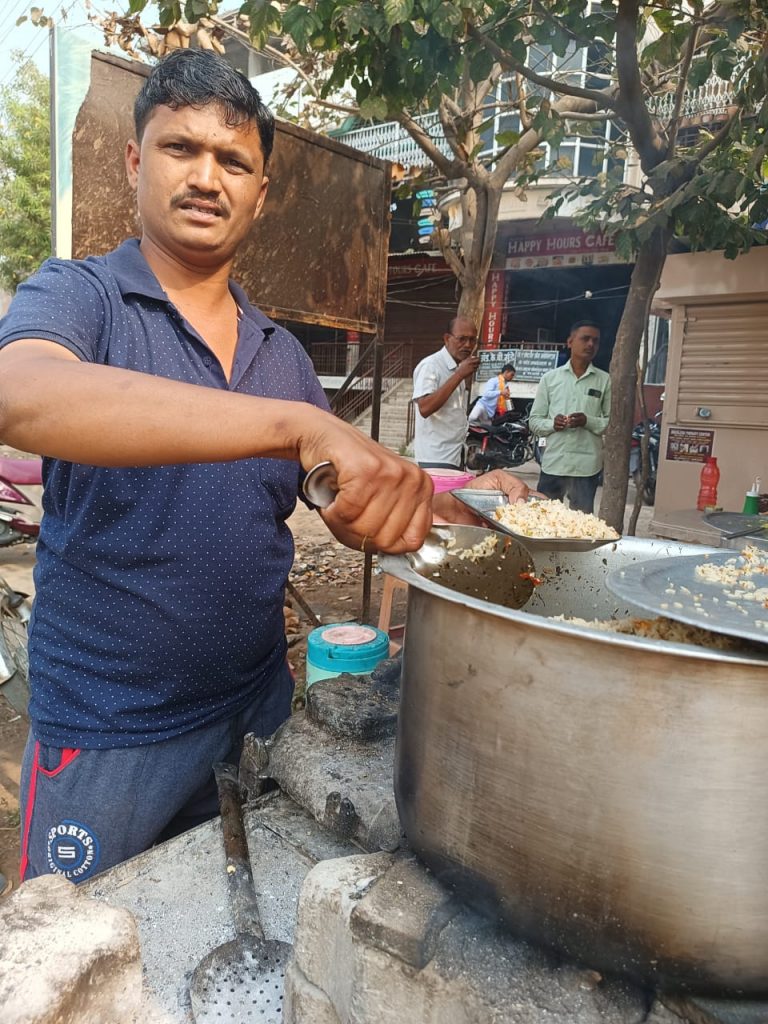
Rajabhau uses Prabhakar Rice for his Khichadi. He said that the rice type may fluctuate according to his monthly income. Along with this, Rajabhau has made a deal with one of the milk-seller. The milk-seller gave all his remaining milk to Rajabhau in the evening and then Rajabhau made Kadhi out of it. "We still believe in Humanity, Didi", said Rajabhau.
Rajabhau used to earn Rs fifteen thousand at the end of the month when he was working in the hotel. Now 400-500 customers visit his stall on a daily basis and he earns Rs three thousand to four thousand every day.
Rajabhau said, "No one will ever say this but I am thankful to COVID-19. Corona gave me the reason to step out of my comfort zone and open my very own stall rather than working for someone else. Now my family and I are way happier than we ever were."
Picture Credit: Siddhi Dharmadhikari

Women’s Day Special: The Last Bath
Sakina Motiwala, SY BA JMC
Vishwakarma University
The Gusul you are given before you meet your creator
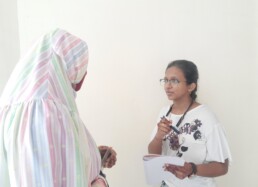
In the small community of the Dawoodi Bohras, there has been a tradition of bathing the dead that is as old as the community itself. When asked, why? They simply said that it’s like when you take a bath or shower before going to some important work event. Death they believe is not the end of life but the beginning of an eternity of being with your creator, Allah. And when you are going to meet Allah, you need to be in the best clothes and absolutely clean.
You might be wondering who the people who bathe the dead are. It obviously can’t be the dead themselves. I had the same question and to find the answers I went digging. While doing so I met a 64-year-old woman from Nallasopara who has been doing this for over 40 years. Unfortunately, she denied giving us any pictures of the ritual and hence none are published but the important details can all be found in this article.
Nafisa Sarangpurwala is a part of the Dawoodi Bohra community and has been bathing the dead since her early 20s. Now a widow, she is the mother of two daughters and a son and has six grandchildren. She had been married to Yusuf Sarangpurwala when she was 18 years old. Due to his job, the first four and a half years Yusuf was in Kuwait. It was during this time that she decided to start doing something to give something towards the welfare of the community.
Her father-in-law was the one who motivated her to actually join the committee for bathing the dead or giving them gusul (cleansing bath in Muslims). In the early years, she would simply stand in a corner and observe what the others, who were older than her were doing. Then she started by helping them with getting the water and small things like that. Slowly within a month or two, she had understood the whole process with all the duas (prayers) and the necessary rules that needed to be followed so as not to hurt the dead.
When Yusuf returned to India the family decided to shift to Nallasopara, Mumbai Sur-Urb and for the next few years, Nafisa had her kids and had stopped working. When her oldest was around 7 years old she decided that she wanted to do something for the community that no one was doing. At that time Nallasopara didn’t have a burial place for the community and the dead were taken to Vasai for being bathed and buried.
Nafisa and five others at that time came together and decided to form the first women’s group in Nallasopara who had full knowledge and experience of giving gusul to the dead. In the last 40 years, however, Nafisa is the only one of the original 6 to be alive and active enough to still keep doing what she had started decades ago.
There have been several instances with her where she was asked to come in the middle of the knight because of sudden death and at that time, she says that she is very thankful for both her parents-in-law to support her and take care of her children.
Being 64, she isn’t the fittest and cannot do a lot, but she still goes every time someone calls her to give gusul and guides the youngsters who are taking the tradition forward. And she has been doing all of this for over 40 years just to do her bit for the community without asking for anything in return.
Email: 202000330@vupune.ac.in
Women’s Day Special: The Queen challenged customs and traditions and enabled Saudi women to be educated
ESRA AHMED
Second Year, BAJMC
March 8, 2022
Beginning of the story :
In the 1940s, laws establishing education for boys were introduced , Girls haven't found their way
into formal education , tradition has tried to hijack their dreams and the rest of them
the clergy ensure that education is withheld for girls , after the clergy took control of this topic
It seemed for a moment that the future of women in the country would be associated with illiteracy
forever, but about 10 years after the establishment of the Boy's Knowledge Directorate .
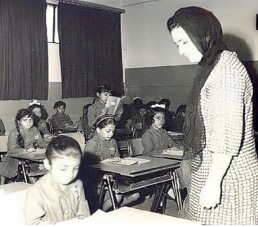
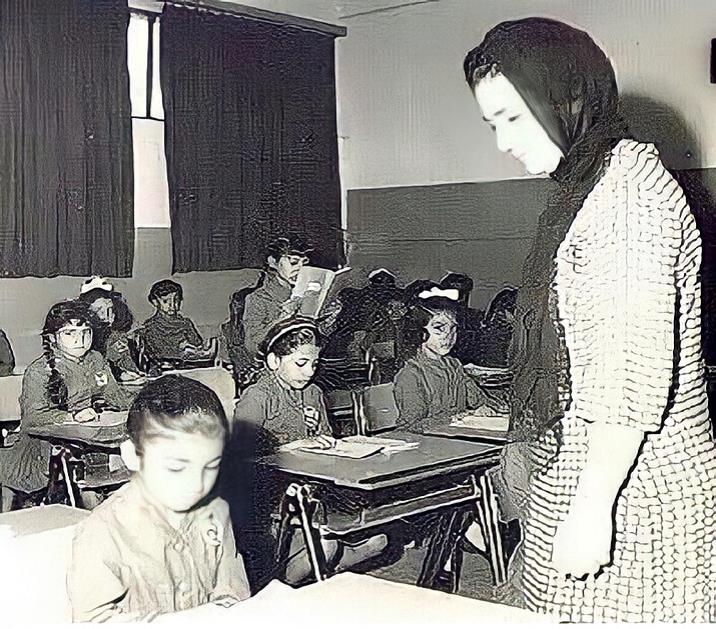
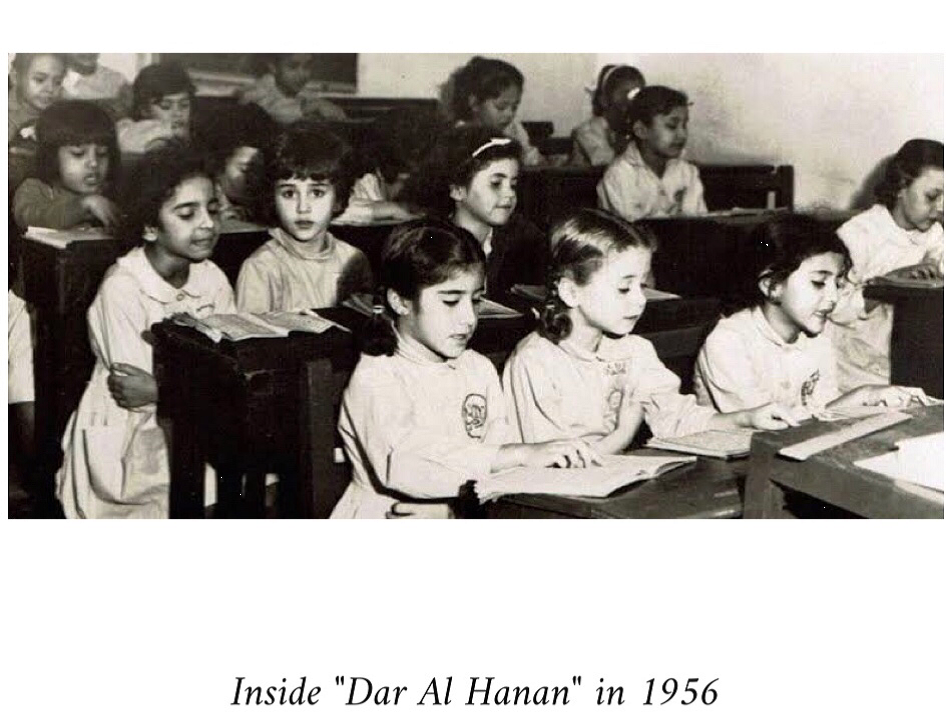
The first group of girls entered the school in 1955. Thirty elementary
students stood in the courtyard of " Dar Al Hanan " in jeddah
Founded by the wife of King Faisal Queen "Effat Al-Thunayan"
The first school for girls in the Kingdom of Saudi Arabia .
Birth and upbringing:
Effat was born Turkey in Istanbul in 1915 and studied in Turkish schools, after her father passed
away, she wrote to King Abdulaziz, founder of the third Saudi state.
she request from him, obtaining permission to perform Hajj , the king agreed to her request and told
his son at that time, King Faisal, to receive her , Effat met King Faisal by virtue of the kinship
between them, both of whom felt in harmony with the other , she admired his personality and a
conversation arose between them through an interpreter until she learned the Arabic language
Their relationship developed and they got married.
Effat indulged In Saudi society, she learned the Saudi dialect, and education was the first thing that
caught her eye, and the first question she asked was: Where are the schools?
How did she strive and continue her mission to spread education?
At the time when Effat searched for education and schools, popular education was present in the
small books in a rudimentary manner
At that time she found women allocating rooms in their homes for girls' tuition, Some families were
also known to open their homes to educate girls, but there wasn't an organized education
After the announcement of the unification of Saudi Arabia in 1932, “ King Abdulaziz “ met with the
dignitaries of the “ Hejaz “ and expressed his approval for the approval of girls’ education.
This was in recognition of the role that society plays in the formation of educational schools, but it
was not sufficient. The first step began in the 1940s when “Effat” decided to open a department for
girls’ education alongside the boys’ education department at the “Taif Academy” school .
husband, King Faisal, agreed, and the opening actually took place and Effat joined her daughters in
the sec, but the people's response to enrolling their daughters was weak amid strong social
opposition, it was closed because of that section after 4 years .
But Effat didn't give up, so she opened another section in her palace and supervised education in it
herself . she decided to wait for the right time, and in fact 1955 came in Jeddah , she tells her
daughter during her meeting at school and published in " Dar Al-Hanan"
I woke up one morning and found a strange movement in the house, saying, "My mother brought
sewing machines and various fabrics of taffeta, lace and embroidery tools, and she sat among us with
her friends working on sewing school uniforms, bedspreads and curtains that will decorate the
school, Effat changed her strategy in urging the community to educate .
How did she act after the girls' section was closed?
She presented her school as a home for orphans to enter education later. Effat did not like the word
orphans, which was the reason for replacing it with the name "Dar Al - Hanan".
some women refused to join their daughters to the orphanage because of the inferior view that
society has of the orphanage.
Queen Effat decided to announce that her daughters and the daughters of the families she knew
would be enrolled in school , in order to encourage everyone to do that, and thus the number of
female students reached thirty students in the first year and increased to 100 students in the
second year , The enthusiasm of the parents increased, and they demanded that they participate in
the school fees, “ Effat “ decided that she would allocate 30 riyals of the fees paid to take care of
orphans
She didn't stop her work after the introduction of education. One year after the construction of "Dar
Al Hanan", turned it into a fully regular school supervised by the Ministry of Education .
What after that ?
Five years later, the first batch of female students graduated from primary education, it is the year
that approved the issuance of the royal decree approving the government’s education for girls after
it was established civilly, and from it, the establishment of girls’ schools began in the capital, Riyadh,
in Mecca and other cities and suburbs, "Dar Al Hanan" continued to expand, and Effat decided to
accommodate its graduates from primary school by opening a school for intermediate education,
The government agreed to this, and the government assigned it the task of supervising all aptitude
tests for all private schools ,in 1963, then a secondary school examination center.
How after this insistence put her mark?
With her determination, persistence, and defiance of the consequences and difficult traditions, Effat
laid the foundation stone for educating Saudi women to educate and advance them, with these great
achievements, she has the right to register her name in the register of the great and immortal Saudi
women.
She passed away in 2000 at the age of 85, after an operation that her health could not bear the force
of the operation, and in appreciation and respect for her, her children founded a university and
named it "Effat University" in Jeddah.
She passed away, but she still lives in the heart of every Saudi woman
Women’s Day Special: Tiffin Wali Aunty, A Women Who Became Annapurna For Hostelites
Manisha Swain, Third Year BA, JMC
Journalism Specialization
March 7, 2022
Mark Twain once said, "Age is an issue of mind over matter. If you don't mind, it does not matter."
We often believe that a person's age defines what they should be. This not only restricts a person's creativity but also their confidence.
But some people do not let all these talks define them.
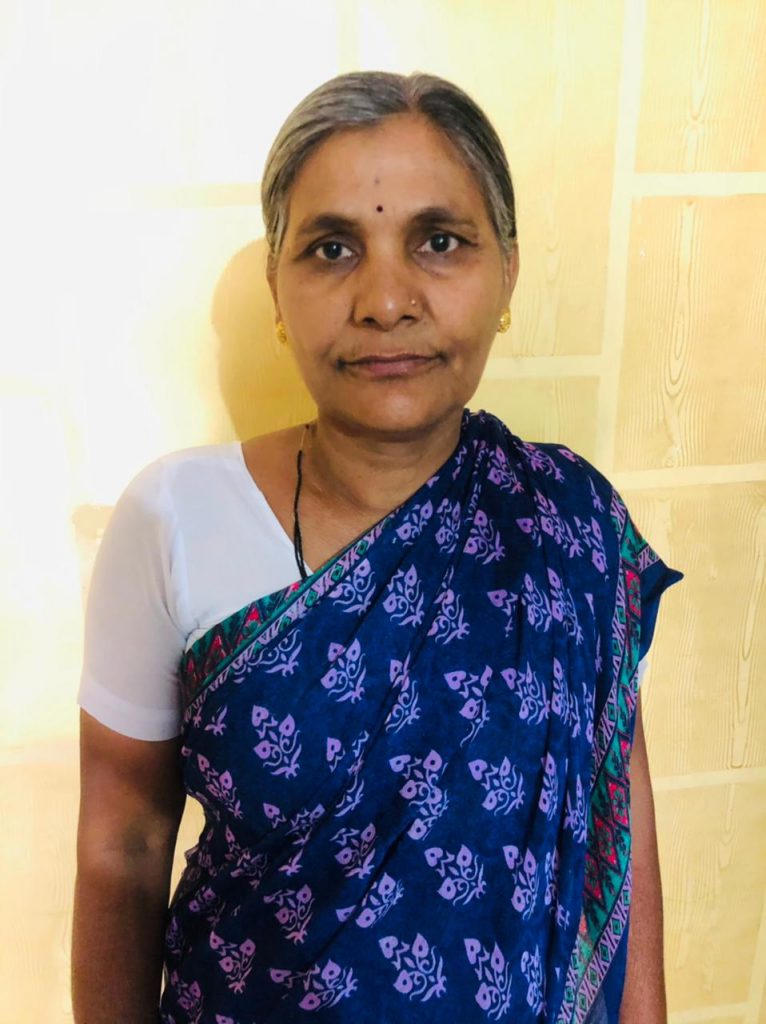
One of them is Meena Manik Sontake, who started making and selling tiffins at the age of 55.
Meena, who was originally from Junnar came to Pune after her marriage. She could not complete her studies which forced her to be a homemaker.
Meena says, "I wanted to learn and study more. But I was married at a young age. After marriage, I couldn't complete my studies while taking care of my home. So I had to give up on that dream."
In June 2018, Meena's family was going through some financial issues, which led her to start making tiffins for a living.
Meena said, "When my family was going through a financial crisis, I wanted to be of some help. I did not want to sit still. So a thought crossed my mind, why not do something which I am already good at? I talked with a nearby hostel owner and told him that I will make and sell tiffins for the hostelites."
"I started with one tiffin. I used to sell the tiffin for forty rupees which included four rotis, two sabzis, rice and daal," says Meena.
Selling a few tiffins at such a low price when the price of vegetables was at its peak was hard for Meena, but she did not let those factors discourage her. But soon, lockdown due to Covid-19 was imposed and her small business came to a halt.
Meena lost her husband in December 2020. Her world was shattered, but she picked herself up.
"I lost my husband and I thought what will I do now? But I knew that my family needed me the most, so I had to be strong for them," says Meena.
During the lockdown, Meena was not able to sell many tiffins. It was a huge loss for her as the tiffins were with the students who moved from Pune to their hometowns.
Meena says, "I was afraid that I might lose those tiffins. This may sound silly that I was worried about empty tiffins but those were the only things that helped me and my family to sustain ourselves. But some students paid for those tiffins when they reached home."
Meena makes the tiffins with her Daughter-In-Law, Sangeeta Vishal Sontake. They divide the work among themselves and they ensure that no food goes to waste during the process.
Meena says, "I was often told by people that I should act my age and that I should just rest on my bed. But I never listened to them because I know that if I hadn't decided to start making tiffins at that time, then my family wouldn't have survived."
"Now that I look back, I realize that all this was done just by two women and it was all our efforts which made us independent and strong. If I can do it then certainly anyone can and I am sure that if one is determined then no one can stop them," says Meena.
Manisha Swain
Women's Day Special: “Life of a Waste Collector and the formation of SWaCH”
Anil Malla, SYBAJMC, Vishwakarma University
Courtesy – swachcoop.com
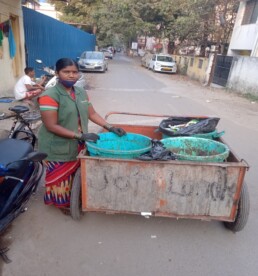
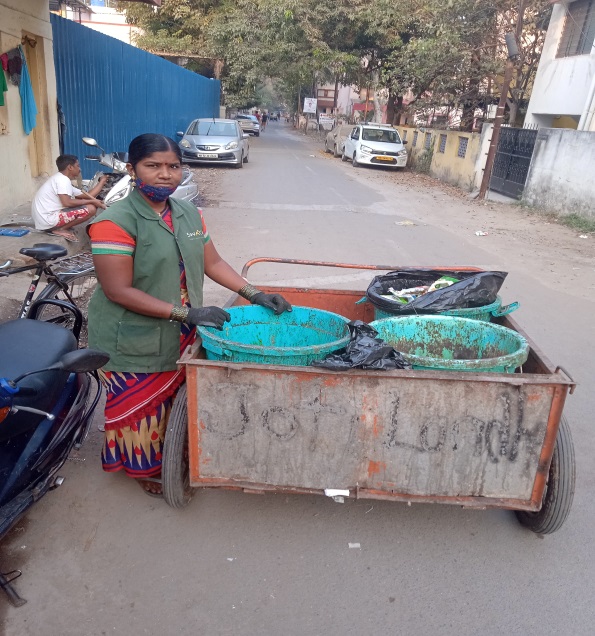
Jyoti Londhe is been working for SWaCH Waste Management for about 15 years, as a waste collector. SWaCH is India’s first completely owned cooperative of self-employed waste collectors. It is an autonomous enterprise that provides front-end waste management services to the citizens of Pune.
In 1993, several waste collectors and waste buyers in Pune and Pimpri Chinchwad came together to form Kagad Kach Patra Kashtakari Panchayat (KKPKP), it is a membership-based trade union. KKPKP aimed to establish and assert waste collectors contribution to the environment, the status of workers and their crucial role in the Solid Waste Management of Pune city. At present, the union has around 9000 members, 80% of whom are women from socially backward and marginalized sections of the society. Members are been given I-cards that are endorsed by the PMC, and can avail benefits like educational support for their children, life insurance and interest-free loans.
In 2000, the new MSW laws and rules were passed, which required segregation of waste, door to door waste collection, and waste processing instead of dumping. There was also a movement towards reducing containers on the street and making the city ‘container-free’, for better sanitary conditions and cleanliness. KKPKP took this opportunity to improve the working conditions of waste collectors. In 2005, KKPKP launched a pilot programme in collaboration with PMC, where waste collectors were integrated in door-to-door waste collection.
The pilot scheme was implemented in collaboration with the Department of Adult Education, SNDT Women’s University, it was operational between 2006-2008 and enabled 1500 waste collectors to become service providers for the door-to-door collection of waste from 1,25,000 households in Pune city. This considerably improved their working conditions and improved their livelihoods, effectively bridging the gap between households and the municipal waste collection service.
Jyoti said that the door to door collection is sent to V-Collect events where recycling of old electronic items, furniture, kitchen utensils, bicycles, etc is been done. Jyoti mentioned that SWaCH is partnering with Pune Municipal Corporation and ITC to collect and recycle Multi layered packaging (plastic) waste. She further added that SWaCH enables organisations to meet regulatory requirements for the safe disposal of e-waste.
When asked about her salary and financial conditions, Jyoti answered that she earns around 10 to 12 thousand rupees which includes both salary and door to door collection fee. She added that “this is not enough for a better lifestyle because there is too much inflation after the covid-19 pandemic, food items, mobile recharges, school bus fee, LPG cylinders, petrol, edible oil, clothes, etc everything is expensive we don’t have enough purchasing power”. Jyoti’s children are studying in a government school in online mode, she said that “we cannot afford extra tuitions or coaching classes for the children due to financial problems, they have discontinued attending tuition classes”.
At the end of the interview when asked about her personal safety and hygiene during her work Jyoti said that SWaCH is providing safety gloves, respiratory and dust masks, safety coveralls, safety hats/helmets, ear protection, safety eye protection and hand sanitizers.
By – Anil Malla
Women’s Day Special: A Thelewali With An Unbending Will
Siddhi Dharmadhikari, Third Year BA.JMC, Journalism Specialization
February 28, 2022
One of the consequences of lockdown measures in the country has led to an unprecedented migration of workers and families from large urban centers to rural India. After the first lockdown in-country, workers immediately returned to their native places.
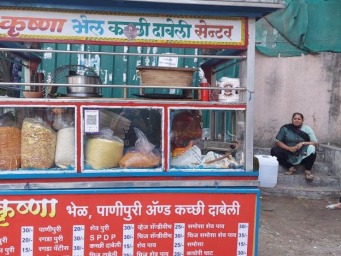
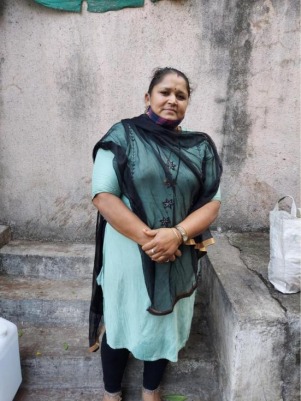
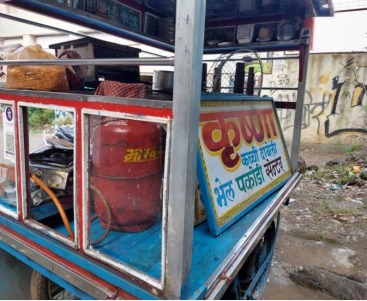
Mrs. Laxmi Aheer, a Thelewali Bhabhi, who owns a street food stall, “Krushna Bhel Kacchi Dabeli Center” at Vishwakarma University is one of those people who faced the wrath of Covid-19.
On March 18, 2020, Laxmi and her husband Madanlal Aheer and their two children went to Rajasthan as the government informed them about the upcoming lockdown.
While talking about her difficulties, Laxmi explained that it was one of the terrifying moments for the family. She said, "Unlike employees, we do not get paid at the end of the month. This sudden lockdown affected us so much that we had to return to our hometown in Rajasthan."
"What are we going to do now? This was the only thing I could think about during the entire journey," she added.
Laxmi used to earn Rs eight thousand to ten thousand daily at the campus. Laxmi informed, “It was a satisfying income for us. But when lockdown started it felt like our worst nightmare had begun". She further added, "In Rajasthan, we started doing farming to earn money. We borrowed Rs two lakhs from money lenders. My husband used to drive the tractor while I used to look after the farm."
In November 2021, Laxmi returned to Pune with her family. While sharing her experience, she said, “We were so happy when we were coming back to Pune. The experience was unforgettable. I was continuously praying and thanking God for giving us another opportunity.
She added, "I was imagining my kids going back to their tuition because earlier we could not afford the finances. We were feeling so guilty for ruining our children’s studies but what more we could do. While returning to Pune, we borrowed Rs. fifty thousand to buy ingredients for our thela".
But Laxmi's happiness did not last long as everything was closed when she arrived.
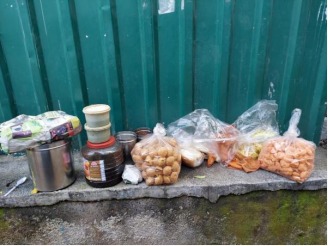
Covid-19 did engrave its impact on us. But the same impact was relatively worse for people like Laxmi and her family who were dependent on their Thela to sustain themselves.
She concluded by saying “The campus is now open so I am not going to cry while disturbing my God again and again."
While laughter was echoing in the surroundings and tears covered Laxmi's eyes, she said, "We will get through this Didi. Bhaiyya and I are very strong."
Siddhi Dharmadhikari